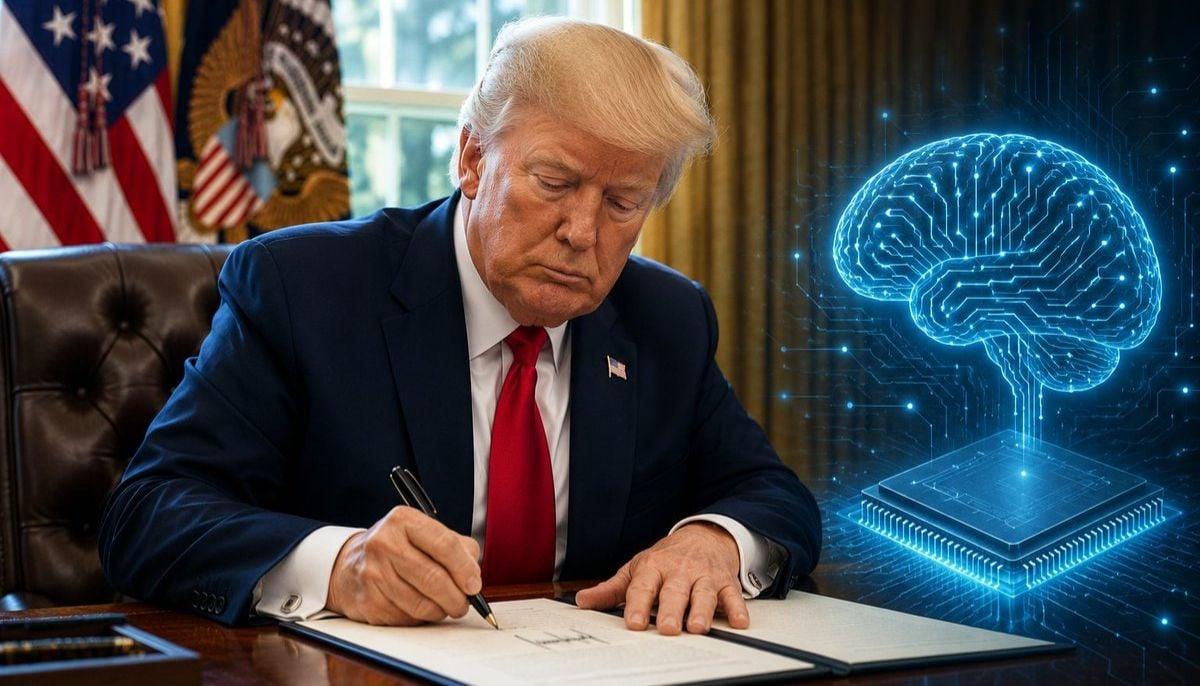
United States President Donald Trump has signed an executive order to oversee artificial intelligence models.
The order signed on Tuesday, June 2, 2026, asks companies to voluntarily allow the government to review the national security risks of the most advanced AI systems.
The U.S. government can test a model up to 30 days before its official public release.
The AI executive order states: “Advanced AI capabilities make our nation stronger, but also introduce new national security considerations that require coordinated action across executive departments and agencies. »
This comes just weeks after President Trump refused to sign an executive order on AI on May 21. It remains unclear whether the one signed today was similar or if changes were made to make it acceptable to the 47th POTUS.
While refusing to sign the order in May, the 79-year-old Republican said: “We lead China, we lead everyone, and I don’t want to do anything that will hinder that advance.” »
Here is a brief description of the order available on the White House website:
- Introduces a voluntary framework under which large AI companies can submit advanced AI models to U.S. government agencies for security and cyber risk testing before release.
- Focuses specifically on “frontier” or highly advanced AI systems with potential national security implications
- Aims to identify cybersecurity vulnerabilities, misuse risks and infrastructure threats before public deployment
- The testing process involves coordination with federal agencies, including Defense, Homeland Security, Commerce and Treasury.
- Defines a review period (typically up to approximately 30 days per model) for government evaluation of submitted systems.
- Does not impose mandatory licensing or application requirements on AI developers
- Designed to maintain U.S. leadership in AI innovation while adding a layer of security oversight
- Establishes a structured benchmarking process to evaluate AI systems against cyberattack and misuse scenarios
- Encourages collaboration between government and leading AI companies on security assessments
- Strengthens broader federal cybersecurity preparedness for critical infrastructure potentially impacted by advanced AI
This comes as Anthropic AI prepares to launch its most advanced AI model, Claude Mythos, amid an ongoing contract dispute with the Trump administration over the Pentagon’s use of its technology.
For OpenAI and Anthropic, this essentially means that their most advanced models will likely face a new “pre-launch verification” stage in which U.S. agencies can review them for security and misuse risks. This could slightly slow down exits but also strengthen their ties with the government.