
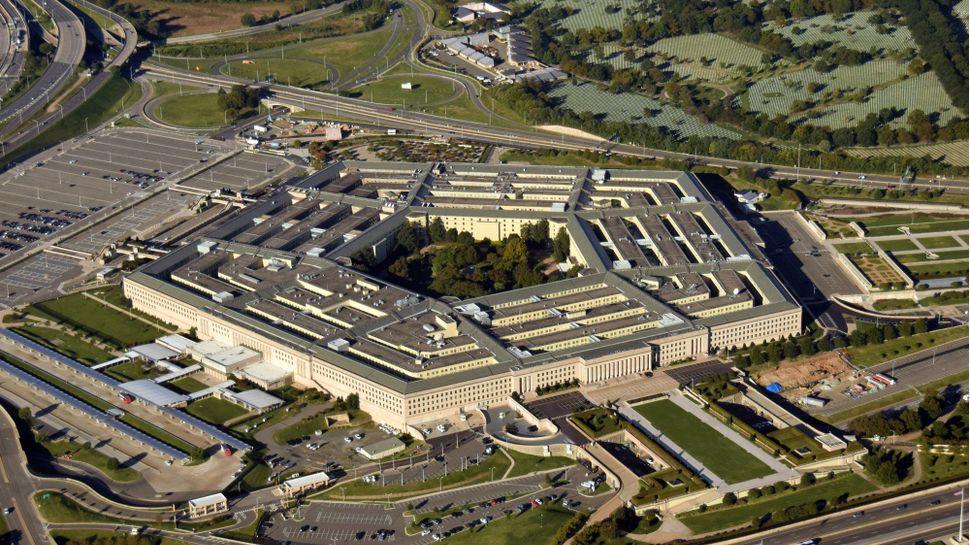
- Pentagon science adviser Joseph Jewell speaks out on the war in Ukraine and the integration of AI and biotechnology marks a paradigm shift in how the US military thinks about future conflicts
- The Marines recently 3D printed shaped charges from coconut husks and coffee grounds that beat conventional explosives by 25%
- The Defense Department is also trying to accelerate innovation in the industry by offering up to 500 patents to private companies for free.
The Russo-Ukrainian War has had a devastating impact on those directly affected by the conflict, which is now entering its fifth year as the two sides trade blows in what many see as a prolonged standoff resulting in part from a shortage of manpower.
However, the conflict, or rather its asymmetrical nature, has many modern militaries keeping a close eye on events that show what the future of combat between two warring nations might look like.
U.S. Assistant Secretary of War for Science and Technology Joseph S. Jewell recently spoke at length at the Defense One technology summit about how information from conflict and advances in AI and biotechnology continue to shape modern warfare as we know it.

Breakthroughs in manufacturing, AI integration and a focus on biotechnology
The summit saw the deputy secretary address a host of topics, including an overview of how the Russian-Ukrainian conflict is playing out and what lessons the United States should learn from the ongoing war.
He discussed how Ukraine had essentially wanted its entire drone industry to exist because it was key to its survival, while keeping the Russian navy at bay for most of the conflict, even though it did not have a similarly equipped sea fighting force.
The phrase that came from him, however, might relate to the Marines’ reuse of coffee grounds and coconut husks to make 3D printed form fillers for the battlefield.
This highlights a significant shift that has already taken place on the modern battlefield, as researchers and military personnel increasingly push the boundaries to find the best way to resupply and rearm while making advances in lethality in some cases.
The coffee grounds and coconut husks were just the tip of the iceberg; the Marines also tried the same thing with plastic water bottles and even crushed volcanic rock, noting that the latter worked best.
Jewell said the field-made charge reduced operational focus time by 99 percent because it could be produced on-site from materials “endemic to the Indo-Pacific,” and more interestingly, it had “25 percent better focusing characteristics than conventionally manufactured high explosives.”
The underlying story is not only about how field-made loads save enormous amounts of time and money on future battlefields, but also about how military doctrine has changed to include “patent holidays” to increase access to technology and foster innovation, for better or worse, at least on the Pentagon’s side in recent years.
While he focused on Ukraine, similar lessons were learned by the United States in its recurring conflict with Iran, where the latter resorted to low-cost but high-volume weapons, including drones and missiles, to effectively force a standoff in the Strait of Hormuz, indicating that a paradigm shift is needed where the side with the best, or most “effective,” weapons does not necessarily win.

Follow TechRadar on Google News And add us as your favorite source to get our news, reviews and expert opinions in your feeds.


