
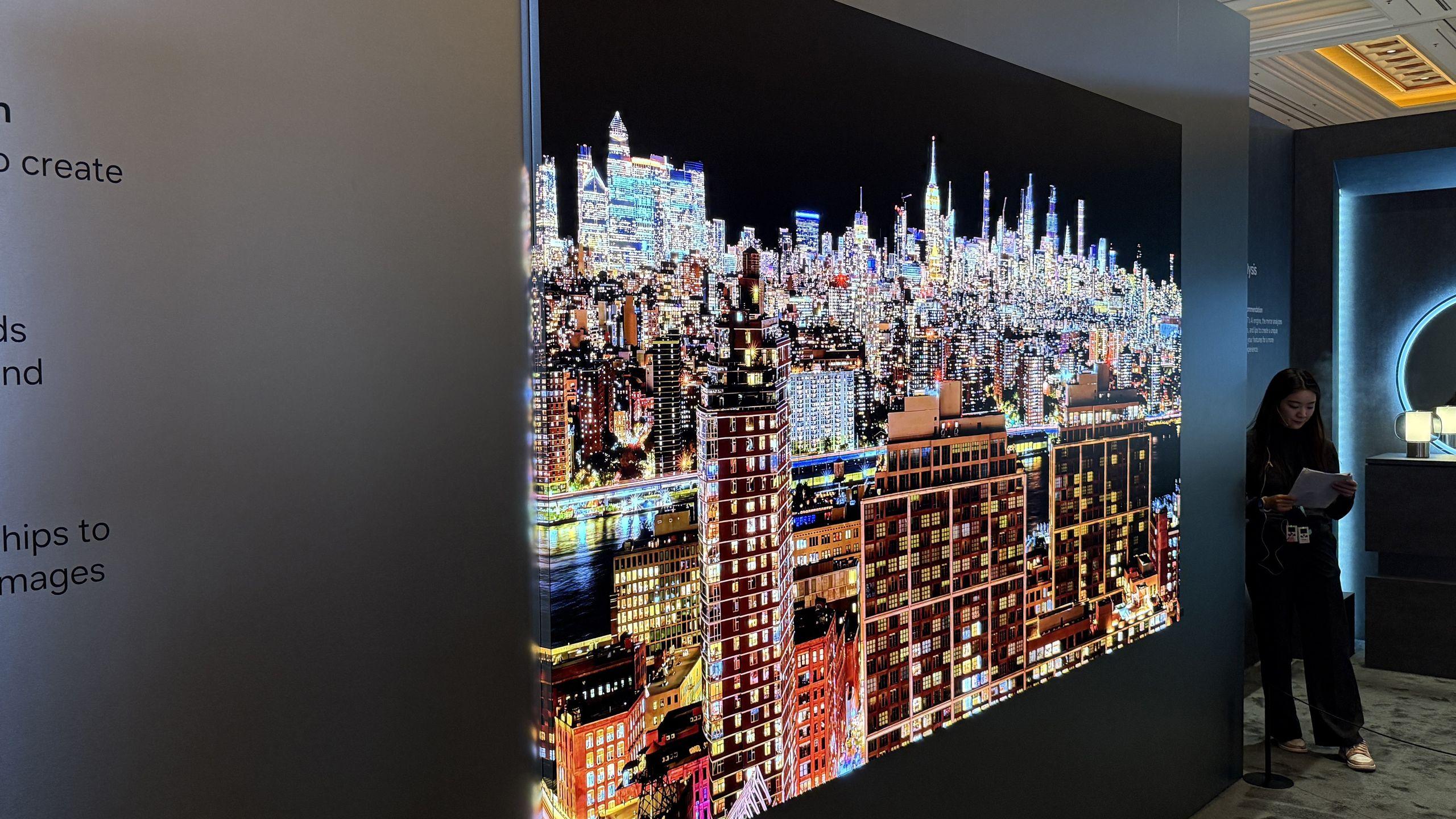
- Samsung reportedly reduces production of micro-LED TVs
- High production costs are an ongoing problem
- Facing the double whammy of stagnant demand and rising costs
This time last year, we were told that micro-LED would make OLED and LCD redundant as they became affordable in smaller panels – but it seems Samsung hasn’t gotten the memo. A new report says it is scaling back its micro-LED business.
The report, authored by ETNews via DigiTimes, states that Samsung is scaling back its manufacturing of micro-LED TVs after previously making the TVs to order. This production has apparently stopped, with Samsung also outsourcing processes such as panel manufacturing and gluing, which were previously done in-house.
It’s all about the numbers, it seems, and Samsung is struggling to sell such expensive TVs. According to ETNews’ sources, Samsung only sells “around 100 units” per year.

Is Samsung getting out of the micro-LED TV business?
Not yet: the report states that Samsung is still handling the final assembly of the product. But industry watchers say it’s a first step toward what could be a retreat from that part of the TV market unless things improve.
Last year, Samsung introduced its Micro RGB LED TVs, which are a sort of halfway house between micro-LED and mini-LED. These don’t have the same self-emitting pixels as a true micro-LED TV, but use the same type of RGB LED to replace a monochrome mini-LED backlight behind an LCD panel.
The idea is to provide visual enhancements without the very high cost of true micro-LED and, according to DigiTimes, has been seen as a way to raise awareness and adoption of micro-LED technology.
Demand for new televisions has been relatively low in recent years and production costs are increasing, making television a difficult business to operate in today. Samsung also faces very intense competition from competitors such as TCL and Hisense, as well as the upcoming Bravia TV partnership between TCL and Sony.
So what does this mean for micro-LED TVs? It helps that TCL and Hisense are also getting aggressive in this area. Samsung and Hisense both showed off some very impressive TVs as recently as CES 2026, when Samsung showed off a 140-inch smart TV whose frame was also a screen, while Hisense showed off micro-LED technology with extra colors built into each pixel (to be released later in 2026).
But the technology is still far from being commercialized on a large scale; Earlier this year, we reported that TV companies were telling us it will take five years to go mainstream, and even that’s among the more optimistic options.
If you’re in the mood for a new TV, the technology in today’s best TVs won’t be usurped any time soon, except by a more refined version of the same technology. Micro-LED TVs may still be having their moment, but if Samsung isn’t holding its breath internally, you probably shouldn’t either.
Are you planning to buy a new television?
Try our TV size and model finder! You tell it how far you’re sitting from your TV, we’ll tell you what size to buy based on viewing angle advice from picture quality experts, and we’ll recommend our three best TVs of that size at different prices.

Follow TechRadar on Google News And add us as your favorite source to get our news, reviews and expert opinions in your feeds.


