
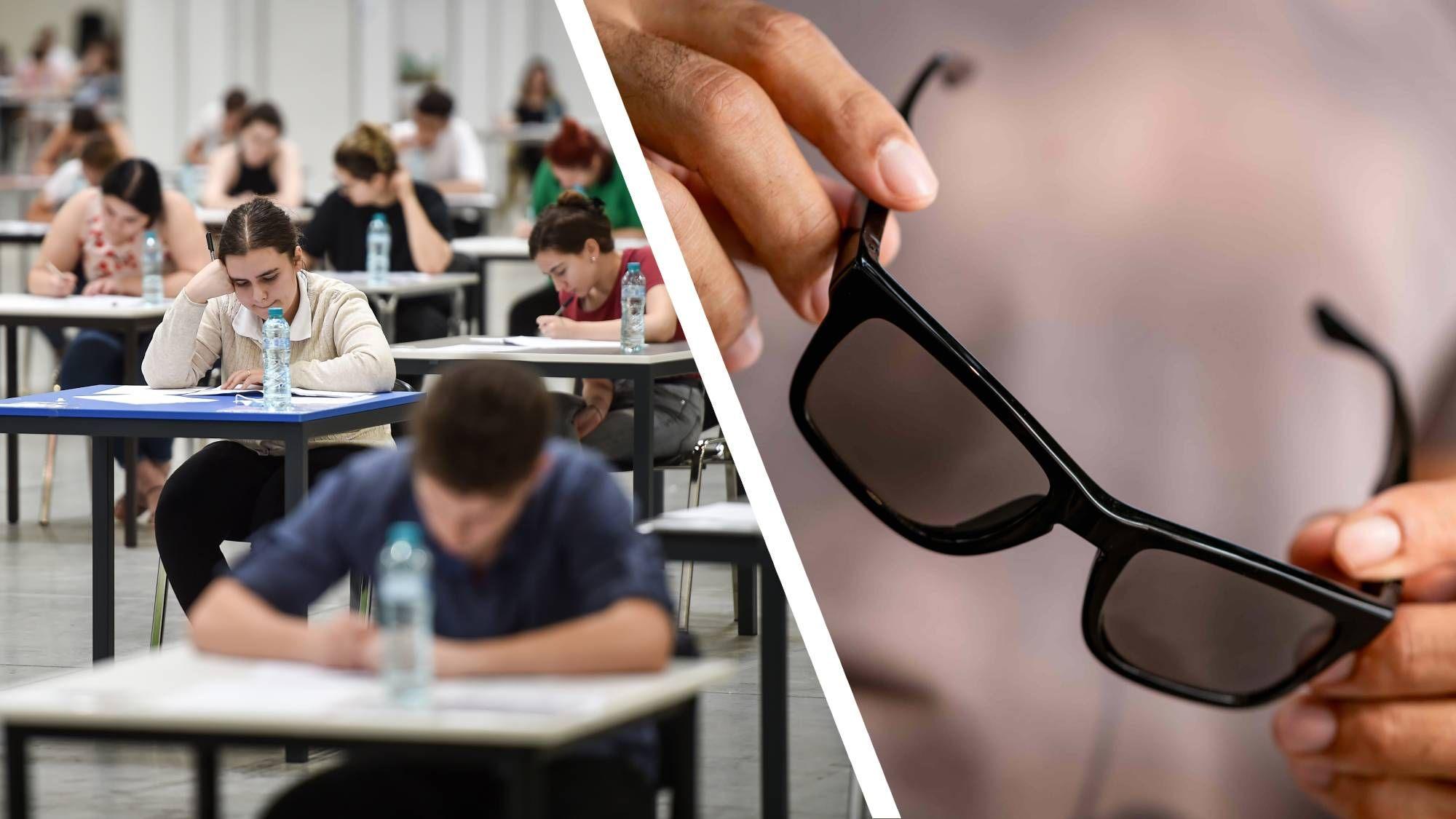
- UK government says exam cheating using smart devices a big threat
- Students could soon resort to smart glasses and invisible headphones
- This is not just a concern in the UK, but cases are increasing in China and the US.
The UK government has warned that the rise of smart technology could give students more reasons to cheat in GCSE, AS and A-level exams, and that this threat must not be overlooked.
Sir Ian Bauckham, chief regulator of Ofqual (Office for Qualifications and Examinations Regulation), warns that devices such as hidden headphones and smart glasses advertised to students via social media could overtake phones as a means of cheating. Speaking to BBC Radio 4, he shared the following:
“We hear stories – and I hear this directly in schools as I travel the country – about devices like so-called hidden headphones, smart glasses that secretly stream text inside the glasses that only the wearer can see, and even ballpoint pens. [pens] which are equipped with seemingly invisible mini video screens. » “In the worst case scenario, they could lose all their baccalaureate grades. It changes the future,” he added.

Additionally, Bauckham has appeared on Ofqual’s Can I just qualify this? podcast show, where he revealed that the government had to “act very quickly, because technology is changing quickly”. He also said that exam invigilators are now trained to detect this type of smart technology.
Since 2018, the increase in smartphone-related exam malpractices has increased significantly, and last summer alone, 2,225 cases of using smartphones and other devices to cheat were reported, leading to the disqualification of 545 students.
According to Bauckham, access to cell phones in schools has opened the door to a new wave of technology for cheating on exams, and based on his recent warnings, it will become even more difficult to control. That said, this threat is not limited to British schools.
Global education systems must act
This is not the first time that smart devices have appeared in the exam room.
In places like China, smart glasses are becoming a popular way to cheat on college exams, allowing students to scan questions, the device of which will then display the answers on the lens, Rest of World reported a few weeks ago.
Students are even going so far as to rent their smart glasses to other students to use during exams for between $6 and $12 a day, the outlet said, and second-hand online marketplaces like Xianyu are becoming an increasingly popular place for students to get their devices.
Using smart glasses to cheat on exams is one thing, but AI is another growing problem in educational spaces. Not only is AI becoming increasingly difficult to detect in written courses in the UK, but it is also prevalent in universities across the Atlantic.
In May, Ars Technica reported that 30% of Princeton students were cheating on exams using AI, but this can be attributed to the institution’s outdated exam codes. The outlet explained that because professors don’t proctor exams (the university still adheres to a 19th-century regulation), it’s easier for students to cheat, and the number of cases is only increasing.
According to a survey of Princeton seniors in 2025, nearly 30% of students admitted to cheating on an exam. However, despite this figure, almost 45% of students said they had witnessed cheating among classmates but decided not to report it, although students must agree to report any misconduct.
However, the university will soon take action on this matter. A few weeks ago, Princeton faculty members voted in a referendum to enshrine mandatory proctoring for in-person exams into Princeton law, and it was a landslide victory with only one member opposing it. The regulation will come into force on July 1.

Follow TechRadar on Google News And add us as your favorite source to get our news, reviews and expert opinions in your feeds. Make sure to click the Follow button!
And of course you can too follow TechRadar on TikTok for news, reviews, unboxings in video form and receive regular updates from us on WhatsApp Also.


