
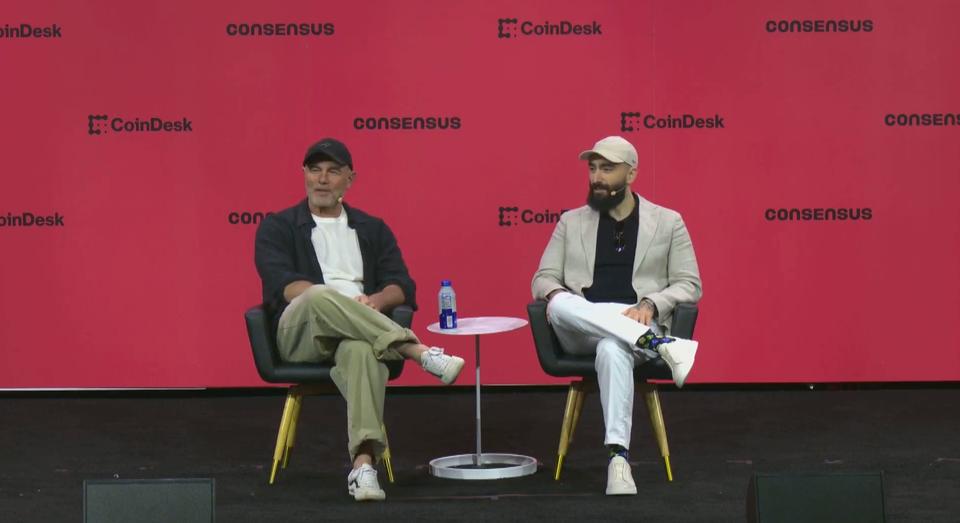
Zcash will roll out quantum recoverable wallets within a month and reach full post-quantum status within 12 to 18 months, Zcash Open Development Lab founder and CEO Josh Swihart told an audience at Consensus Miami on Thursday in a session moderated by Mert Mumtaz, founder of infrastructure company Solana Helius.
A separate scaling track targets MasterCard and Visa-scale throughput over a similar horizon.
The roadmap arrived during a ZEC rally that sent the token surging more than 110% in the past 30 days as prominent crypto fund Multicoin Capital disclosed a large investment in ZEC and privacy talk gained traction among investors, according to sentiment data.
Swihart’s argument was that Bitcoin is no longer the cypherpunk-quality money it was intended to be. The asset functions as an ETF wrapper and store of value, he said, but as a peer-to-peer private payments system, “it’s fundamentally broken.”
Visible balances on a transparent ledger allow governments to capture what they can see, he argued, the same critique of wealth visibility that Multicoin’s Tushar Jain relied on this week when disclosing the fund’s purchases.
User-side traction is coming through Electric Coin Company’s mobile wallet after an October integration with Near Intents opened up cross-chain trading of assets such as BTC, SOL and USDC directly in a protected ZEC.
Near Intents allows a user to indicate what they want, such as turning USDC into ZEC, while specialized routers manage the multi-step exchanges on different blockchains in the background.
About $600 million to $700 million has flowed this route since launch, primarily to and from USD and USDC, Swihart said. Near’s broader intent-based system has processed nearly $800 million in volume in the last 30 days alone, according to data from the Near protocol, with Ethereum, Solana and Zcash dominating the on-chain side.
A separate proposal to reduce Zcash’s target block time from 75 seconds to 25 seconds is under active discussion on the project’s community forum, with bridges to Solana and Hyperliquid already live, Mumtaz noted.
Token holder voting through Zashi is also planned, Swihart said, less as formal governance and more as an opinion layer feeding into the project’s existing rough consensus model.
For traders, the cleanest short-term test is whether Quantum Recovery actually ships in the month Swihart says. Fail-safe is the protected pool, which now represents around 30% of the ZEC in circulation, an all-time high. If it continues to grow alongside prices, the rally is supported by adoption rather than speculation.


