
.
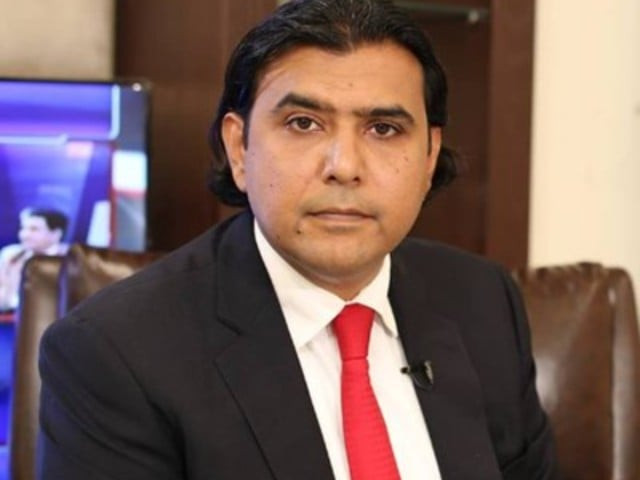
Former senator Mustafa Nawaz Khokhar. Courtesy:
ISLAMABAD:
Leaders of the opposition Tehreek Tahafuz Ayeen-e-Pakistan (TTAP) alliance have slammed the government’s national security strategy, foreign policy posture and economic management.
The opposition alliance warned that growing poverty, governance failures and misguided diplomatic choices were pushing the country towards irreversible damage.
Addressing a press conference in Islamabad, central leader Mustafa Nawaz Khokhar, along with PTI’s Taimur Khan Jhagra and other representatives of the alliance, expressed concern over the recent major terrorist incidents in Islamabad and Balochistan.
Khokhar said the state must move forward “with clarity” in the fight against terrorism and stressed that the Tehreek-e-Taliban Pakistan (TTP) and the Balochistan Liberation Army (BLA) were terrorist organizations which needed to be dealt with strictly.
However, he argued that the government appeared to be failing in its response.
Khokhar also raised alarm over developments in the region, saying “clouds of war were hovering over a neighboring country” and alleging that the United States had deployed two naval fleets to Iran.
He said the scale of the military move was the largest since 2003, before the attack on Iraq, and questioned why no serious discussions were taking place in Pakistan about the potential implications of regime change efforts in Iran for the country.
Criticizing Pakistan’s participation in US President Donald Trump’s Peace Council, Khokhar referred to a Guardian report, which claimed that the gathering brought together representatives of dictators and monarchies, while countries like China and Britain stayed away.
He said Pakistan participated without taking anyone into confidence and alleged that soon after its participation, news of a deal regarding the Roosevelt Hotel was announced. He questioned on what basis the Roosevelt Hotel had been divested and demanded that the government disclose the terms and conditions of such a deal.
On domestic governance, Khokhar said the current system had failed to serve the people, citing deteriorating law and order. He warned that if the current trajectory continued, it would shake the foundations of the country and called for transparent elections.
He also demanded the release of political prisoners, provision of best medical facilities to PTI founder Imran Khan, and accountability of a “Form 47 government” that did not consider itself responsible.
On the economy, Taimur Khan Jhagra rejected the government’s claims of recovery, saying that despite controlled media narratives depicting improvement, official data showed the opposite, even after four years.
Referring to the recently released National Poverty Report by Federal Minister Ahsan Iqbal, Jhagra said 29 percent of Pakistan’s population was now living below the poverty line, compared to 22 percent in 2018.
He lamented that over the past 11 years, poverty has increased significantly and inequality between rich and poor has widened to its highest level since 1998.
Jhagra said poverty had increased by 41 percent in Punjab, 33 percent in Sindh, 23 percent in Khyber Pakhtunkhwa and 12 percent in Balochistan, noting that two traditionally poorer provinces had performed better than the richer ones.
He said overall household income had declined by 10 percent since 2015, adding that under the official poverty line, a person earning more than 282 rupees per day was not considered poor.
“What can you buy with Rs282? » he asked, estimating that around 130 million Pakistanis lived below the poverty line. He added that poverty levels in Bangladesh and India were half those in Pakistan.
He further claimed that foreign direct investment had declined by 42%, arguing that the government lacked a coherent economic model and was instead focusing on minerals, cryptocurrencies and corporate agriculture, with no results.
He also cited the government’s unemployment report, saying it reflected the highest unemployment rate in 21 years.
Jhagra criticized the Punjab government’s purchase of an aircraft worth Rs 10 billion, comparing it to planes owned by the likes of Elon Musk and Jeff Bezos or heads of wealthy states, and said it could not realistically be intended for Air Punjab’s commercial operations.
He argued that even though Pakistan International Airlines was sold for Rs10 billion, no justification was provided for purchasing the aircraft at a time when people were struggling to afford basic necessities.
He also alleged that special privileges were given to the Inspector General and Chief Secretary of Punjab, including permission to keep vehicles of 1,800 cc, 2,800 cc and 4,500 cc, with the monthly expenditure on petrol reaching Rs 700,000.
He questioned whether Pakistan had one of the highest per capita GDPs in the world to justify such advantages.
The former provincial finance minister also cited an Al Jazeera report alleging that the CCD had committed 900 extrajudicial killings, and said 40 billion rupees had been spent on a digital firewall project which was later abandoned.
He stressed that Palestine had no representation in the Peace Council and warned that if a pro-Israeli government emerged in Iran, Israel’s strategic presence could expand closer to Pakistan’s borders.
TTAP spokesperson Akhunzada Hussain Yousafzai also expressed concern over the health of PTI founder Imran Khan, saying a second injection was scheduled for February 24 or 25.
He demanded that the incarcerated leader be taken to Shifa International Hospital for treatment in the presence of his family and Dr Asim.
Yousafzai further condemned the recent tensions between Pakistan and Afghanistan and urged that differences with neighboring countries be resolved through dialogue.


