
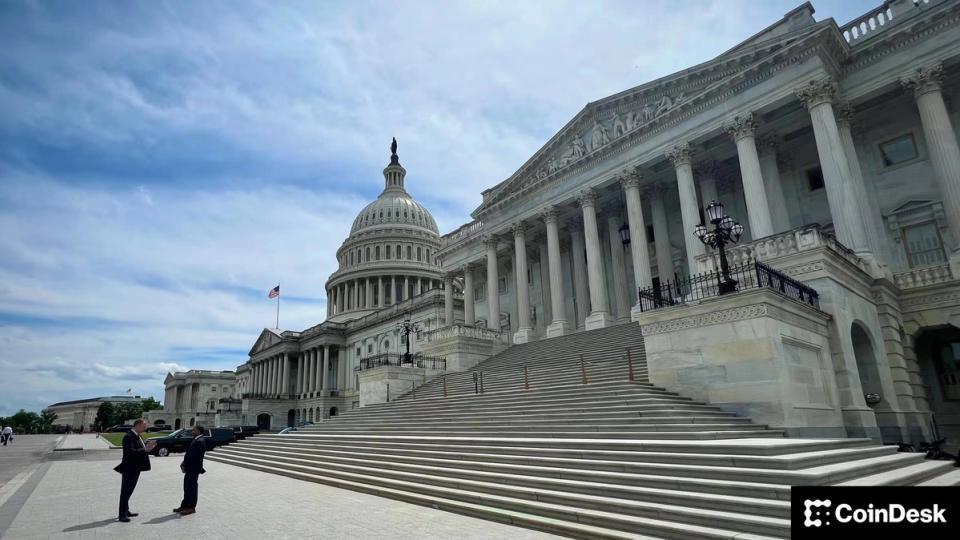
An initiative to ban the U.S. Federal Reserve from issuing a government-run digital dollar was approved in a mostly bipartisan 89-10 vote in the Senate, but it is contained in a housing bill that could face headwinds in the U.S. House of Representatives.
The effort to ban a central bank digital currency (CBDC) has long been a favorite of Republican lawmakers, although the U.S. government never got beyond research into establishing a government token that could compete with privately issued stablecoins (and compete with other CBDCs being pursued by China and other jurisdictions). The 21st Century ROAD to Housing Act included an unrelated section that banned U.S. CBDCs until at least the end of 2030.
The article, in the final pages of the 302-page bill advanced by the Senate, states that the Fed “may not issue or create a central bank digital currency or any digital asset substantially similar to a central bank digital currency, directly or indirectly through a financial institution or other intermediary.”
“Financial privacy is a cornerstone of American freedom, and any decision to authorize a central bank digital currency must remain within the purview of Congress and the American people,” Digital Chamber CEO Cody Carbone said in a statement. “We appreciate the Senate emphasizing that digital innovation in the United States must be led by the private sector while protecting individual freedom.”
But House lawmakers have signaled they could force a second effort on the Senate version, which could disrupt the bill’s progress. The Senate bill requires large investors in the U.S. real estate sector, such as private equity firms, to sharply limit the number of homes they can own.
President Donald Trump himself has favored the concept — one of the few areas of overlap with Democratic lawmakers.
Although Trump has supported efforts to make housing more widely available in the United States, he recently said he would not sign any bills until Congress sends him legislation that would require voters to produce identification and proof of citizenship before voting in this year’s congressional midterm elections. The path forward for this initiative is unclear, adding to uncertainty for those advocating the housing bill and other efforts, including the crypto market structure bill known as the Digital Asset Market Clarity Act.


