
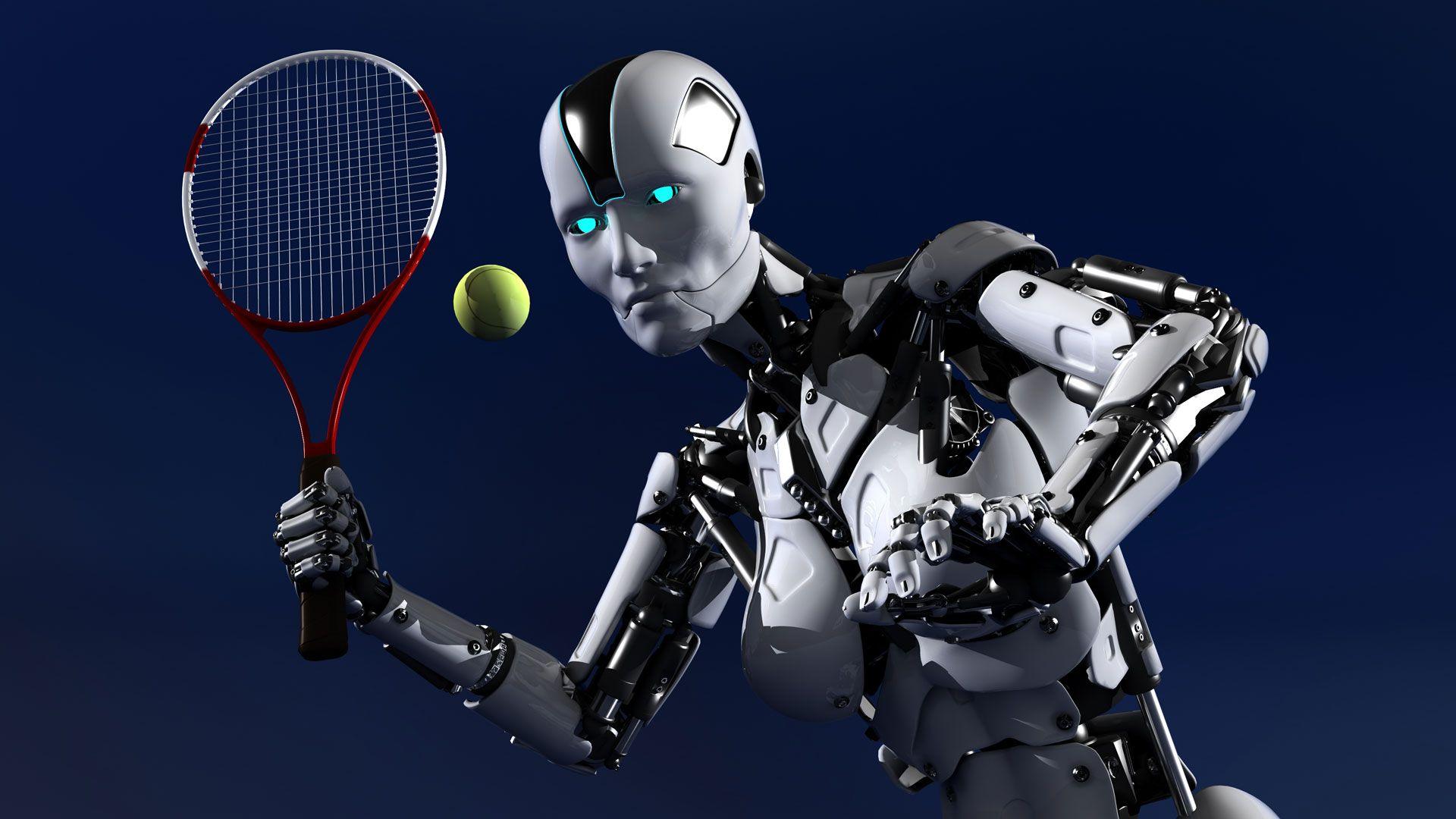
- Galbot found an unprecedented way, called LATENT, to train robots
- Using ‘skill fragments’, they trained a Unitree G1 robot to play tennis
- The robot developed relatively robust tennis skills based on this minimal training
Future Wimbledons, in which a fifth-ranked tennis pro faces a sixth-ranked robot, have just moved from the realm of science fiction to something that seems inevitable.
How did we get here? Blame it on Galbot and his LATENT innovation.
The best robot athletes, those who can karate, box, or parkour, are either remotely controlled or highly scripted to perform a set of pre-programmed actions. Competing in real time against, for example, a human opponent is considered difficult, if not impossible. But now Galbot and a team of researchers have done it: They used minimal learning to teach a Unitree robot how to play tennis against an unpredictable human opponent.
Article continues below
They call it “Learning Humanoid Tennis Athletic Skills from Imperfect Human Movement Data” (which they jury-rigged in LATENT). Instead of highly detailed robotic training that captures the full range of human tennis skills, LATENT focuses on “fragments of movement that capture the primitive skills used when playing tennis.”
Look on it
Somehow, researchers figured out how to use these elements of tennis skills, or what they call “imperfect” data, to provide enough information about “primitive human skills in tennis scenarios.”
The robot, a Unitree G1, can then rely on these fragments to make sense of the live game and, according to the researchers, “consistently hit incoming balls across a wide range of conditions and return them to target locations.”
That’s a dry way of describing what’s happening in the surprising demo video in which a Unitree G1 robot skillfully plays – and sometimes outperforms – a human tennis player.
As they note in the research summary: “Our method achieves surprising results in the real world and can stably support multi-shot rallies with human players.”
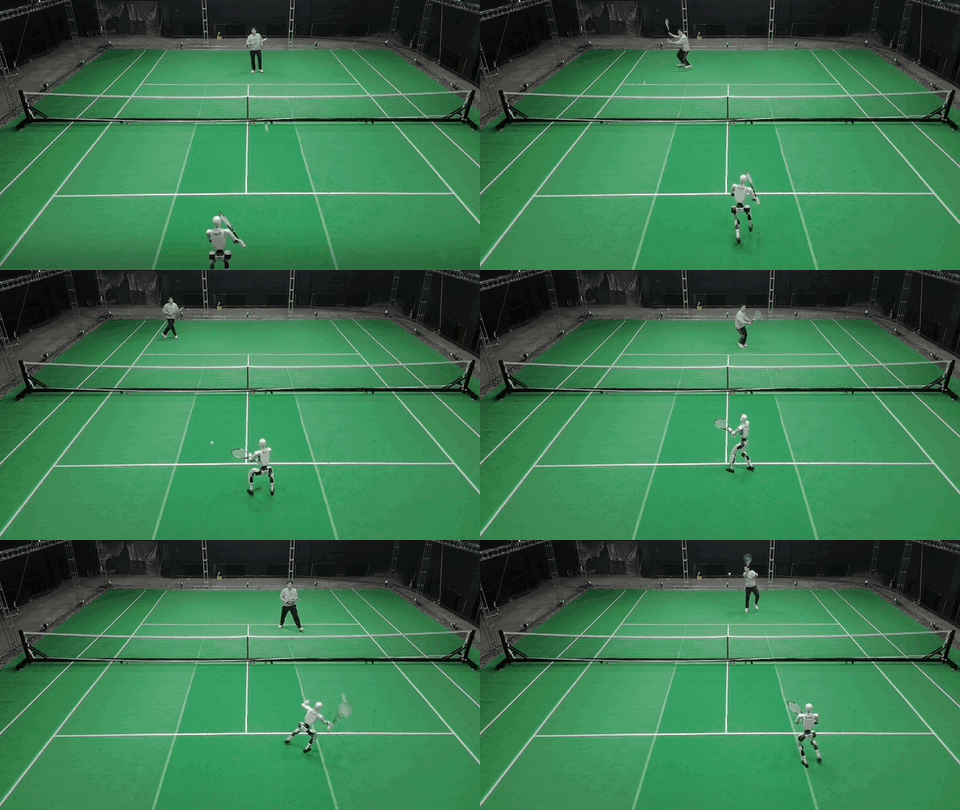
Now you can watch the video and assume that the human is going smoothly with the robot or even aiming the ball in the robot’s direction. It’s possible, but how can we explain that the robot systematically returns the volley and deliberately places the ball where the human player is not? This seems downright competitive.
Obviously the robot could be better. He often seems on the verge of disaster, and that racket seems fused to his right arm. I don’t even know how the robot would react to a shot flying over its metal and plastic head.
Despite this, from the ball return to a nasty backhand, to the quick footwork and even the ability to stay on its feet, the Galbot/LATENT robot puts on quite a spectacle.
It’s not too hard to imagine where this is going. Give it time, and a robot like this could play exhibition matches against someone like Rafael Nadal.
Follow TechRadar on Google News And add us as your favorite source to get our news, reviews and expert opinions in your feeds. Make sure to click the Follow button!
And of course you can also follow TechRadar on YouTube And TikTok for news, reviews, unboxings in video form and receive regular updates from us on WhatsApp Also.

The best business laptops for every budget


