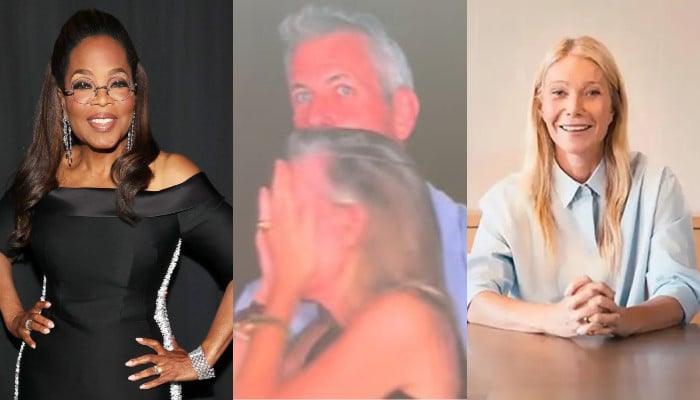
Kristin Cabot, the woman at the center of last summer’s Coldplay Kiss Cam controversy, opened up to Oprah Winfrey about the fallout that followed, taking direct aim at Gwyneth Paltrow and Ryan Reynolds over the ad that she said added fuel to the fire at the worst possible time.
During a session for Oprah’s Podcast posted on Tuesday, March 17, Cabot looked back on the incident in which she and her then-boss Andy Byron, both married at the time, were filmed together at a concert outside Boston last July.
When the two men tried to hide, Coldplay’s Chris Martin jokingly singled them out, and the footage went viral almost instantly.
Byron was the CEO of the technology company Astronomer; Cabot was the head of human relations.
Both resigned shortly afterward.
Shortly after the incident, Astronomer published a tongue-in-cheek ad featuring Paltrow, Martin’s ex-wife, produced by Ryan Reynolds’ company Maximum Effort.
Cabot has not forgiven either of them for this.
“It was really disappointing to me,” she told Winfrey.
“I felt like Gwyneth, someone whose company [Goop] is founded or framed around the upliftment of women and their well-being…it doesn’t need money.
She was also singled out over Reynolds.
“I don’t want to let Ryan Reynolds off the hook either. He produced the commercial, he created it and his wife [Blake Lively] “I just went through something very similar in the last year,” she said, referring to the legal dispute between her and Lively. It ends with us director Justin Baldoni.
Winfrey revealed during the interview that she spoke with Paltrow, who said she only participated because she was told that Cabot and Byron had approved the ad.
This was not the case.
What followed was, by her account, a sustained wave of harassment and death threats that fell disproportionately on her rather than Byron, who has since been seen publicly with his wife and has never spoken about the incident.
Cabot was particularly stung by the narrative that she had used her sexuality to advance her career.
“I was never involved with anyone I worked with before this story broke,” she said. “I’ve been working since I was 13.”
Winfrey, to her credit, admitted that she was among those who rushed to judgment. “I was like everyone else,” she said.
“I judged that you made a mistake and dated your boss.”
At the end of the interview, she offered something closer to an apology on behalf of the audience. “I feel bad for us as human beings if this is what we did to you.” Cabot simply replied, “Thank you.”
Her broader message was one that she felt clearly needed to be heard.
“I am heartbroken by the way women treat other women,” she said. “I just think we’re holding back. Let’s stop.”