
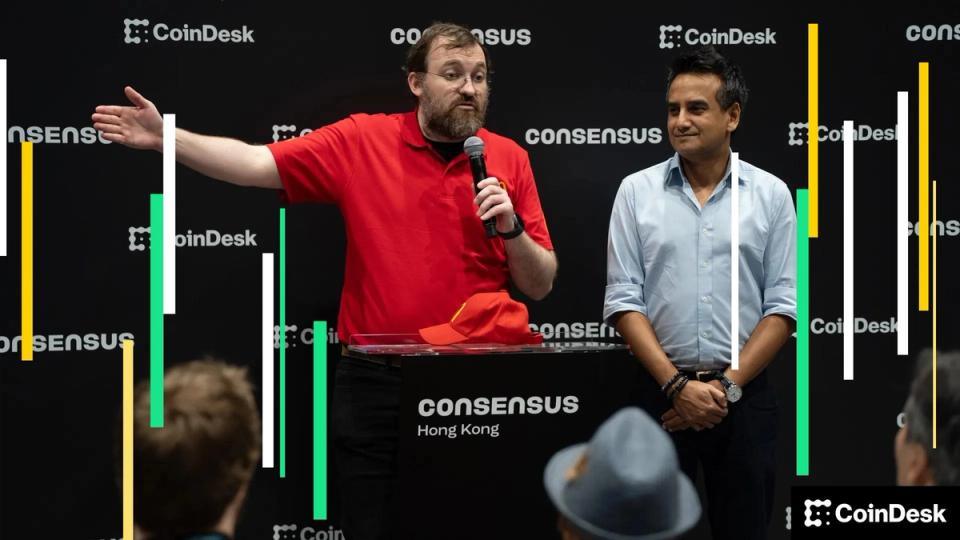
Midnight, a blockchain backed by Charles Hoskinson, went live on Monday, designed to fix what the Cardano founder described as crypto’s key design flaws by making it private, simple and safer to use.
Crypto has spent more than a decade solving the wrong problems and failing to penetrate the real-world economy, Hoskinson said in an interview.
“The question I have been asking myself for eight years is: why didn’t the revolution take place?”
For Hoskinson, crypto’s biggest obstacle is not regulation or volatility, but ease of use. Today’s systems require users to navigate complex portfolios, accept the risk of irreversible loss and operate in a completely transparent environment where every transaction can be tracked, he said.
His answer is Midnight, a project in which he has invested around $200 million. Rather than competing with networks like Bitcoin or Ethereum, it sits alongside them, allowing users and businesses to use crypto without exposing sensitive data or dealing with technical complexity, Hoskinson said.
“The last mile is simplicity, confidentiality and rules,” he said. Without this, blockchain will remain excluded from the real world.
In practice, this means that crypto behaves more like an application. Users should not have to manage private keys or risk losing access permanently, and transactions do not have to automatically expose balances or activities. In some cases, users may not even realize they are using blockchain.
“You shouldn’t need to understand how cryptography works to use it,” Hoskinson said. “You tap, you authenticate, and it works.”
Deployment will occur in phases, starting with infrastructure and extending to applications and governance. Early uses include confidential financial products, identity systems and enterprise data feeds.
The user experience is “broken”
“Today’s consumer experience is broken,” Hoskinson said. “People are afraid of losing their money. »
Midnight attempts to solve this problem by introducing what Hoskinson described as “selective disclosure,” a system that allows users to prove specific things about themselves without revealing underlying personal data. Instead of transmitting sensitive information, users can answer simple yes or no questions and verify them cryptographically.
The network marks what Hoskinson calls the fourth generation of blockchain, designed to support large-scale real-world applications. He said Midnight introduces a hybrid model in which some data remains private while other elements can still be verified if necessary.
The concept builds on industry efforts to balance privacy and transparency, a tradeoff that has historically limited enterprise adoption of public blockchains.
“Public blockchains expose too much, private systems sacrifice verifiability,” Hoskinson said. “Midnight removes that tradeoff.”
This change could enable new types of applications. Businesses could run payroll systems on the blockchain without revealing employee salaries, while financial institutions could move funds without exposing positions. Identity systems could verify users without storing personal data.
This vision is beginning to see the light of day. London-based Monument Bank recently announced plans to tokenize up to 250 million pounds ($330 million) of retail deposits at midnight, one of the first examples of a regulated bank placing customer funds on a public blockchain while maintaining regulatory protections.
Largest airdrop by number of users
Unlike many crypto projects, Midnight was not built on venture capital. Hoskinson funded it himself and widely distributed tokens through what the project describes as one of the industry’s largest airdrops, reaching 37 million wallets across eight blockchains when they went live in December.
The market reacted quickly. Midnight briefly surpassed a $1 billion valuation and currently stands at around $776.2 million, with the token trading at nearly $0.047, according to CoinDesk data. It is built on Cardano, which ranks 12th in the world with a market capitalization of around $9.2 billion.
Midnight also sports a dual-token model designed to separate speculation from network usage. A tradable token, NIGHT, is used for governance and security, while a second token, DUST, is used for transaction fees.
The approach is broadly similar to dual-token systems used by networks such as NEO, VeChain, and Ontology, although Midnight places more emphasis on user privacy and abstraction. This distinction allows transaction costs to remain more predictable and opens the door to requests to cover fees on behalf of users.
For Hoskinson, the goal is not just adoption, but invisibility, a future in which users interact with blockchain without thinking about it.
“If we can do this, this is what will finally allow crypto to work at scale,” he said.
UPDATE (March 30, 4:40 p.m. UTC): Adds more commentary and information from an interview with Charles Hoskinson.


