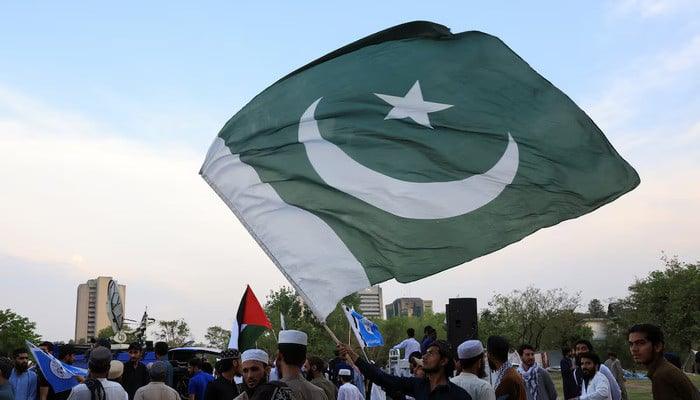
The world at large has been surprised by Islamabad’s remarkable role as the sole interlocutor between Washington and Tehran in a conflict that has also engulfed Gulf countries hosting US bases, including Qatar, Bahrain, Jordan, the United Arab Emirates (UAE) and Kuwait – and to a lesser extent Oman and Saudi Arabia.
Given the consistently inconsistent attitude of US President Trump – he has regularly made contradictory and inflammatory statements regarding the end of hostilities – Pakistan’s role has been exceptional in every way and has been the only glimmer of hope in bringing the warring parties to the negotiating table. Although Islamabad’s tireless efforts have been appreciated by many, its dominant position has damaged New Delhi’s self-aggrandizement and hubris.
For India, this is a difficult pill to swallow in the face of Pakistan’s ever-increasing importance on the world stage. The effect was so severe that it made the Indian Foreign Minister mad enough to utter extremely indecent and undiplomatic words, a shockingly derogatory term against Pakistan in fact. Pakistan’s Foreign Ministry rightly responded that the use of such terms “betrays a deeper sense of frustration” and that “when arguments run thin, invective seems to fill the void.”
Whatever perception India or other stakeholders may have of Pakistan’s global importance, the fact is that despite the country’s internal weaknesses, no one can deny Pakistan’s enduring geopolitical importance in the international order.
It is worth quoting Hathaway, who asserts in his study entitled “The Paradox of Leverage: Pakistan and the United States” that “by most standard measures of power – population size, GDP, size and capacity of its army, possession of nuclear weapons – Pakistan ranks at the top of the world rankings.”
The author claims that “as Bruce Riedel noted, if Pakistan were placed anywhere else on the map – for example, in Latin America or Africa – it would become one of the dominant countries in its region” (p. 117). Thus, for many deans, the importance of Pakistan in the regional and global geopolitical and security architecture cannot be overlooked.
During the two decades of the “war on terror” and intensifying internal conflict in Pakistan, the country has witnessed unprecedented unrest and destruction perpetrated by foreign proxies and terrorists. During these years, Pakistan began to be described as the most dangerous place in the world. In addition to negative media coverage, various publications also presented the country in a way that led readers to believe that the situation there is precarious and that the state and society are on the brink of inevitable collapse.
For example, one commentator begins his article in The Atlantic with this description: “with its ‘Islamic’ nuclear bomb, its borders infested by the Taliban and Al-Qaeda, its dysfunctional cities and its ethnic groups in conflict, Pakistan may well be the most dangerous country in the world, a nuclear Yugoslavia in the making” (Kaplan, 2009). Manuscripts printed at this time contained titles such as “Descent into Chaos” (Rashid, 2008), “Armageddon in Islamabad” (Riedel, 2009), “Pakistan: A Harsh Country” (Lieven, 2011), “The Collapse of Pakistan” (Bano, 2012), “Avoiding Armageddon” (Riedel, 2013), “Pakistan”. Paradox” (Jaffrelot, 2015), “Pakistan at the crossroads” (Jaffrelot, 2016), “Pakistan under siege” (Afzal, 2018) and “Pakistan: courting the abyss” (Devasher, 2018). These are just a few headlines, among countless media reports describing or predicting an imminent end for Pakistan.
There is no doubt that since the birth of this country and throughout its turbulent history, the overall economic and political landscape has not improved much more than the nation deserves, and the country is grappling with multiple crises today as it was in the late 1990s. Pakistan, since its independence in 1947, faced tumultuous years in the first four decades, including wars with India and the breakup of East Pakistan to become Bangladesh in 1971. There is no doubt that the country still faces a poly-crisis comprising domestic political, economic, governance and security challenges. Yet, as in the past, it is the country’s resilience that allows Pakistan to emerge from the abyss.
First of all, one of the country’s main strengths is Pakistan’s geographical location: a country located at the intersection of three regions including Central Asia, the Middle East and South Asia. Due to its unique geographical location, Pakistan has remained an active player in global politics and played a dynamic role in landmark historical events such as the Cold War and the ‘War on Terrorism’.
For a long time, Pakistan has held a key position on the world stage due to its geography, demographics and other factors (such as its strong military capabilities). For example, according to Chase, Hill and Kennedy (1999), among the world’s 140 developing states, there is a group of nine core states whose status and fate are likely to significantly affect regional and even global security. Pakistan is one of these nine states (the other states are Indonesia, India, Turkey, Egypt, South Africa, Brazil, Algeria and Mexico).
Pakistan and these countries have mostly been considered “pivot states” (Chase, Hill and Kennedy, 1996, p33) – countries whose fate determines the survival and success of the surrounding region and, ultimately, the stability of the international system. Thus, “because of its position wedged between Afghanistan and India, as well as its coastline on the Indian Ocean, Pakistan will continue to be a pivotal state for both the United States and China” (Sweijs, Oosterveld, Knowles and Schellekens, 2014, p38).
While many political experts have indicated that Pakistan’s importance will diminish significantly to the United States, particularly after its troops leave Afghanistan in August 2021, the reality is that Pakistan appears to be a pivotal state in the current crisis. The country has become the only actor to play a mediating role between the United States and Iran, with both countries having confidence in Islamabad.
In recent years, Pakistan’s foreign policy has been remarkably successful in maintaining strong ties with Beijing and Washington as well as Tehran and important Gulf capitals. Islamabad’s engagement with Beijing is built on decades of mutual trust, and the relationship is multifaceted, encompassing extensive defense collaboration, joint military projects, intelligence cooperation, expanded trade and economic cooperation under CPEC, and Pakistan’s status as the largest recipient of Chinese arms exports since 2008. All of this makes Islamabad-Beijing ties quite unique without a formal defense treaty or military alliance.
At the same time, in the context of Trump’s “America First” policy, there is no doubt that since his second arrival at the Oval Office, Pakistan has successfully engaged his administration. Islamabad has been remarkably successful in earning Trump’s praise at several forums and on several occasions. Much remains to be done about how well Pakistan will be able to negotiate a long-awaited and much-needed peace deal, depending on the behavior of Iran and the United States.
The very fact that Tehran and Washington have placed their trust in Islamabad and Pakistan has maintained a channel of communication between the two countries is testimony to Pakistan’s extraordinary diplomatic efforts and extraordinary stature.
The writer teaches at the University of Malakand. He can be reached at: [email protected]
Disclaimer: The views expressed in this article are those of the author and do not necessarily reflect the editorial policies of PK Press Club.tv.
Originally published in The News