
Pakistan tried until the last moment to create space for meaningful engagement, but the situation deteriorated further
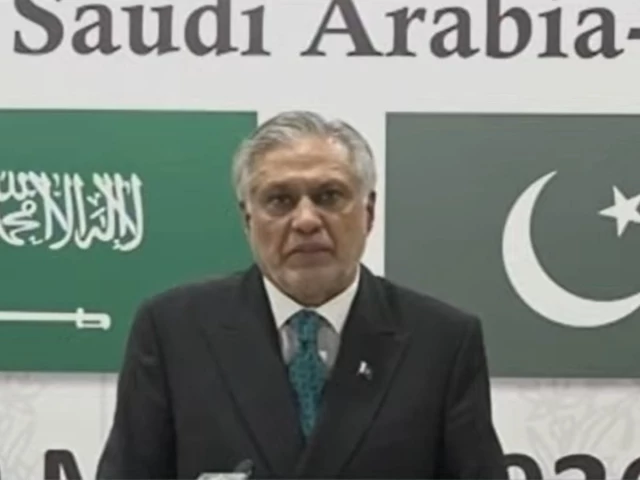
Foreign Minister Ishaq Dar. SCREENSHOT
Deputy Prime Minister and Foreign Minister Ishaq Dar on Tuesday expressed concern over the recent escalation in the Middle East, saying Pakistan’s efforts to create space for dialogue had been undermined by new developments, including Israeli strikes on Iran.
Briefing the Senate about Pakistan’s diplomatic efforts, the Foreign Minister said Islamabad had remained actively engaged since the beginning of the crisis and had made last-ditch efforts to facilitate meaningful engagement between the parties.
“Pakistan tried until the last moment to create space for a pause and meaningful engagement between the parties,” he said, regretting that the situation had deteriorated again.
Read: Top military brass condemns Iranian attacks on Saudi facilities, calling them ‘unnecessary escalation’ spoiling mediation efforts
FM Dar noted that the UN Secretary General had called him to appreciate Pakistan’s role and offered support for its peace efforts. He added, however, that recent developments had derailed progress and intensified tensions.
Lamenting the recent rise in regional tensions despite Pakistan’s proactive diplomatic efforts, he attributed the escalation to Israeli strikes on Iran, which he said had once again complicated the situation.
“A major Israeli attack on Iran and the subsequent strike on Jubail in Saudi Arabia have made the situation more dangerous and sensitive,” the deputy prime minister said, referring to the latest developments, which saw attacks by Israel on Iranian oil facilities and by Iran on Saudi Arabia’s petrochemical infrastructure.
He warned that a prolonged conflict could have serious consequences globally as well as in Pakistan, particularly in terms of rising oil prices and economic pressures. Despite this, he expressed hope that continued diplomatic efforts would ultimately lead to a “worthy resolution to the conflict.”
Briefing lawmakers on earlier developments, FM Dar said he was in Medina after attending an OIC meeting when the first attack on Iran took place. He said he immediately asked the Foreign Ministry to issue a strong condemnation and contacted the Iranian Foreign Minister to express Pakistan’s support and solidarity.
Read also: Iran cancels negotiations with the United States, informed Pakistan (New York Times)
He said Pakistan has since maintained close contact with its regional and global partners, including China, Japan, the United Kingdom and Canada, as well as several European states, to encourage restraint and prevent further escalation.
Describing Pakistan’s role, FM Dar said Pakistan had acted as a facilitator and mediator, moving cautiously to avoid undermining sensitive diplomatic efforts.
“Prime Minister Shehbaz Sharif, Field Marshal Syed Asim Munir and the Ministry of Foreign Affairs remain fully engaged in the diplomatic process,” he added.
The foreign minister also referred to a meeting hosted by Saudi Arabia in Riyadh on March 19, attended by representatives of 12 countries, during which Pakistan contributed to a balanced joint statement including condemnation of Israel.
He further highlighted a quadrilateral meeting involving Saudi Arabia, Egypt, Turkey and Pakistan, aimed at promoting peace in the region. A follow-up meeting, initially scheduled for Istanbul, was then held in Islamabad on March 29, during which foreign ministers discussed ways to advance diplomatic efforts.
Dar said Pakistan had also engaged China at a high level, noting that during his March 31 visit, the two sides discussed a five-point peace initiative for the region.
On domestic politics, he said Prime Minister Shehbaz Sharif remained open to dialogue with the opposition and would convey his message to the Prime Minister.
Talks with the foreign ministers of Bahrain and Norway on the regional situation
Furthermore, Dar held telephone conversations with the foreign ministers of Bahrain and Norway.
During their meeting with Bahraini Foreign Minister Abdullatif bin Rashid Al Zayani, the two sides discussed the regional situation, ongoing deliberations at the United Nations Security Council and the importance of maintaining peace and stability. They agreed to stay in touch
Deputy Prime Minister/Foreign Minister, Senator Muhammad Ishaq Dar @MIshaqDar50 had a telephone conversation this evening with the Minister of Foreign Affairs of Bahrain, Dr Abdullatif bin Rashid Al Zayani.
The two leaders expressed concern over recent developments in the region, discussed… pic.twitter.com/koL7zc1HlO
— Ministry of Foreign Affairs – Pakistan (@ForeignOfficePk) April 7, 2026
In a separate conversation with Norwegian Foreign Minister Espen Barth Eide, the two leaders reviewed recent developments in the Middle East. The Norwegian minister appreciated Pakistan’s efforts at dialogue and diplomacy, and both sides agreed to remain in close contact.
Deputy Prime Minister/Foreign Minister Senator Mohammad Ishaq Dar @MIshaqDar50 had a telephone conversation this evening with the Norwegian Minister of Foreign Affairs, Espen Barth Eide @EspenBarthEide.
They discussed recent developments in the Middle East and the wider region. THE… pic.twitter.com/MMgMQZUPq2
— Ministry of Foreign Affairs – Pakistan (@ForeignOfficePk) April 7, 2026


