
- Record-breaking RC car reached 234.7 mph in February thanks to drone-powered drivetrain
- Project 250 redesign focuses on narrowing chassis and increasing electric power
- Engineer aims to surpass current world record with upgraded motors and higher voltage
Stephen Wallis, a part-time motorcycle engineer from Rugby, UK, set a Guinness World Record in February 2026 when his remote-controlled car reached 234.7 mph, and he is already working on a redesigned machine designed to push beyond 250 mph.
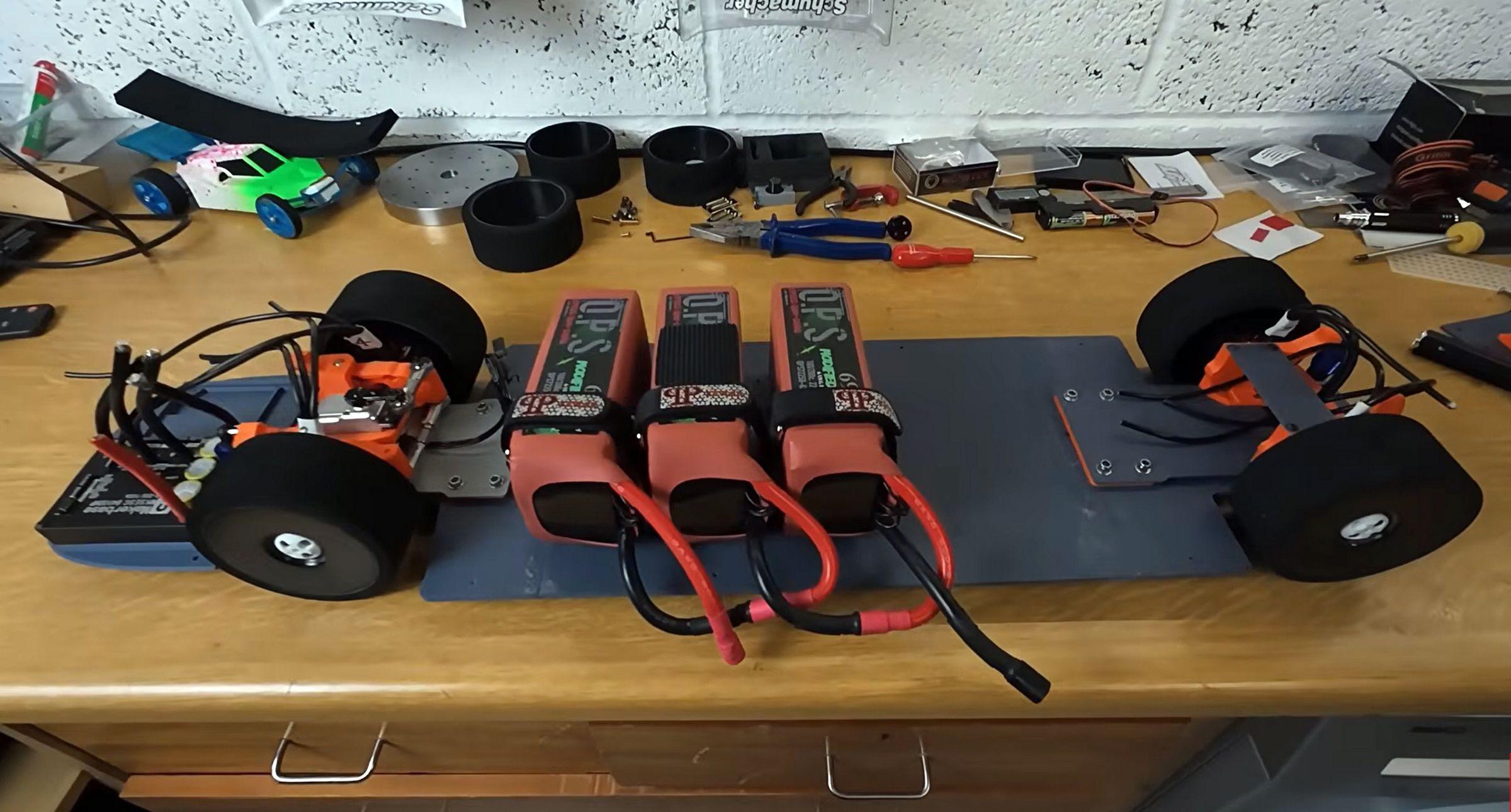
The record-breaking vehicle, known as The Beast, measures 3ft 2in long, or around 1m, and took more than a year to design and build using 3D printed components and high-powered drone motors.
Four motors are bolted directly to the wheels, which connect directly to the chassis to reduce mechanical losses and maintain simplicity of the transmission at very high speeds.
Article continues below
A slightly ridiculous goal: 250mph
Wallis said his interest in radio-controlled cars came from his childhood. “It goes back to when I was eight years old and got my first radio-controlled car,” Wallis told the BBC.
The Beast’s recorded final speed put the small vehicle ahead of the top speed of a production McLaren F1, providing a useful comparison with a well-known performance benchmark.
Reaching 240 mph was a private goal during the initial project, although his attention has now shifted to an even more demanding goal.
In a recent video update, Wallis explained how he was rebuilding the car to reach higher speeds and break his own record.
“Today I’m going to show you exactly how I scale my RC car to break my Guinness World Record of 234.7 mph and chase a somewhat ridiculous goal: 250,” he said.
The new version, known as Project 250, retains the general layout of The Beast while introducing several mechanical and electrical improvements.
Reducing overall width is a key change, as a narrower body reduces drag and helps maintain stability at higher speeds.
Larger 5215 motors are also being introduced to provide more torque and manage heat more efficiently under heavy loads. Battery capacity also increases, with an additional two-cell unit raising the system to a 20-cell, 84V configuration.
“I have ideas: make it narrower, install bigger motors and run more voltage. Now I have to turn these ideas into a real design,” he said.
Changes to the wheel mounting and steering components were required to achieve a narrower layout, including revised adapters that place the wheel closer to the engine face.
Weight balance is another challenge, as replacing batteries and electronics can change the car’s behavior at extreme speeds.
“I need to design a car that can go 250 mph and build it in time for the next speedrunning season, which starts in 8 weeks,” he said.
Prototype parts have already been produced via 3D printing to confirm fit and layout and the final components will be made from aluminum and carbon fiber.
Follow TechRadar on Google News And add us as your favorite source to get our news, reviews and expert opinions in your feeds.


