- Stocks are mostly in the red after another day of decline on Wall Street.
- Hong Kong, Sydney, Singapore, Seoul and Wellington fell.
- The analyst says markets are more cautious amid optimism about the deal.
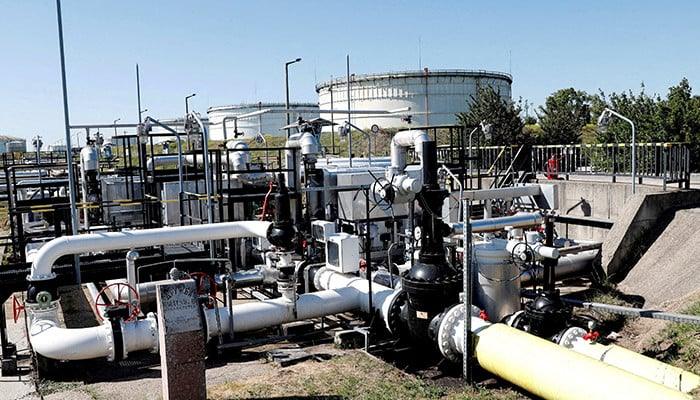
Oil prices fell on Wednesday, as did stocks, as investors weighed the chances of peace talks between the United States and Iran after Donald Trump extended his ceasefire at the eleventh hour but maintained his blockade of the Strait of Hormuz.
As the two-week truce nears its final hours, the US president said he would extend the deadline indefinitely following a request from Pakistan’s mediator and stressed the need to give Tehran’s “fractured” leaders time to formulate a proposal.
He had previously indicated that he would not extend the truce and warned that he would resume bombing on the Islamic republic once the truce expired.
“I have… ordered our military to continue the blockade and in all other respects remain ready and able, and I will therefore extend the ceasefire until their (Iranian) proposal is submitted,” Trump wrote on social media.
The decision not to carry out further attacks on Iran but to continue blocking its ships from passing through the strait – a major sticking point between the rivals – has left traders awaiting clearer developments.
The fate of peace talks in Islamabad hung in the balance, with a White House official saying Vice President JD Vance would not visit on Tuesday as planned, pending the submission of an Iranian proposal.
Tehran has said it will not attend the event due to what it sees as unreasonable US demands, while the semi-official Tasnim news agency said there was no chance of officials attending at the moment.
Christopher Wong, a strategist at Oversea-Chinese Banking Corp, said: “The US and Iran may be trying to build leverage and play the game of whoever blinks first.
“Whatever the outcome, the suspense in the meantime could lead to a reduction in risk appetite, but if either side blinks, risk indicators could recover.”
The two major oil contracts fell slightly, although they fluctuated in early trading, after rising about 3% on Tuesday.
Stocks were mostly in the red after another day of decline on Wall Street.
Hong Kong, Sydney, Singapore, Seoul and Wellington fell, while Shanghai remained stable. Tokyo, Taipei and Wellington increased.
Traders struggled to find direction this week after Tehran announced Friday that it would allow ships to pass through the Strait of Hormuz — which it had effectively closed since the war began on Feb. 28 — before withdrawing a day later, citing the U.S. blockade and the seizure of a ship.
Donald Trump also accused Tehran of violating the ceasefire by harassing ships in the waterway, a transit route for about a fifth of the world’s oil.
These developments sent the price of crude oscillating, although it remained below $100, while stock markets were less volatile due to lingering optimism that the two sides will eventually reach a deal to end the seven-week conflict that has battered the global economy.
“With market optimism that the war will soon end and the Strait of Hormuz will open, markets are now more cautious,” wrote Fawad Razaqzada, an analyst at FOREX.com.
“If there is no deal, I imagine oil prices could rise back above $100, which would likely put pressure on stocks.”
Investors are also watching the senators’ confirmation hearing of Kevin Warsh, Trump’s pick to replace Federal Reserve boss Jerome Powell, whose term ends next month.
Warsh insisted he would not be controlled by the president as he answered questions about his assets and the independence of the central bank during his confirmation hearing.
The former Fed governor stressed his commitment to “ensuring that the conduct of monetary policy remains strictly independent,” adding that he would “absolutely not” be Trump’s puppet.
Trump, since returning to office last year, has harshly criticized Powell for not cutting rates more aggressively, and told CNBC on Tuesday that he would be disappointed if the new president didn’t quickly reduce borrowing costs.