
Recent advances in quantum computing have reignited a long-standing concern about bitcoin. .
According to Bitcoin analyst James Check, a sufficiently powerful and cryptographically relevant quantum computer could, in theory, break Bitcoin’s elliptic curve signatures, exposing coins with visible public keys, especially early Satoshi-era wallets.
Quantum doomsayers warn that this would trigger an influx of supply and cause a market collapse. The numbers suggest otherwise.
The threat of quantum computing is not in question.
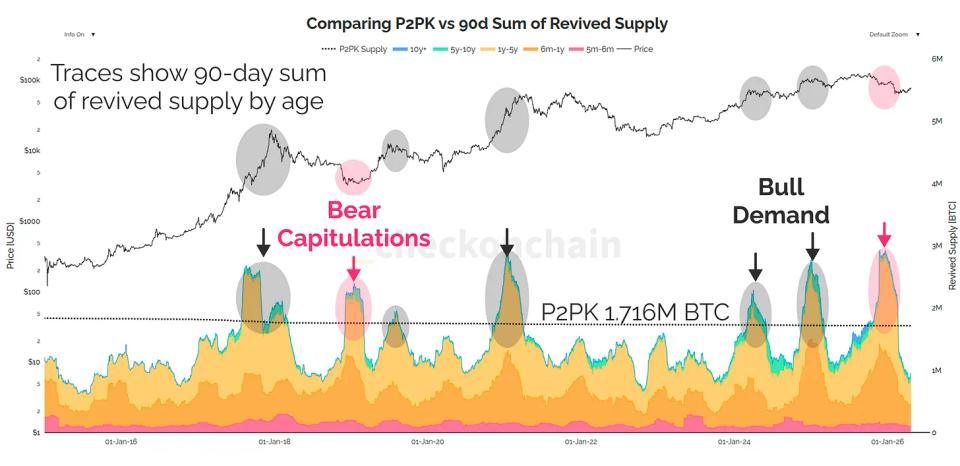
Around 1.7 million BTC is in Satoshi-era addresses which could be vulnerable in such a scenario. That’s about $145 billion at current prices in potential selling pressure, which sounds catastrophic, but is actually manageable.
During bull markets, long-term holders (investors who have held Bitcoin for at least 155 days) regularly distribute between 10,000 and 30,000 BTC per day. At this rate, the entire Satoshi era supply equates to about two to three months of typical profit-taking. During the last bear market, over 2.3 million BTC changed hands in a single quarter, surpassing the total quantum “target” without a systemic collapse.

Additionally, monthly exchange inflows are approaching 850,000 BTC. Derivatives markets cycle through notional volumes equivalent to the entire Satoshi reserve every few days. What seems massive in isolation becomes relatively ordinary when compared to Bitcoin’s existing liquidity and turnover.
A sudden, concentrated release would still be important. This would likely lead to volatility and could trigger a prolonged downturn, according to Check. But even this scenario assumes economically irrational behavior. Any actor able to access such a treasure would have an incentive to distribute gradually, probably by hedging via derivatives to minimize slippage and maximize returns.
Bitcoin markets regularly absorb supply of the same order of magnitude as coins in the P2PK era. The time frame is measured in months, not years.
The real problem is not mechanical sales pressure. This is governance. The biggest problem is potentially freezing the Satoshi coins, via BIP-361, and then letting everything play out as it should.


