
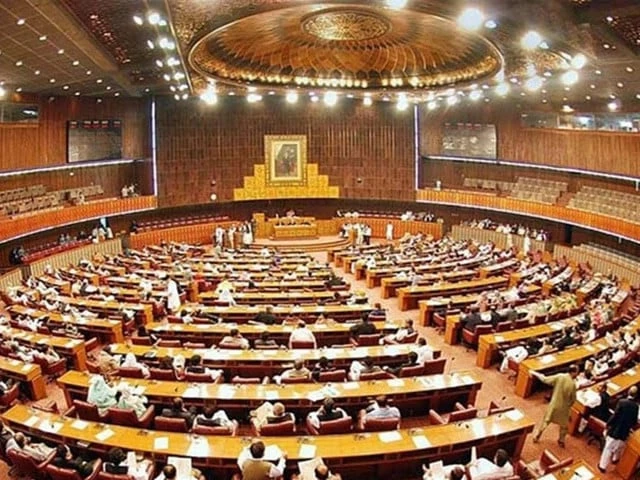
Sindh records a rape conviction rate of 22%, followed by Balochistan at 12% and KP at 6%.
ISLAMABAD:
The Senate Standing Committee on Human Rights on Thursday examined conviction rates in human rights cases in the provinces, as well as broader concerns about the delivery of justice, security and gender inequality in Pakistan.
The meeting, chaired by Senator Samina Zehri, was briefed by the Human Rights Secretary on conviction rates, which stood at 4% in 2020, with officials claiming improvement since 2021.
Provincial data on rape conviction rates was also presented. Sindh recorded a conviction rate of 22 percent, followed by Balochistan at 12 percent, Islamabad at 6.9 percent and Khyber-Pakhtunkhwa at 6 percent. Punjab recorded the lowest conviction rate at 4 percent.
During the session, lawmakers expressed concerns about delays in justice and the inefficiency of the justice system. Senator Khalil Tahir questioned why justice cannot be delivered within 24 hours if crimes can be committed within that time frame.
“Humanity is dead. We only discuss these issues in living rooms and then move on,” the commission chairman said. “In Punjab, a bus conductor raped a woman.”
Senator Abid Sher Ali said if a citizen hits a Pera Force official, the anti-terrorism law is invoked.
“But when a common man is targeted with 160 bullets, Section 7ATA is not applied,” he added.
The Attorney General of Punjab said that in cases involving attacks on uniformed forces, such provisions are applied.
Abid Sher Ali said that in such cases even courts commit injustice by granting bail. “In our society, the powerful class gets what they want.”
The committee also discussed the Jaranwala incident, in which attacks on the Christian community and churches were condemned.
Lawmakers stressed the need to combat religious extremism. Abid Sher Ali called for an end to “religious extremism”.
Senator Aimal Wali Khan criticized the police system, saying law enforcement had become deeply compromised.
“If a judge is corrupt, accepts bribes or money, we will speak against him. If someone has the courage, he can summon us for contempt of court,” he said.
The human rights secretary briefed the committee on gender disparity indicators, saying that Pakistan ranked last among 148 countries in the global gender gap index. He noted that 26 million children are still out of school in the country, with particularly high dropout rates among girls after primary education.
He further highlighted that women’s participation in the civil service has improved to around 44 to 47 percent in recent years, while representation in the federal cabinet remains limited. He also highlighted regulatory measures requiring at least one woman to serve on company boards.


