As the standoff over Iran’s frozen war threatens to lead to global economic collapse, Washington and Tehran have scaled back efforts to reach a comprehensive peace deal and are now seeking a limited pact, postponing the toughest issues.
Here’s what we know about the proposals under discussion and how they leave major unresolved disputes behind the war:
At what stage are the discussions?
Sources in both camps said the latest peace efforts were aimed at reaching a temporary memorandum of understanding to end the war and allow movement through the Strait of Hormuz while they discussed a more comprehensive deal.
The proposed framework would take place in three stages: officially ending the war, resolving the crisis in the Strait of Hormuz and launching a 30-day window for negotiations on a broader agreement.
Gaps remain even on this limited front, sources said. Any broader agreement would have to address intractable disputes such as Iran’s nuclear program. The last agreement on the nuclear program – reached in 2015 and broken by Trump in 2018 – required years of negotiations between large teams of technical experts.
What are the main issues?
Ending the war – US President Donald Trump said the war was about to end and could be resolved if Iran agreed to terms. Iran does not trust him or Israeli Prime Minister Benjamin Netanyahu. Iranian officials emphasize their decision to attack in February despite a ceasefire that ended a previous U.S.-Israeli air campaign last year. Both conflicts were sparked unexpectedly during efforts to resolve issues diplomatically. Tehran also cites Israeli attacks during ceasefires in Gaza and Lebanon as reasons to believe a truce will not hold and wants some form of external guarantee.
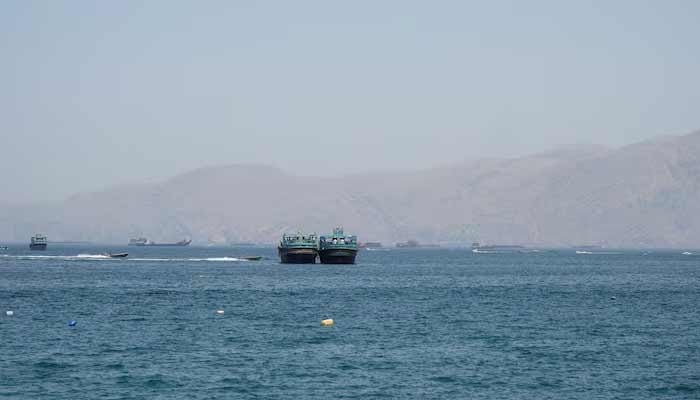
Blockade of Hormuz and the Gulf – Tehran considers its control of Hormuz and Washington considers its blockade of Iranian ports its main leverage. But both sides are suffering. Iran’s economy is facing catastrophe, and its inability to export oil could lead to a shortage of storage and a reduction in production. Meanwhile, its blockade of the Strait of Hormuz is causing a global energy crisis months before the US midterm elections. Iran wants formal recognition of its control over Hormuz, although this would encounter international opposition.
Nuclear: The United States believes Iran wants to build a nuclear bomb. Iran has always denied this, saying its atomic program had only a peaceful purpose. The focus is on the enrichment of uranium, which produces fuel for nuclear power but can also be used as material for a nuclear warhead. Washington wants Iran to give up its right to enrichment for 20 years and hand over its stocks of highly enriched uranium. Iran wants its right to enrichment to be recognized. An agreement could eventually be possible, providing for a one-year moratorium on the enrichment and export of its highly enriched uranium, but this still seems far away.
Ballistic Missile — One of the main U.S. demands before the war was that Iran limit the range of its ballistic missiles so that they could not reach Israel. He says his war has succeeded in degrading Iran’s missile stockpiles, and it’s unclear whether he will continue to insist on range limits as part of a broader peace deal. Iran has consistently refused to discuss its ballistic missiles, saying its right to conventional weapons cannot be discussed and that it still has a large arsenal.
Sanctions and frozen assets — Iran’s economy has been affected by sanctions for years, contributing to January’s national unrest. Tehran absolutely needs them to be lifted and frozen assets released. They also want reparations for war damages, although it appears there is no chance the U.S. will agree to that, and it is unclear whether it will stick to that demand as a condition of a deal.
Iran has already said Israel’s war against its ally Hezbollah in Lebanon must be included in any peace deal. Israel rejects this proposal, and it is unclear to what extent Iran will insist on this point in future negotiations.
What do Israel and the Gulf countries think?
Israel is not directly involved in the peace effort. Netanyahu was eager to continue the war and would also be reluctant to subject Israel’s campaign against Hezbollah to an agreement between Washington and Tehran.
Gulf states are not united on how to end the conflict. They have been targeted by Iran throughout the war and would oppose a deal that would allow Iran to continue hitting them or impose controls on the Strait of Hormuz – their main trade route. They might fear that Washington will not prioritize their needs and concerns during negotiations.
Could European states, China or Russia play a role?
European states have their own sanctions against Iran and would like to be involved in any agreement to resolve the nuclear conflict. France, Germany and Britain were closely involved in the 2015 deal. European countries offered to play a role in ensuring free passage to Hormuz after the war.
China is a major buyer of Gulf oil transiting the Strait of Hormuz. Iran may hope that it would agree to act as guarantor in any deal, but it has given no indication that it would want such a role.
Iran may also want Russia to play a role in any possible deal over its stockpile of highly enriched uranium, although it is unclear whether Washington would accept that.