It’s official, the NCAA men’s and women’s basketball tournaments are expanding to 76 teams after committee members voted to approve the transition Thursday.
In what has become a central point of contention among college basketball fans over the past year, the increase in the number of teams that will now make up the playoffs has moved through several tiers to its final stages.
“The expanded bracket format will not impact the regular season or conference championship schedule,” the NCAA said in its statement.
CLICK HERE FOR MORE SPORTS COVERAGE ON PK Press Club
Some may be wondering why the NCAA is expanding the tournament again. Look no further than the revenue this will generate for schools across the country, which is tied to television contracts and sponsorship funds too lucrative to turn down.
In the new agreement, the NCAA will also open new avenues for sponsorship deals, which will include beer, wine, spirits and hard seltzer, to name a few options.
UConn head coach Dan Hurley reacts after a call during the second half of an NCAA tournament semifinal game against Illinois during the Final Four in Indianapolis on April 4, 2026. (Abbie Parr/AP)
Over the past month, NCAA officials have met with media partners to determine what adding 12 teams would create in terms of revenue for the postseason tournament, with Turner Sports benefiting from additional games to broadcast each year.
In the new format, the First Four will now advance to the opening round, which will feature 24 teams competing in 12 matches over a two-day period. Half of these matchups will take place in Dayton, Ohio, while the remaining matches will be decided at a location to be announced.
COACHES PUSH FOR 24-TEAM CFP, AS COLLEGE FOOTBALL HEADS TOWARDS PARTICIPATION TROPHY TERRITORY
How will additional teams be configured on the tournament field?
For these first round matches, there will be a mix of at-large teams and automatic qualifiers. Every 16-seed team and half of the 15-seed teams will compete in these games, while the rest will be set up as 11s, 12s, and potentially a 13-seed team.
The winning teams will play in the first round of the NCAA tournament on Thursday and Friday.
Yes, I know it’s a bit much, which has turned into a very entertaining conversation on social media and within athletic departments in recent weeks.
UConn’s Dan Hurley warns NCAA Tournament expansion could make regular season ‘meaningless’
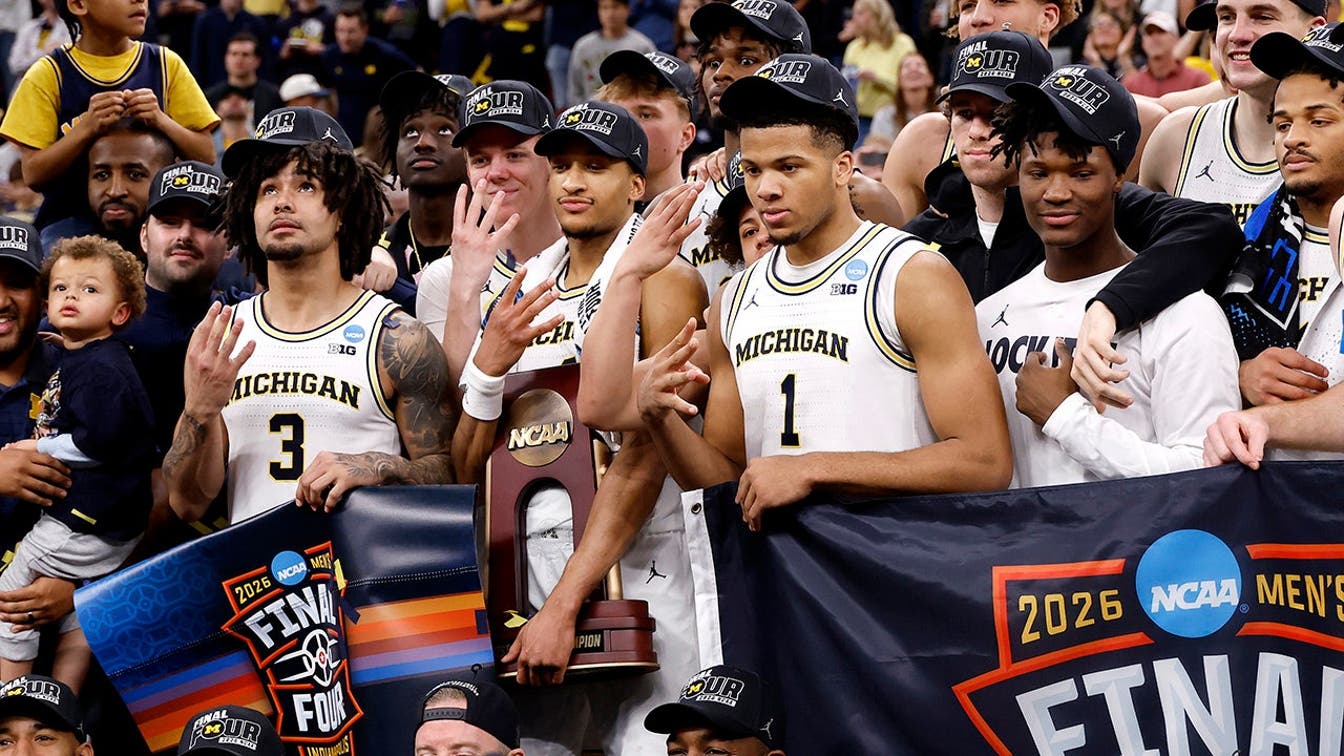
Nimari Burnett of the Michigan Wolverines poses with teammates holding the Midwest Regional Championship trophy after defeating the Tennessee Volunteers in the Elite Eight of the 2026 NCAA men’s basketball tournament at the United Center in Chicago, Illinois on March 29, 2026. (Michael Reaves/Getty Images)
It’s hard not to argue that college basketball isn’t just about handing out extra offers to increase a university’s chances of receiving its participation ribbon.
But we’re also seeing a substantial increase in spending on every college campus, which is another reason why expansion was crucial for schools.
“The NCAA will be able to award more than $131 million in new revenue distributions to member schools participating in basketball tournaments over the remaining six years of the NCAA broadcast agreements,” the organization announced.
Additionally, the NCAA will see an increase in revenue of $300 million from the media rights deal over a six-year period.
CLICK HERE FOR MORE SPORTS COVERAGE ON PK Press Club
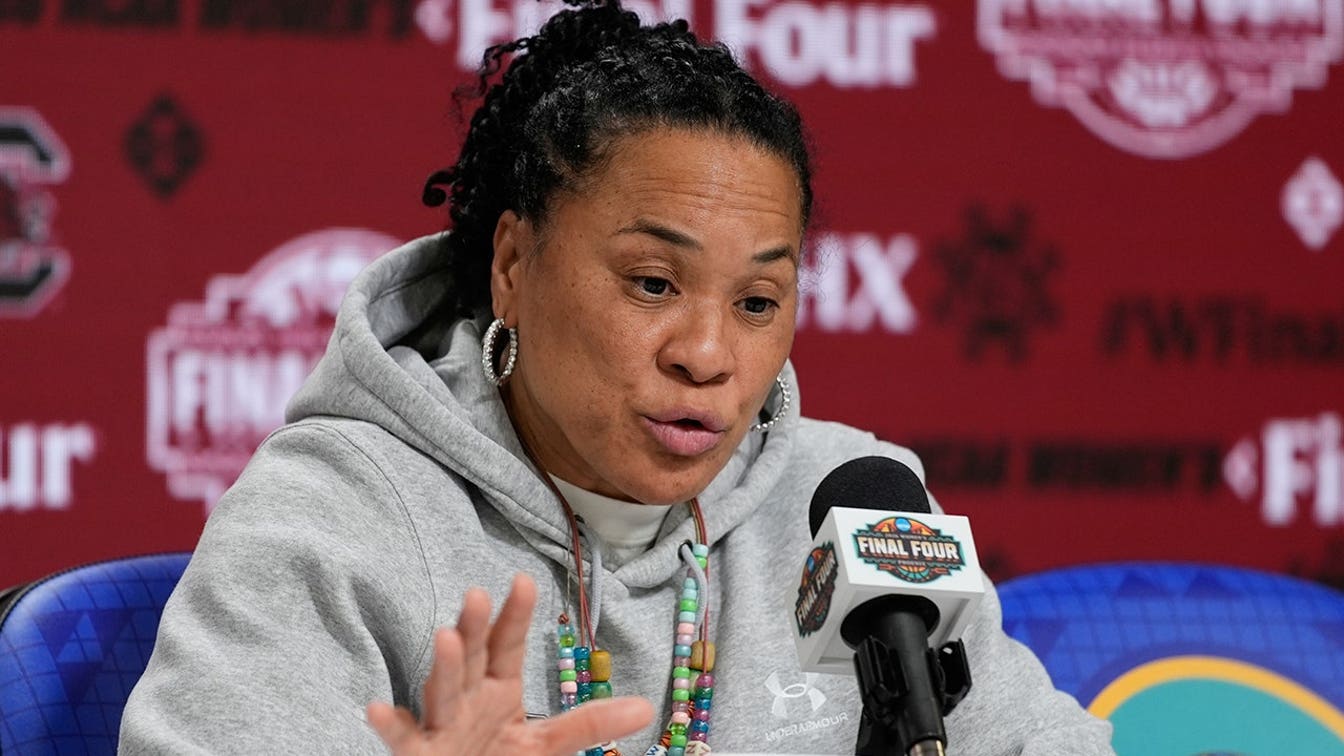
South Carolina head coach Dawn Staley speaks during a news conference during the Final Four of the NCAA college basketball tournament in Phoenix on April 4, 2026. (John Locher/AP)
CLICK HERE TO DOWNLOAD THE PK Press Club APP
“Expanding Division I men’s and women’s basketball is the right decision for student-athletes and programs who will now have access to the biggest college sporting events,” said Virginia Tech President Tim Sands.
Now that the tournament is gearing up for a larger number of participants, we can look ahead to the upcoming television contract negotiations, where there will undoubtedly be discussions about increasing the number of teams.