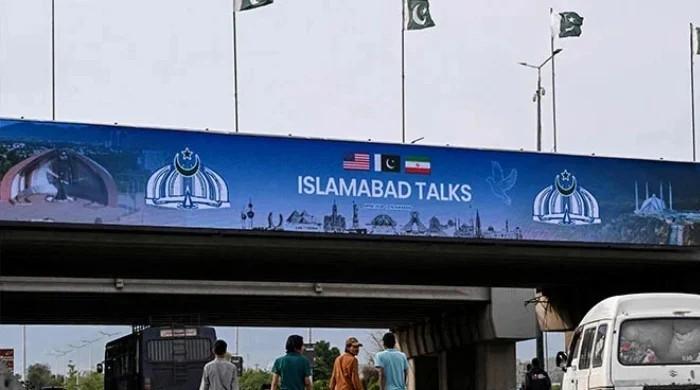
The ink was barely dry on the Islamabad memorandum of understanding when it ran into difficulties – a painful reminder that the peace between the two sides is inherently fragile, always on the verge of collapse, and that the strait is likely to remain a sticking point in a long-term détente between Washington and Tehran.
Shortly after the US strikes on Iran, President Donald Trump said in a social media post that it was “very possible” that Tehran would “never learn.”
The Islamabad MoU is an interim agreement on the basis of which Iran and the United States will negotiate and conclude a final treaty within 60 days (the deadline is extendable), which will be approved by a binding resolution of the United Nations Security Council (UNSC).
From Tehran’s perspective, the most important provision of the memorandum of understanding is that the United States will end “all types” of sanctions against Iran. The language here is categorical, unqualified. Until sanctions are lifted, Washington will grant waivers for the export of Iranian crude oil and petrochemicals. The United States will also release frozen and restricted Iranian funds and, together with its regional partners (Gulf states), implement a $300 billion plan for Iran’s economic reconstruction.
In exchange, Iran “will not acquire or develop nuclear weapons.” The language here is equally emphatic. Enriched uranium stored by Iran will be disposed of in a manner to be agreed by both countries as part of the final deal. Until then, Iran will maintain the current status of its nuclear program and the United States will not impose any new sanctions on Iran; nor will it deploy additional forces to the region.
The memorandum of understanding prohibits the use or threat of force by both sides against each other and commits them to guaranteeing the territorial integrity and sovereignty of Lebanon, which has borne the brunt of Israel’s firepower in recent years. The United States will end the naval blockade of Iran in 30 days, while Iran will do “its best efforts” to lift the blockade of the Strait of Hormuz and allow free passage of commercial goods for 60 days. The future administration of the strait will be defined within the framework of a dialogue between Iran and Oman, in accordance with applicable international law.
It follows that Iran’s main commitment in the MoU is not to acquire or develop nuclear weapons in exchange for the lifting of all sanctions from Washington, which over the years have crippled the Iranian economy and strained its citizens. Lifting sanctions will allow Iran to reintegrate into the international economy and trade and help eliminate the most critical reason for people’s discontent with the Iranian establishment.
Thus, the MoU – if it results in a final agreement – will be extremely beneficial to both the government and the people of Iran. A definitive treaty between the United States and Iran will also provide much-needed assurances to Iran’s neighbors in the Gulf.
President Donald Trump is being criticized for conceding “too much” to Iran, including pledging to end all sanctions against Iran and promising to launch a multibillion-dollar program for the country’s economic reconstruction. That said, critics should keep in mind that Iran’s engagement on the nuclear issue fulfilled Washington’s long-standing demand.
Although Iran is a signatory to the Nuclear Non-Proliferation Treaty (NPT), under which only states that have manufactured and detonated a nuclear weapon or other nuclear explosive device before January 1, 1967 have the right to possess nuclear weapons, the Americans never believed that Tehran would honor its NPT commitment. US sanctions against Iran were designed primarily to prevent it from becoming a nuclear power.
If Tehran keeps its word on the nuclear issue, there is no reason for Washington to maintain sanctions.
Additionally, the revival of the Iranian economy and its reintegration into international economic and trade regimes will open up opportunities for the United States in terms of trade and investment. As the second-largest country in the Middle East after Egypt, Iran represents a potentially important market for U.S. products.
In particular, Iran’s civil aviation industry, hit by sanctions and blighted by aging planes, offers interesting prospects for the American company Boeing. I spent a few years in Tehran and know the strong preference of Iran’s urban population for Western goods and services.
How does the Islamabad Memorandum of Understanding compare to the JCPOA (better known as the Iran Nuclear Deal) signed by the Obama administration in 2015? Besides the fact that the JCPOA is a final, plurilateral agreement signed by the five de jure nuclear states and the European Union with Iran, the two agreements differ on several substantive provisions.
Under the JCPOA, Iran committed to limiting its nuclear program under the supervision of the International Atomic Energy Agency (IAEA) so that it does not lead to the production of weapons-grade uranium or plutonium.
However, Tehran has not expressly committed not to produce or acquire nuclear weapons. This is primarily why Trump left the JCPOA during his first term.
The other JCPOA signatories have relieved Iran of some, but not all, sanctions. Furthermore, the lifting of sanctions was contingent on IAEA reports confirming that Iran was upholding its end of the bargain. The United States suspended its secondary sanctions on Iran, but primary sanctions remained intact.
Secondary sanctions prevented any third country from doing business with Iranian-sanctioned institutions or companies (such as the central bank and the Revolutionary Guard), while primary sanctions prevented U.S. citizens and U.S.-based companies and institutions from doing business with sanctioned Iranian entities. Since the bulk of international transactions are conducted in US dollars, despite the lifting of secondary sanctions, only a few countries have been able to resume normal trade relations with Iran.
The notable difference in the substance of the two agreements is mainly explained by different contexts. The JCPOA is the result of in-depth negotiations conducted in a peaceful environment. Its text was comprehensive and its sequential implementation was supposed to span several years. On the contrary, the Islamabad MoU was born out of a serious crisis: the war between the United States and Iran, which turned international energy trade upside down. To end the war, it was necessary for both sides to immediately make ambitious commitments through an interim agreement.
The proper implementation of the memorandum of understanding leading to a final agreement will remain susceptible to several obstacles. Trump’s occasional rants are just one of them – and arguably the least important. At the top of these potential disruptions is the reaction of Israel and its powerful lobby in Washington, which wants nothing less than complete impoverishment leading to the annihilation of Iran.
In the event that Israel fails to respect Lebanon’s sovereignty and territorial integrity or its powerful supporters in Washington persuade the Trump administration to maintain sanctions against Iran, the planned treaty could collapse after some time. As the resumption of hostilities between the United States and Iran shows, the management of the Strait of Hormuz will remain another point of friction.
The writer is a columnist based in Islamabad. He tweets/posts @hussainhzaidi and can be contacted at: [email protected]
Disclaimer: The views expressed in this article are those of the author and do not necessarily reflect the editorial policies of PK Press Club.tv.
Originally published in The News