
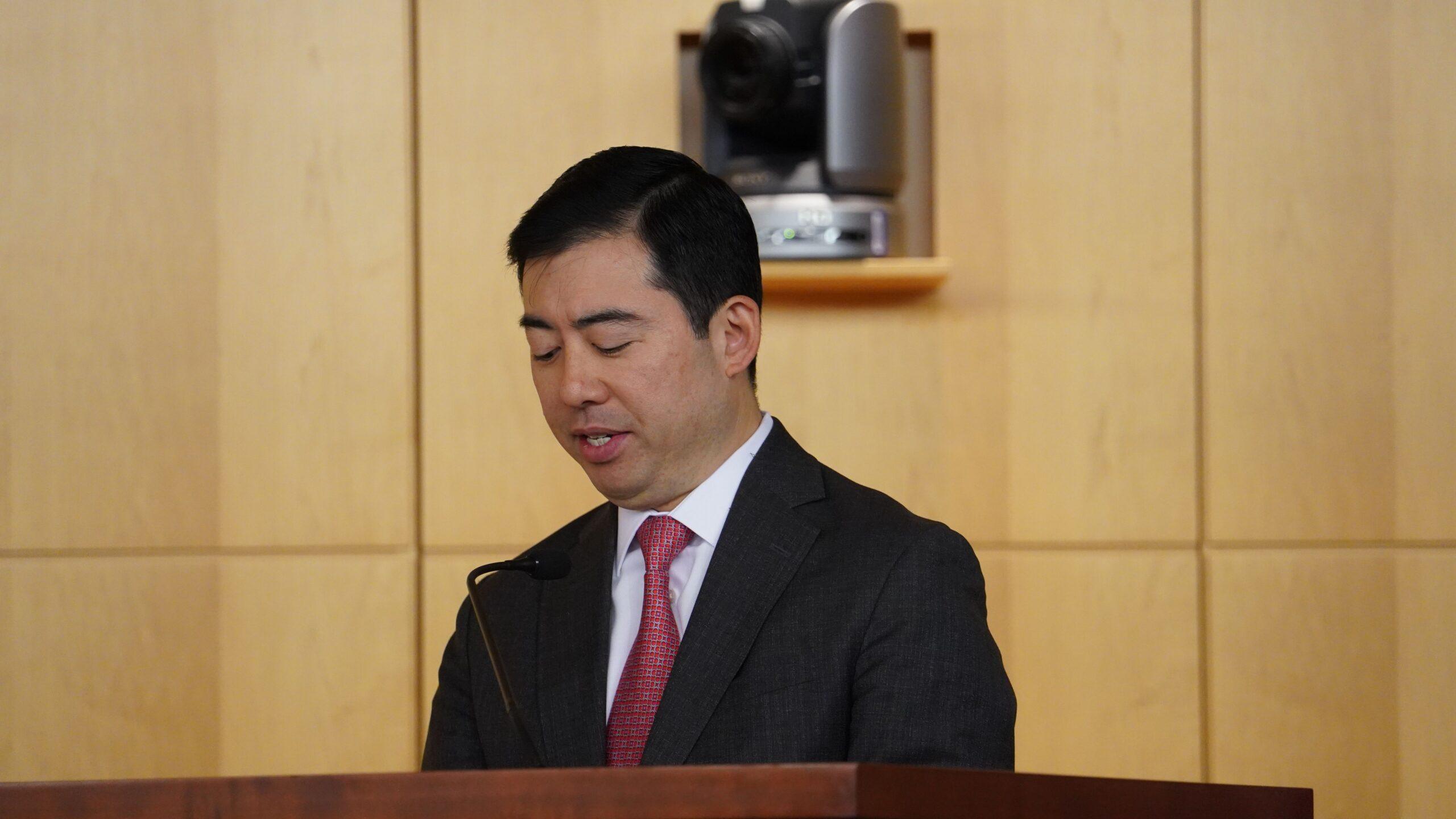
The American Commission for Securities and Exchange seeks to reset its relations with the cryptographic industry, even before a permanent president was confirmed by the Congress. The last effort was the round table on Friday, organized at the SEC headquarters in Washington, DC and with a dozen lawyers representing different views and positions within the cryptography industry.
You read State of Crypto, a Coindesk newsletter looking at the intersection of the cryptocurrency and the government. Click here to register for future editions.
The story
The reset of the SEC began when the acting president Mark Uyeda launched a working group on the crypto and supervised his agency with accounting staff 121, file a certain number of prosecution in progress, take a more break and publish several personnel declarations on the way the agency could examine the same and the extraction of the proof of work.
Why it matters
The dry is undoubtedly the most important federal regulator of the crypto at the moment. Although its sister agency, the Combo -Duity Futures Trading Commission, the regulator which could one day supervise the markets of the cryptographic points, at the moment, it is the dry that most companies in the sector are looking for advice on what they can do exactly.
Decompose it
The round table has been divided into two parts (three, if you count the introductory remarks of the three commissioners): a moderate round table of around 90 minutes, led by the former SEC commissioner and the founder of PARDES strategies, Troy PARDES, and a city hall of 90 minutes always moderate by PARDES but by asking questions from the general public.
You can read the Coindesk cover of the round table on this link.
Although the central question of the discussion has been – as it has been for years – when and how exactly a cryptographic or crypto transaction is, the panelists addressed everything, the role of the crypto in the increase in ransomware to the way companies should work.
Chris Brummer, CEO of Bluprynt and Professor at Georgetown Law, opened the discussion with his analysis of what the Howey test really means: we essentially say that when you have savings, there is a problem of protection of investors. The field of the common company that we all know is really to solve a kind of problem. “”
“It really goes to information asymmetries, then the issue of profits goes to investors’ psychology, greed and fear, the kind of thing that can distort decision-making,” he said. “And basically, when you have all these factors together, you have compulsory disclosure [rule]. “”
Until now, the approach of the SEC has limited a certain number of cryptographic projects, said the Advocate General of Delphi Ventures, Sarah Brennan. While many crypto projects are intended to have a wide initial distribution, “the spectrum of applications of securities laws” means that many projects act more as if they will become public than to adopt the cryptographic aspects of their projects.
“We see more and more the token is the product … There are different ways that people artificially support the price and that I would generally say, in a way toxic to the market,” she said.
John Reed Stark, a former dry lawyer, said that the “economic reality of the transaction” was essential.
“However, you want to look at it, people who buy crypto are not collectors,” he said. “We all know that they are investors, and the mission of the SEC is to protect investors.”
It remains to be seen how the efforts of the SEC will continue, but the agency plays a more active role by engaging publicly with these questions and the industry seems to react. The dry auditorium was about three quarters full sometimes, not to say anything about anyone listening to the live flow.
- While the Congress talks about its cryptographic bill which shakes the earth, the regulators are already at work: The federal agencies do not wait for the congress or even their permanent leaders to deal with the development of crypto policies, noted Jesse Hamilton in this premonitory analysis which was before the declaration of extraction of the POW of the dry and the update of the risk of reputation of the OCC.
- Proof of-Work Crypto Mining does not trigger securities laws, dry says: An exploration of proof of joint and solo work is outside the court of the SEC, the agency said in a press release.
- US Bank Agency reduces the “reputation risk” of exams after the cryptography sector cites problems: The currency controller’s office removed the “reputation risk” of its supervision manual, he told national banks on Thursday.
- XRP zoom 10% like Garlinghouse says that dry has dropped against Ripple: The CEO of Ripple, Brad Garlinghouse, said that the SEC had agreed to remove its call from a decision of July 2023 which declared that Ripple had not violated the federal securities laws in the sale of XRP to retail investors by making it available via exchanges, and that the case itself is close to the end.
- Digital Chamber obtains a new chef while the crypto lobbyists kiss the friendly Washington: The founder and CEO of the Digital Périanne Boring Chamber withdraws next month and becomes the president of her board of directors. The president of the organization of the lobby, Cody Carbone, will take over as CEO.
- Crypto Exchange Bithumb stiff by South Korean prosecutors on allegations of diversion of diversion: Report: Report: The South Korean prosecutors launched an investigation into the exchange of Bithumb crypto, examining the allegations of diversion of diversion.
- Inside Pump.Fun’s plan to dominate the Solana Defi trading: Pump.Fun launches a chip exchange service in order to obtain a tranche of the costs generated by automated market manufacturers in Solana.
- The founder of Gotbit, Aleksei Andriunin, pleads guilty of wire fraud, market manipulation: Aleksei Andriunin, the Russian national who declared to Coindesk in 2019 that he headed a washing trading service to make cryptocurrencies to have greater liquidity and market capitalization than they do, pleaded guilty to market manipulation and fraud accusations in a plea agreement.
- The NASDAQ goes to the negotiation of shares 24th a day in part because of the crypto, explains the execution of the exchange: The NASDAQ and the New York Stock Exchange both work in negotiations 24th in 24th at least in part because of the crypto trade already 24 hours a day, said the head of US stocks and negotiated NASDAQ stock markets.
- The candidate president of the SEC, Paul Atkins, would face the Senate panel next week: The candidate for the president of the SEC, Paul Atkins and the candidate of the controller, Jonathan Gould, will face the committee of senatorial banks for their confirmation audience next week.
- The US government removes tornado cash sanctions: A few months after the fifth Circuit Court of Appeals, ruled that the Treasury’s foreign asset control office could not sanction smart contracts, the OFAC eliminated its sanctions against Tornado Cash.
Tuesday
- 3.30pm UTC (11:30 am he) The federal judge supervising the case of the United States Ministry of Justice against the founders of Samurai Wallet held a state conference hearing in the case. According to my colleague Cheyenne Ligon, who attended, the 7 -minute hearing, addressed some procedural questions but did not plunge into the substance of the case.
THURSDAY
Friday
- 5:00 pm UTC (1:00 p.m. HE) The American Commission for Securities and Exchange organized a round table with legal experts from the Cryptographic and SEC staff.
- (Reuters) Another stump of bird flu – this time H7N9 – has hit the United States for the first time since 2017. It is above the current H5N1 epidemic.
- (CNN) Amtrak CEO Stephen Gardner said he would leave the management of the almost public transport company in the management of the White House.
- (Bloomberg) Coinbase is in advanced talks to acquire the derivative derivative derival, reported Bloomberg, following Coindesk reports last month that the exchange was interested in the company.
- (Cable) A former Meta employee wrote a revealing book on her experiences in the company and Meta goes everything to limit her distribution. Careless, since then, has become a bestseller on Amazon.
- (Bloomberg) Bloomberg profiled the role of the New York Kirsten Gillibrand Democrat in the continuation of cryptographic legislation in the Senate.
- (Politico) Trump administration plans for USAID include reform and “Leverag[ing] Blockchain technology to secure transactions “, although this document that Politico has obtained does not include much more details.” All distributions would also be secure and drawn via blockchain technology to radically increase security, transparency and traceability, “says the document. If you are one of the individuals who push for the integration of the blockchain with the American government, let’s discuss.
- (The goalkeeper) The Trump administration made more than 200 men of Venezuelan origin to a Salvadoral prison in EL, potentially in violation of a court order and without having hearings or trials. While the administration said in public statements that the 238 men had links with the Gang Tren of Aragua which, in turn, took over the management of the government of Venezuela, officials declared in court documents only many people transported to El Salvador did not have a criminal record. The family members of many of these people say they were not criminals and had no gang ties. Some of the individuals have signed expulsion documents and should be brought back to Venezuela. American intelligence agencies also found that ADD was not linked to the Venezuelan government, Times reported.

If you have reflections or questions about what I should discuss next week or any other comment you want to share, do not hesitate to send me an e-mail at nik@PK Press Club.com or to find me on Bluesky @ nikhileshde.bsky.social.
You can also join the group conversation on Telegram.
See you next week!


