
- Panthalassa’s valuation now nears $1 billion after new financing
- Peter Thiel led $140 million investment in ocean technology company
- Investors see ocean energy as vast untapped IT resource
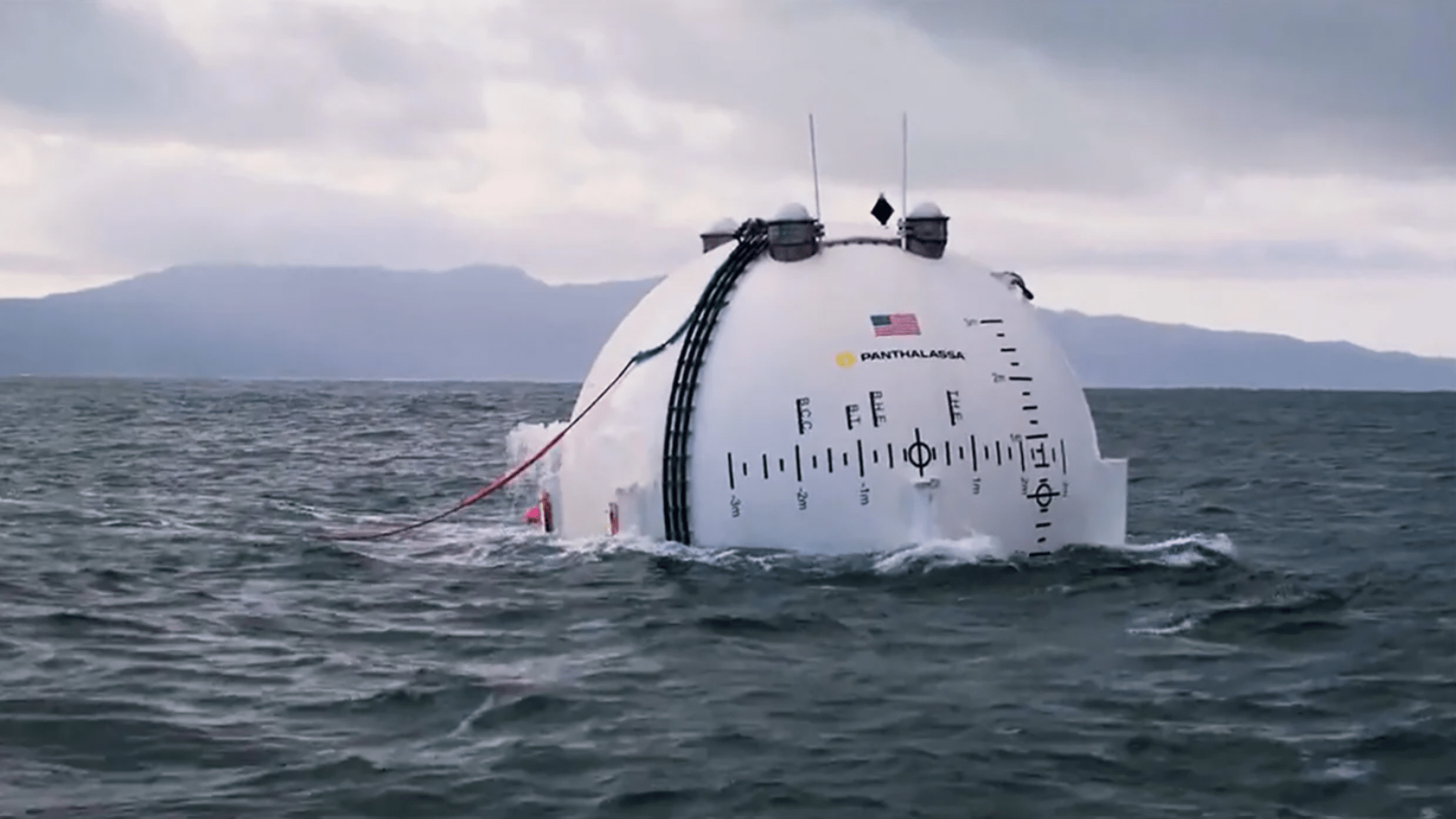
Panthalassa, an American ocean technology company, is continuing its plan to relocate data processing to open waters, supported by new financing that puts its valuation at nearly $1 billion.
The startup spent ten years developing wave energy technology and is now backed by PayPal co-founder and early Facebook investor Peter Thiel, who led a $140 million investment round in the company.
“We are now ready to build factories, deploy fleets and provide a new source of sustainable energy for humanity,” said Garth Sheldon-Coulson, co-founder and CEO of Panthalassa.

Bypass the network by going offshore
Panthalassa’s idea connects two pressures that rarely meet directly: the growing demand for AI computing and the limits of Earth’s energy systems.
By offshoring both power generation and computing, the company says it can get around network constraints and cooling issues.
The plan is to use wave motion to force water through a turbine, generating electricity to power AI chips directly at sea.
The company houses this entire system inside what it calls a node, an 85-meter-long solid steel structure located primarily beneath the ocean’s surface.
A hermetically sealed container contains the AI server, which is cooled by the surrounding seawater.
Ships can drive themselves to their destination using the shape of their hull, without requiring an engine or fuel.
Unlike other ocean energy projects, Panthalassa will never transmit electricity to land. Instead, onboard AI chips will receive user requests over SpaceX’s Starlink satellite connection and return inference tokens in the same way.
Terawatts of untapped energy
“There are three energy sources on the planet with new potential of tens of terawatts: solar, nuclear and ocean,” Sheldon-Coulson said.
Waves are created by wind and wind is created by the heat of the sun. This means that waves are essentially twice concentrated sunlight that continues to move even when the wind stops.
The company’s nodes have no hinges, flaps or gearboxes that could fail in hostile ocean conditions, making them easier to manufacture at scale.
They use only earth-abundant materials like steel, with robust supply chains that enable rapid deployment – a huge opportunity for data center development.
The scale of this opportunity has attracted the attention of some of Silicon Valley’s most prominent investors.
“The future requires more calculation than we can imagine,” said Peter Thiel. “Extra-terrestrial solutions are no longer science fiction. Panthalassa has opened the ocean frontier.”
John Doerr, an early investor in Google and Amazon, called Panthalassa’s system revolutionary in “meeting the world’s energy needs and clean energy production.”
“It’s a triple win: Workers benefit, communities benefit, and we gain a strategic asset that strengthens America’s technological leadership,” Doerr added.
Panthalassa plans to deploy its Ocean-3 pilot nodes in the northern Pacific Ocean this year, with commercial deployments planned for 2027.
The company demonstrated its capabilities with the Ocean-1, Ocean-2 and Wavehopper prototypes in 2021 and 2024.
However, scaling from prototypes to a commercial fleet of hundreds or thousands of nodes is a completely different challenge.
The ocean is unforgiving, and maintaining floating data centers in isolated waters, far from any port, will require logistics that no company has ever handled before.
Saltwater corrosion, biofouling, and storm damage are not theoretical problems for marine equipment: they are everyday realities that have sunk many promising ocean energy companies before this one.
Thiel’s money buys time and productive capacity, but it does not allow one to escape the laws of physics or the hostility of the sea.
Unlike projects that sink sealed containers to the ocean floor or launch racks of servers into orbit, these floating nodes must first survive the unpredictable surface of the open ocean before providing any computational value.
Via the Financial Times

Follow TechRadar on Google News And add us as your favorite source to get our news, reviews and expert opinions in your feeds.


