
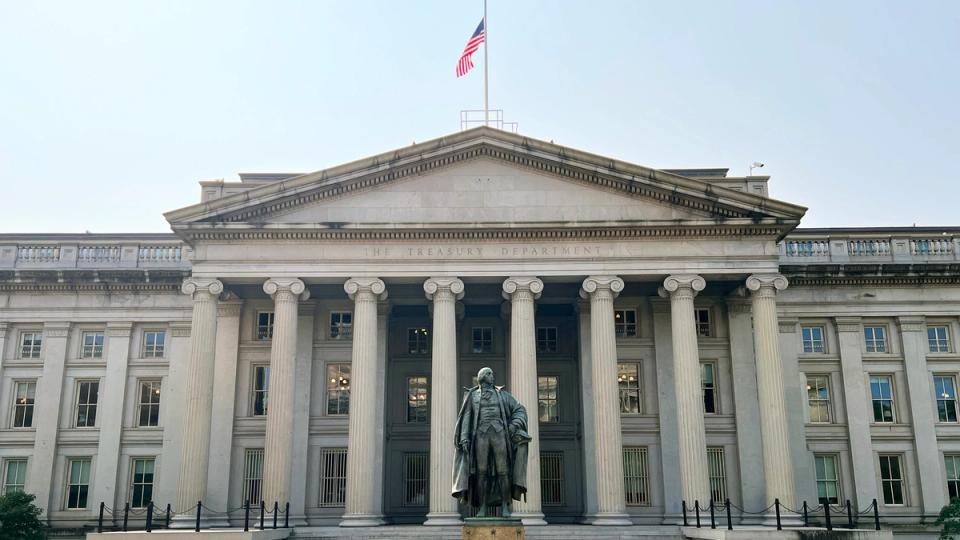
The crypto industry frequently finds bankers involved in its priority regulatory efforts, and this time, a coalition of banking trade associations has asked the U.S. Treasury Department to extend the window during which the public can weigh in on the implementation of last year’s Guiding and Establishing National Innovation for American Stablecoins (GENIUS) Act.
In a letter sent this week to the Treasury Department and the Federal Deposit Insurance Corp., U.S. bankers are requesting that three different GENIUS Act rule proposals be given extended comment periods, at least 60 days after another rulemaking effort (at the Office of the Comptroller of the Currency) is completed. The OCC’s efforts to implement its rule to control stablecoin issuers are significant to the outcome of other rules enforced by Treasury’s Office of Foreign Assets Control (OFAC) and the Financial Crimes Enforcement Network (FinCEN), as well as related regulation within the FDIC.
All of these efforts “are directly dependent on the OCC’s final framework,” the bankers say. The collective efforts, in addition to regulatory proposals that have yet to emerge from the Federal Reserve and other agencies, “represent a body of regulatory work of extraordinary scope and complexity.”
Banking organizations, including the American Bankers Association and the Bank Policy Institute, said their comments “will necessarily be more comprehensive, and therefore more useful to the agencies, if we have sufficient time to evaluate the proposed rules together and each against the finalized OCC framework.”
The GENIUS Act is expected to be in effect by 2027, although it is not uncommon for federal agencies to grant extensions of comment periods on complex rules. The Treasury Department did not immediately respond to a request for comment on the banking industry’s request.
The same bankers are also embroiled in a stablecoin-related debate with the crypto industry that has so far managed to delay the Digital Asset Market Clarity Act by several months and potentially undermine its potential to become law this year.
Read more: US Treasury proposes requiring stablecoin companies to be set up to monitor bad transactions


