- Aleem Khan welcomes historic strategic agreement.
- Construction begins in May under the PPP model.
- M6 denounces the missing link in the North-South corridor.
The National Highway Authority (NHA) and the Asian Development Bank (ADB) have signed a historic agreement to build two sections of the M6 motorway.
In an article on
In February, Communications Minister Abdul Aleem Khan announced that construction of the M6 motorway would officially begin in May under a public-private partnership model.
The minister termed the project as a vital bridge to Pakistan’s future development and a decisive step towards economic prosperity.
“A project that has been stalled for over 30 years, and has achieved this breakthrough in just two years of dedicated effort,” he said.
Aleem Khan highlighted that the M6 motorway represents the “missing economic link” in the country’s North-South corridor, making its completion an absolute necessity for sustainable national growth.
He noted that this highway was among Pakistan’s most critical infrastructure, designed to serve as a backbone for the country’s future trade and logistics.
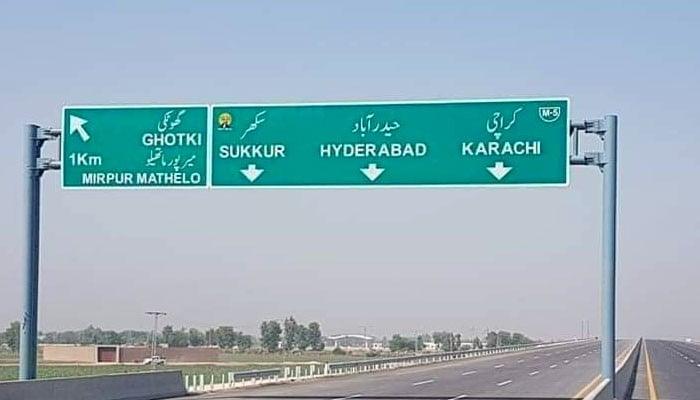
Completion of this missing link would revolutionize Pakistan’s transportation network by allowing traffic from Karachi port to flow seamlessly to Peshawar and Gilgit via a seamless highway system, he added.
While giving details of the project, the federal minister said the 306-kilometre-long six-lane project would be equipped with modern tolling and security systems, including 15 interchanges and 10 state-of-the-art service areas to facilitate the journey of travelers and commercial transporters.
He further said that the project structure included two key sections from Hyderabad to Nawabshah, which would be developed under a public-private partnership (PPP) model to ensure transparency and attract private sector investments.
“The Islamic Development Bank (IDB) and the OPEC Fund have already approved the financing of three other sections,” he said, adding that the entire M6 project is expected to be completed within the next two years.
He concluded by saying that connecting Karachi ports to northern regions is a national priority that would unlock new investment opportunities and strengthen Pakistan’s regional trade connectivity.
– with an additional contribution from the APP