
ISLAMABAD:
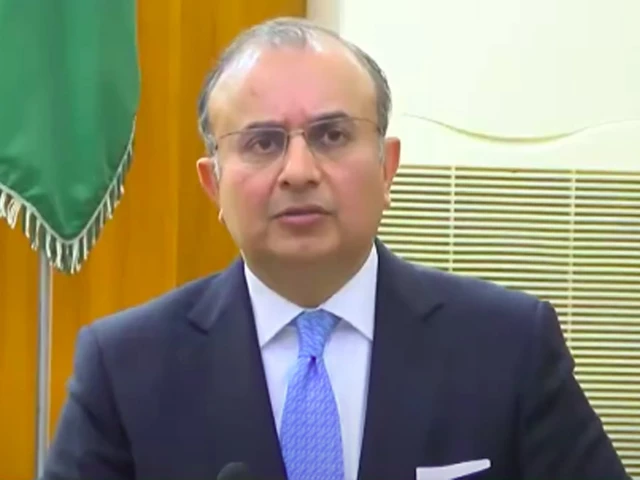
Former Supreme Court judge Mansoor Ali Shah on Monday raised serious questions over the top judiciary’s proposal to establish an International Commercial Tribunal of Pakistan (ICPC) through a constitutional amendment, saying the ICPC could not become a destination for global trade unless Pakistan first restores faith in the rule of law, judicial independence and constitutional governance.
Talk to The Express PK Press Clubsaid former Supreme Court judge Mansoor Ali Shah, until these foundations are firmly in place, the creation of a new court risks being seen as a cosmetic reform rather than a meaningful reform.
Justice Shah said institutions could not be created merely by announcement. “The proposal to establish an international commercial court in Pakistan raises more questions than it answers, as the announcement provides no details on the jurisdiction of the proposed court, its composition, appellate structure, procedural law, relationship with arbitration or whether international judges will be appointed. Without these essential elements, any meaningful assessment is impossible.”
The former Supreme Court judge further said that international commercial courts do not derive their credibility from constitutional amendments or legislation, but from the legal ecosystem in which they operate. “Investors evaluate the independence of judges, the certainty of the law, the enforceability of contracts, respect for arbitral awards and the absence of interference from the executive. They invest in institutions, not in slogans.”
The retired judge said jurisdictions such as Dubai, Abu Dhabi and Qatar are often cited as success stories. Their political systems may differ from constitutional democracies, but they have consciously built commercial justice systems that inspire international trust.
“They did not feel that their commercial courts were institutionally confiscated or staffed with judges lacking independence. Their commitment to the commercial rule of law is precisely what gives investors confidence,” he added.
He added that Pakistan presents a different situation. It continues to rely on the outdated Arbitration Act of 1940, which embodies a philosophy of extensive judicial intervention rather than modern arbitration.
“More importantly, trust in any commercial court ultimately depends on trust in the judicial system itself. If judicial independence is called into question, no specialized commercial court will be able to fill this institutional gap,” he added.
Lawyer Asad Rahim Khan said it was quite incredible, at a time when the constitutionality of historically regressive amendments has not even been addressed for years, that the Court would concern itself with such issues. “This is our new language of rights: QR codes, light bulbs, digitalization, commerce, while incredible sentences are handed down to lawyers like Imaan Mazari and Hadi Chattha.”
Former federal minister Fawad Chaudhry, who is himself an advocate, said pursuing structural expansion through increased bureaucracy or new courts ignores the underlying crisis of institutional legitimacy.
“The 26th and 27th Amendments have catalyzed a marked decline in judicial credibility. Moving forward, we must abandon superficial solutions and undertake comprehensive structural reform, anchored in a commitment to merit and public accountability,” says Fawad Chaudhry.
Abdul Moiz Jaferii’s lawyer, however, said that given that Pakistani companies would do anything to keep their disputes outside the Pakistani legal system, it is hilarious that the LJCP believes that an international commercial court is viable in that country.
“In the name of expediency, we have repeatedly tried to create exceptions, rather than trying to solve the problems faced by the justice system itself. We have created anti-terrorism courts to arrest terrorists, banking courts to speed up the judicial process, drug courts and, most recently, the Constitutional Court.”
Jaferii further asserts that rather than creating another exception to the delays and lack of competence complained of, it would be better to focus on improving the level of judicial delivery through the normal channel and through the normal courts.
The former jurist, commenting on the proposal, says it would result in more courts, more appointments, more protocols and endless benefits.
“What business judges have when proposing laws. Their constitutional obligation to interpret laws and decide cases and not as an advisor to Parliament.”
However, Hafiz Ahsaan Ahmad Khokhar welcomed the proposal. He termed the recommendation as a historic constitutional and judicial reform, necessary at this time to strengthen Pakistan’s commercial justice system and support sustainable economic growth.
He observed that specialist commercial courts have become a defining feature of successful economies, citing the Singapore International Commercial Court (SICC), the UK Business and Property Courts, the Dubai International Financial Center (DIFC) Courts, the Abu Dhabi Global Market Courts (ADGM) and the Delaware Chancery Court in the US as globally recognized models. These institutions have significantly improved the resolution of commercial disputes by providing specialized judges, rapid procedures, predictable results and internationally respected judgments, thereby strengthening investor confidence and attracting foreign investment.
According to Khokhar, Pakistan needs to adopt a similar institutional model to meet the growing demands of international trade and cross-border investments.
He emphasized that the proposed Federal Commercial Court should be given exclusive jurisdiction over high-value commercial disputes, international commercial contracts, foreign investment disputes, cross-border trade and commerce transactions, banking and financial transactions, corporate and shareholder disputes, mergers and acquisitions, infrastructure and energy projects, public-private partnerships, insurance and reinsurance matters, insolvency and restructuring, shipping and maritime claims, property intellectual property, e-commerce, competition law and all matters related to arbitration, including the recognition and enforcement of domestic and foreign arbitral awards.


