“Further recoveries are expected, particularly when people are diagnosed early and able to access care, and as the response to the outbreak intensifies.“, the United Nations’ World Health Organization (WHO) said in an update on Sunday.
A total of five people have recovered from the virus, the agency said, citing the case of a laboratory worker who was given the all-clear last Thursday.
This announcement is good news as the response in partnership with the UN accelerates to the Ebola epidemic caused by the Bundibugyo virus, particularly because there is no approved vaccine or treatment and which the WHO has described as “a disease you get when caring for someone“.
As of Sunday, 210 confirmed cases of infection were reported in the country, with 17 confirmed deaths. Nearly 350 suspected cases are under investigation and 16 health workers contracted Ebola in the DRC during this latest outbreak.
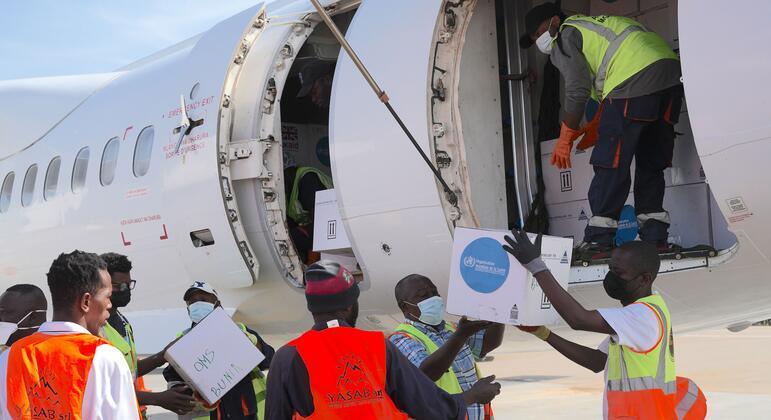
Since the declaration of the Ebola outbreak on May 15, key response measures have included laboratory testing, disease surveillance, infection prevention and control, community engagement, and resource mobilization.
In Bunia, the probable epicenter of the epidemic and capital of Ituri province, the WHO handed over a renovated Ebola treatment center to health authorities. The establishment has 24 beds for a total capacity of 60 beds. The WHO is also setting up an annex that can accommodate up to 42 beds.
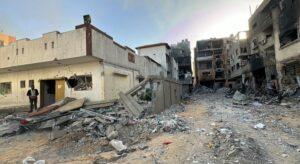
Combating the outbreak has been complicated by the dire humanitarian situation in the DRC’s resource-rich Far East, where decades of ongoing conflict have left 1.2 million people in need of assistance in Ituri province alone. Transmission has been concentrated in Ituri, as well as the provinces of North Kivu and South Kivu.
Current treatments
Although there are no approved vaccines or treatments against the Bundibugyo virus that causes Ebola, WHO advisory groups have described several treatments and vaccine candidates as “sufficiently promising” to warrant priority evaluation in clinical trials.
WHO’s role is to work with health authorities in the DRC and Uganda to achieve this.
For confirmed cases, three candidate treatments have been prioritized for clinical trials: monoclonal antibodies MBP 134 and maftivimaband the antiviral remdesivir.
For prevention, oral antiviral obeldesivir is a priority in a clinical study as a post-exposure measure for those who have been in contact with confirmed cases.
According to the WHO, two vaccine candidates have been identified for evaluation once doses become available.
Tedros’ call for solidarity
At the same time, the agency emphasized the key role of community engagement in ending transmission of the virus, which has a mortality rate between 30 and 50 percent.
“It is possible to survive Ebola caused by the Bundibugyo virus with good medical care, and some people here in Ituri have already recovered. Seeking care as early as possible makes a real difference… It is not without hope,” said WHO Director-General Tedros Adhanom Ghebreyesus, speaking this weekend in Bunia.
In an update released Friday, the WHO highlighted that the outbreak in the DRC and neighboring Uganda was evolving rapidly “with increasing case numbers, geographic spread and continued cross-border transmission.” Another confirmed case of an American who had treated patients in the DRC is still receiving care in Germany.