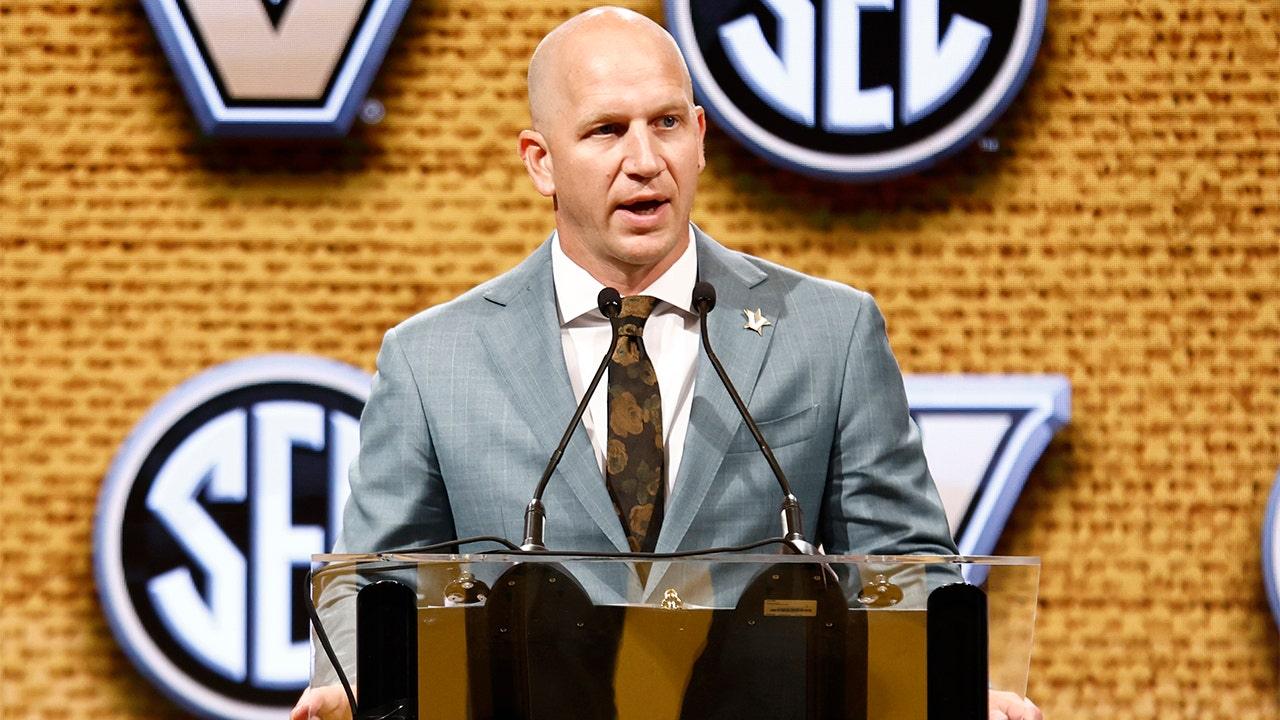
NASHVILLE, Tenn. – Go ahead and get used to it now: The debate over expanding the College Football Playoff to 24 teams isn’t going anywhere anytime soon. Sitting in Vanderbilt head coach Clark Lea’s office on Wednesday, it wasn’t hard to notice the ongoing discussions that had once again resurfaced.
Since CFP leaders wrapped up their meetings in Miami — before Indiana capped a historic season with a national championship — the battle between the SEC and the rest of college football has only intensified, with the most recent gathering taking place just outside Dallas.
COACHES PUSH FOR 24-TEAM CFP, AS COLLEGE FOOTBALL HEADS TOWARDS PARTICIPATION TROPHY TERRITORY
At the center of it all is a question: How big should the playoff field really be?
For months, the SEC has strongly supported a 16-team format, a model supported by its television partner ESPN. Meanwhile, the Big Ten pushed for 24 teams — an idea that initially drew resistance from the ACC and Big 12 before opinions began to change.
This is not new. Changing positions of conference commissioners is practically part of the job. But this time, the stakes are higher. As revenue-sharing challenges mount in college sports — and with some schools already cutting sports — expanding the postseason has become a potential financial lifeline.
CLICK HERE TO DOWNLOAD THE PK Press Club APP
Atlantic Coast Conference Commissioner Jim Phillips speaks during an NCAA college football press conference during ACC Media Days in Charlotte, North Carolina, July 20, 2022. (Nell Redmond/AP)
More teams means more matches. More games means more TV inventory. And maybe more inventory means more money.
As the new College Football Playoff contract with ESPN begins, which is for six years, a number of teams could essentially trigger additional bidding. According to industry sources, if the CFP were to agree on a 14-team playoff, ESPN would still retain its inventory of games, which it could continue to sublicense to networks like TNT or TBS.
BROADCAST INDUSTRY CEO SAYS CONSOLIDATION IS ‘ESSENTIAL’ TO COMPETE WITH RISING NFL MEDIA RIGHTS PRICES
But if CFP leaders somehow agreed to the 24-team or even 16-team format, that would allow networks like FOX, NBC or CBS to join the party if they were willing to pay. This stems from the contract signed by ESPN and the CFP, which would allow the playoffs to market the additional games that would come from a 24-team playoff series.
And while that may be the case, from an economic standpoint the smarter move would be for ESPN to simply purchase the rights to the additional games of a 16-team playoff series, given that it might not be worth the price for FOX or NBC to purchase the additional two games.
But it’s not hard to see why multiple conferences would be integrated.
It’s not that simple. Conference title games replaced by play-in games?
As Vanderbilt head coach Clark Lea pointed out this week in Nashville, expansion isn’t as simple as adding more teams.
“The first thing we need to focus on is when we finish the season,” Clark Lea told OutKick. “I think we have a real problem right now, and I think the problem has to do with television contracts and dedicated time slots where we’re not competing with the NFL, and stuff like that that extends our season three weeks into January and absolutely undermines the integrity of what we’re trying to do as a sport.
“Whatever we do next with the playoffs, expansion is coming. We (SEC) all expected that for this year and it ran into a problem. But, as expansion comes, it can’t come at the expense of finishing the season, and let’s be more reasonable about evening that out.”
Hail Mary in Lubbock: Brendan Sorsby’s latest move to beat NCAA gambling allegations
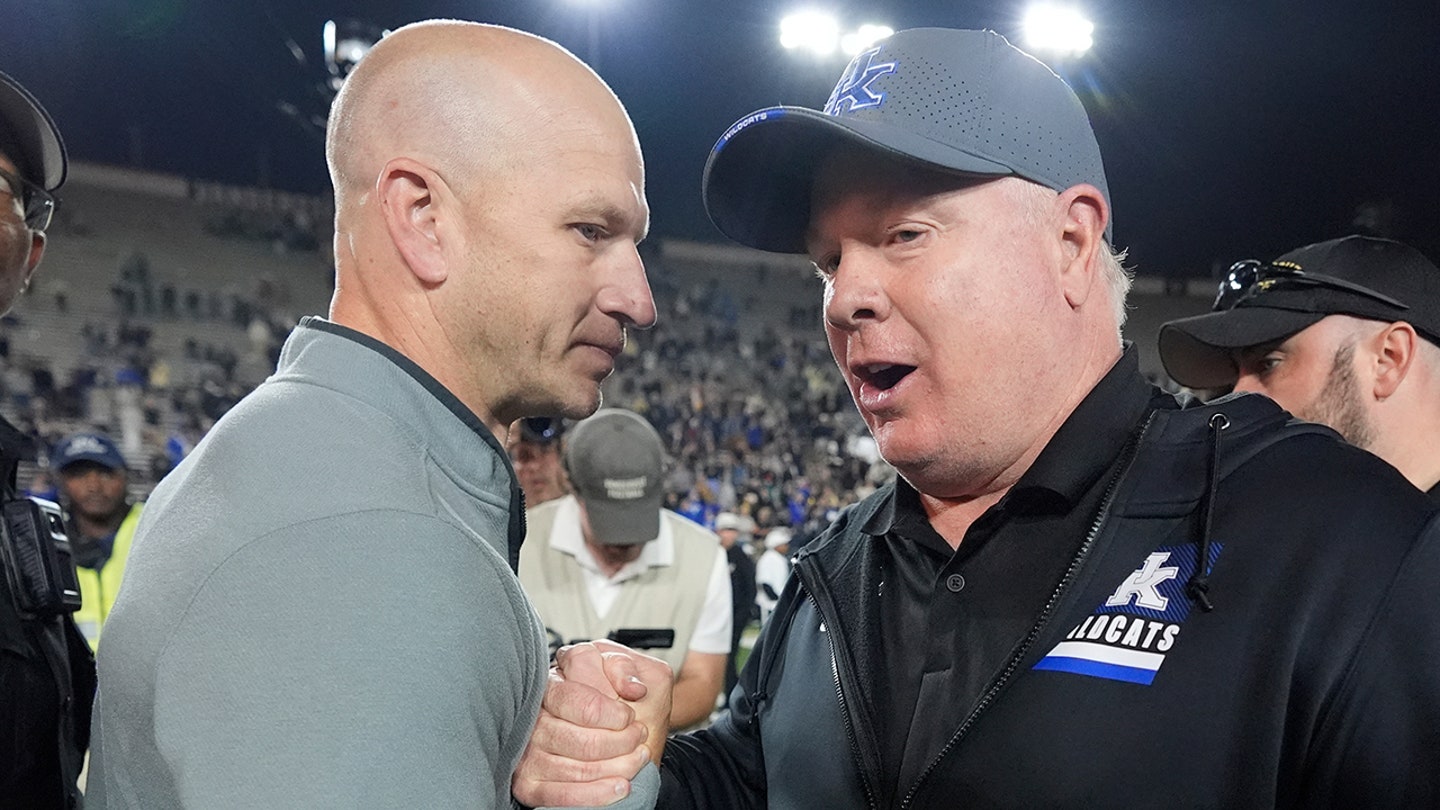
Kentucky head coach Mark Stoops and Vanderbilt head coach Clark Lea meet on the field after an NCAA college football game in Nashville, Tennessee, Nov. 22, 2025. (George Walker IV/AP)
As OutKick reported last year, expanding the playoffs to this magnitude could also come with a caveat that conference title games would cease to exist. While this may seem like an easy solution to some, it is a much bigger concept to realize given the amount of money paid by ESPN and FOX for these title games, with both games receiving $160 million for their title games combined.
“We’re going to have to abandon some traditional end-of-year elements in college football,” Clark Lea said, while noting that he “thinks” it would be a conference championship.
So what replaces them?
“Somehow the playoff model is built in, right?” Léa offered herself. “Otherwise, this (season) drags on forever. I think we saw last year these ridiculous pauses in play, which I think ruin the competitive product on the field. I’d be really interested to hear some answers and get people to think about these things.
“How can we improve the product, tighten up the season? We’re getting closer to the end of the semester, the gate window. Now, all of a sudden, we have a better product.”
INSIDE THE FIGHT: NIL ARMS RACE Fuels New Push for College Football Playoff Expansion
Coaches Become Fans in These Expansion Conversations
The idea of repackaging an SEC, Big Ten, ACC or Big 12 championship weekend into play-in style games for each conference is one that television networks like ESPN and FOX have at least discussed.
Given that they would be giving up a lucrative game in terms of publicity and viewership, the substitute should be attractive enough to consider.
But if you asked fans if they would rather watch four teams compete in Atlanta, Indianapolis, Charlotte or Dallas over a two-day period for a spot in the College Football Playoff, I imagine that would be an easy sell to networks and advertisers.
Dabo Swinney is right: The coaches may be right, but opinions don’t matter in the fight for College Football Playoff expansion
Even then, deciding which route to take is not an easy task.
“Those decisions have to be made based on generating as much revenue as possible and doing the best possible negotiation for each game that we have. So to say 24 or 16 is really just saying as many teams as possible, without giving up the opportunity to negotiate what those games can bring us.
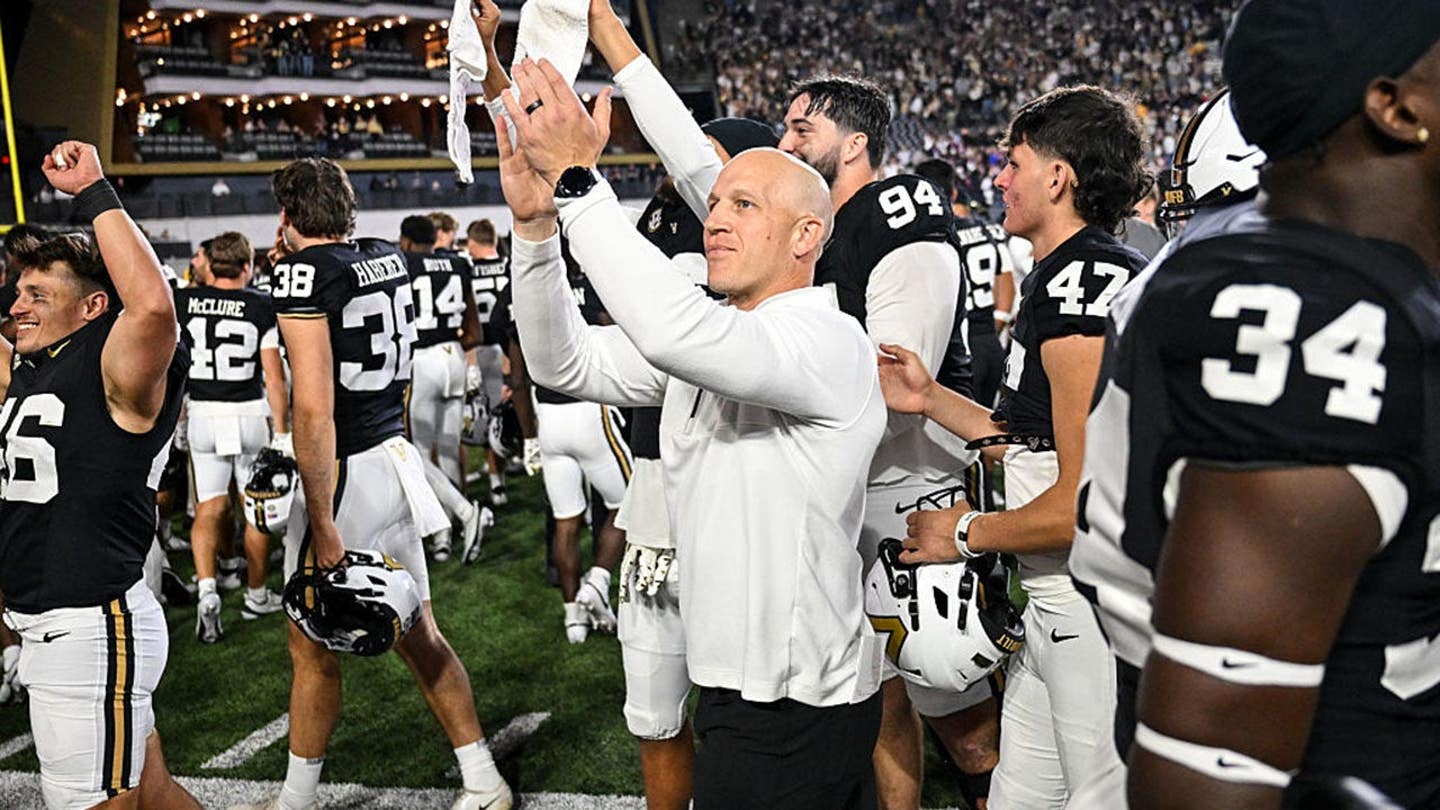
Head coach Clark Lea of the Vanderbilt Commodores thanks the fans after defeating the Missouri Tigers at FirstBank Stadium in Nashville, Tennessee on October 25, 2025. (Carly Mackler/Getty Images)
Ultimately, people just want to see college football put in the best position possible, and that includes coaches competing for spots, like Clark Lea.
“What we do when we start participating in these conversations is we become fans. I know it’s much more complex than just adding as many teams as possible. It has to be done in the best way to optimize our product and generate the revenue we need to support our sport.”
ONE DAY AFTER LANE KIFFIN’S MESS, STEVE SARKISIAN TORCHES OLE MISS FOR “BASKETWEAVING” CLASSES IN OXFORD
With SEC Commissioner Greg Sankey essentially standing alone on an island in terms of promoting a 16-team format to 24, we’re starting to hear his coaches within the conference begin to voice their differing opinions on what the future should actually look like.
While that may be the case, coaches only have limited leverage in these conversations, as I explained on Wednesday.
CLICK HERE TO DOWNLOAD THE PK Press Club APP
Regardless, spring meetings in college football have become much more important over the past two years, with the Big Ten scheduled to meet next week in Los Angeles, while the SEC prepares to meet after Memorial Day in Florida.
Let the games continue.