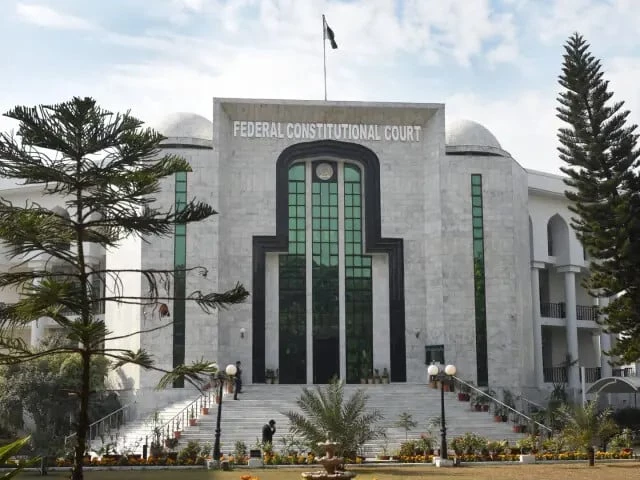
The Federal Constitutional Court (FCC) considered two constitutional appeals against the imposition of a huge tax on oil and the increase in prices of petroleum products. The FCC Registrar assigned numbers to the petitions. In the petition, filed by JI chief Hafiz Naeemur Rehman, the FCC was asked to issue directions to constitute an independent expert-assisted mechanism or commission to examine the constitutional, fiscal, economic and federal implications of the current oil tax structure. The government has announced a tax on oil and carbon as part of a strong commitment with the International Monetary Fund (IMF). The petroleum tax on petrol currently stands at Rs 117.41 per liter, while the tax on HSD is Rs 42.60 per litre. Likewise, the FCC also considered a petition filed by lawyer Zulfikar Ahmed Bhutta on May 1. The petitioner asked the FCC to order the government to withdraw the recent price hike on petroleum products. Both petitions were filed directly with the FCC under Section 175E of the Constitution. Interestingly, the FCC Registrar raised no objections to either petition. The court considered the motions weeks after they were filed. The FCC was created by the current regime through the 27th Constitutional Amendment. In the context of Pakistan, a petroleum tax is a federal tax imposed on petroleum products such as gasoline (motor spirit), high speed diesel (HSD), kerosene and light diesel. It is one of the government’s largest sources of non-tax revenue. The oil tax is a fixed tax per liter that the government collects on fuel sales. Unlike sales tax which is based on a percentage, oil tax is a specific amount per unit. It is imposed under federal laws such as the Petroleum Products (Petroleum Levy) Ordinance of 1961 and subsequent Finance Acts. The federal government has the power to adjust it through finance bills and statutory regulatory orders (SROs).
FCC Considers POL Levy, Rate Pleas