
Two operations in Libya repatriate more than 200 Pakistanis from detention centers and trafficking networks
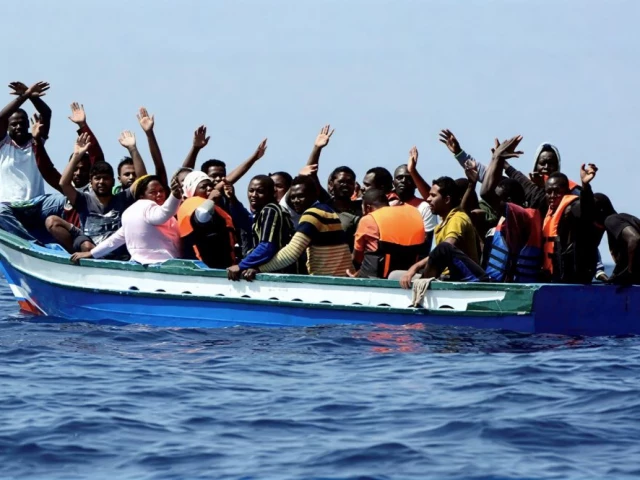
Archive image of a migrant boat. PHOTO: REUTERS
Driven by the search for better economic opportunities, thousands of Pakistani citizens each year fall prey to organized criminal networks operating dangerous and unauthorized international land and sea routes.
Popularly known as the “Dunki” route, this journey promises a rapid gateway to Europe, but regularly results in betrayal, financial failure, captivity and catastrophic loss of life.
The horrific realities of illegal migration have once again been brought to the forefront in 2026, following two major government-facilitated operations that successfully repatriated more than 200 Pakistani nationals from Libya.
According to official data, in February, a joint mission of the Pakistan Embassy and the International Organization for Migration rescued 30 citizens from the Tajoura detention center in Tripoli.
This was followed by a large-scale repatriation operation in late May, which brought back 177 Pakistanis from detention centers in Benghazi and Tripoli via a special flight from Mitiga International Airport.
Most of these returnees were intercepted by Libyan authorities before crossing the central Mediterranean aboard unusable and dangerously overcrowded boats.
Read also: The bodies of six Pakistanis victims of the boat tragedy in Libya repatriated
The physical and psychological price exacted by human trafficking networks is immense. Survivors recount harrowing details: They were sold to local Libyan gangs, facing brutal extortion, starvation, electric shocks and severe physical abuse in makeshift private detention spaces.
The haunting memory of the 2023 Adriana sinking near Greece – which claimed the lives of 262 Pakistanis – and subsequent Mediterranean tragedies in 2025 which claimed an additional 83 lives, are stark reminders that these shortcuts are fundamentally death traps.
Beyond the physical trauma, families are deprived of their life savings. Human trafficking agents charge astronomical sums ranging from 3 to 6 million rupees per person. Desperate families finance these sums by selling their ancestral lands, taking out high-interest loans or emptying out their family assets.
When a “Dunki” attempt fails or is intercepted, the immediate financial consequence is total bankruptcy. Trafficking mafias often call families from abroad, inflicting psychological torture on them through video clips of abuse to extort hundreds of thousands more in ransom. Survivors do not return to a blank slate; they return to a life buried under crippling generational debt.
Aware of the seriousness of transnational organized crime, the Federal Investigation Agency (FIA) has launched extensive institutional reforms. Supported by the National Action Plan to Combat Smuggling of Migrants (2026-2030), the State has fortified its borders and exit points.
The FIA has introduced AI-based second-line screening and biometric profiling systems at major domestic airports, leading to the disembarkation of nearly 40,000 suspicious travelers in 2025 alone.
Learn more: Pakistan facilitates the repatriation of 30 Iranians (Dar)
To date, ten official western border crossing points have been notified, as well as six overseas liaison offices to coordinate cross-border operations.
These strict measures have resulted in a major breakthrough: a 47% drop in illegal migration attempts to Europe in 2025.
During this year, the FIA arrested around 1,770 human smugglers and increased its field interceptions from 628 to 2,662.
The European Union has officially recognized Pakistan’s structural response as “exemplary”, pledging more bilateral funds to expand regional interception protocols.
To care for those returning home, dedicated victim reception centers such as the sprawling Taftan facility, which has hosted more than 13,000 returnees, and specialist reception desks at airports in Lahore, Islamabad and Peshawar have been fully equipped to provide psychological counseling, medical support and initial legal proceedings.
State institutions emphasize that the solution to economic difficulties lies in self-improvement, not exploitation. Every year, thousands of Pakistanis succeed in securing their future abroad through legal employment networks and skilled migration cadres.
The real way out of poverty lies in vocational training and certified skills acquisition – learning high-demand professions such as IT, engineering, nursing and technical trades.
Citizens considering employment abroad are strongly advised to verify the credentials of any recruitment agent through the lists officially published by the FIA or through the Pakistan Overseas Employment Corporation.


