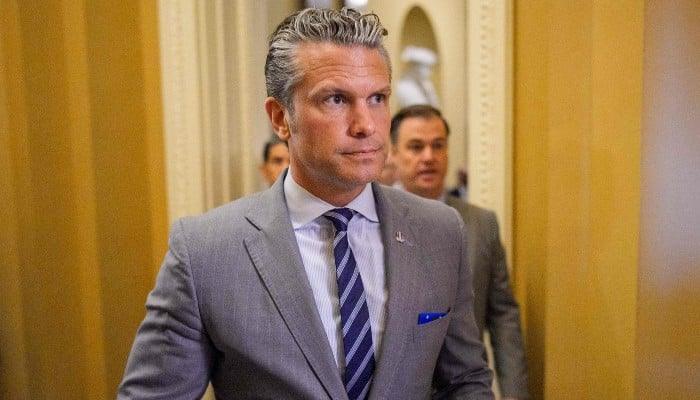
Brussels: US Defense Secretary Pete Hegseth on Thursday welcomed progress by NATO allies in meeting their defense spending commitments, but said some needed to “do more”, as he struck a conciliatory tone at an alliance meeting.
“Many countries have followed through, some still need to do more, and we will be frank about this, both privately and publicly,” Hegseth said ahead of talks with NATO defense ministers in Brussels.
“I think it’s important: friends should be honest with friends.”
The warm tone will likely reassure Washington’s allies ahead of a summit with US President Donald Trump next month – after the leader lashed out at Europe over its response to his war on Iran.
NATO will seek to demonstrate increased European spending to prove to Trump that it is making progress on its commitment last year to reach 5% of GDP for defense spending.
“When it comes to spending, we are seeing staggering amounts of money coming in,” NATO chief Mark Rutte said.
“Europe and Canada will spend more than $90 billion more in 2025 than in 2024, representing an increase of almost 20% in defense spending.”
Despite the alliance’s positive outlook, a NATO official said three European countries, including Slovenia and the Czech Republic, are currently on track to fail to reach the crucial 2% threshold this year.
Washington has made clear to Europe that it wants NATO allies on the continent to take primary responsibility for their own conventional defense as American attention turns to China.
As part of this process, the Pentagon has told its allies that it is reducing the number of assets around the world that it makes available to NATO.
The U.S. move has raised concerns that it could leave Europe vulnerable to an aggressive Russia, as allies still rely on Washington for some key weapons.
Rutte said that even if the US reductions were “immediate”, that did not mean Washington would not be there if NATO faced an attack.
“So all allies, including the United States, will do everything they can to ensure that we can fight the war,” he said.
“Need more time”
U.S. and German media reported that the cuts affect a third of the 150 U.S. F-16 and F-15 jets destined for NATO, as well as refueling and reconnaissance planes, bombers and drones.
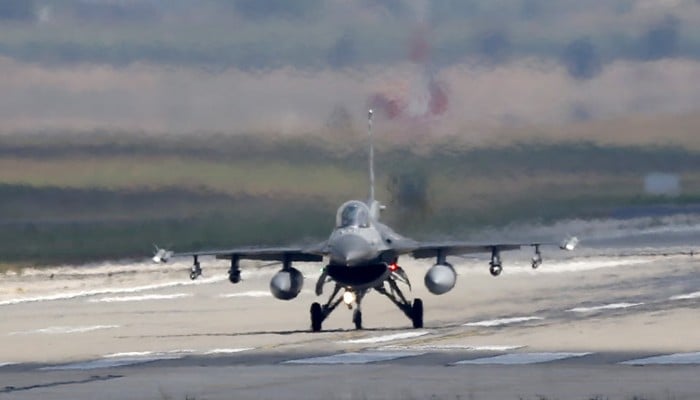
Reports indicate that a submarine capable of launching cruise missiles is also being withdrawn, as well as one of two aircraft carrier groups.
“Overall, we will be able to compensate for a lot. But we need a little more time, and that is the clear message,” German Defense Minister Boris Pistorius said.
“It is difficult and dangerous for the security of NATO territory in Europe to withdraw capabilities very quickly without it being clear when they can be compensated.”
While NATO focuses on its own security, the allies will also hold negotiations on strengthening support for Ukraine.
President Volodymyr Zelensky will join a meeting of kyiv’s military supporters at NATO later today before heading to the EU leaders’ summit.
Ukraine hopes to leverage the momentum from the positive meeting between Zelensky and Trump at the Evian G7 to gain more support in its fight against Russia.