
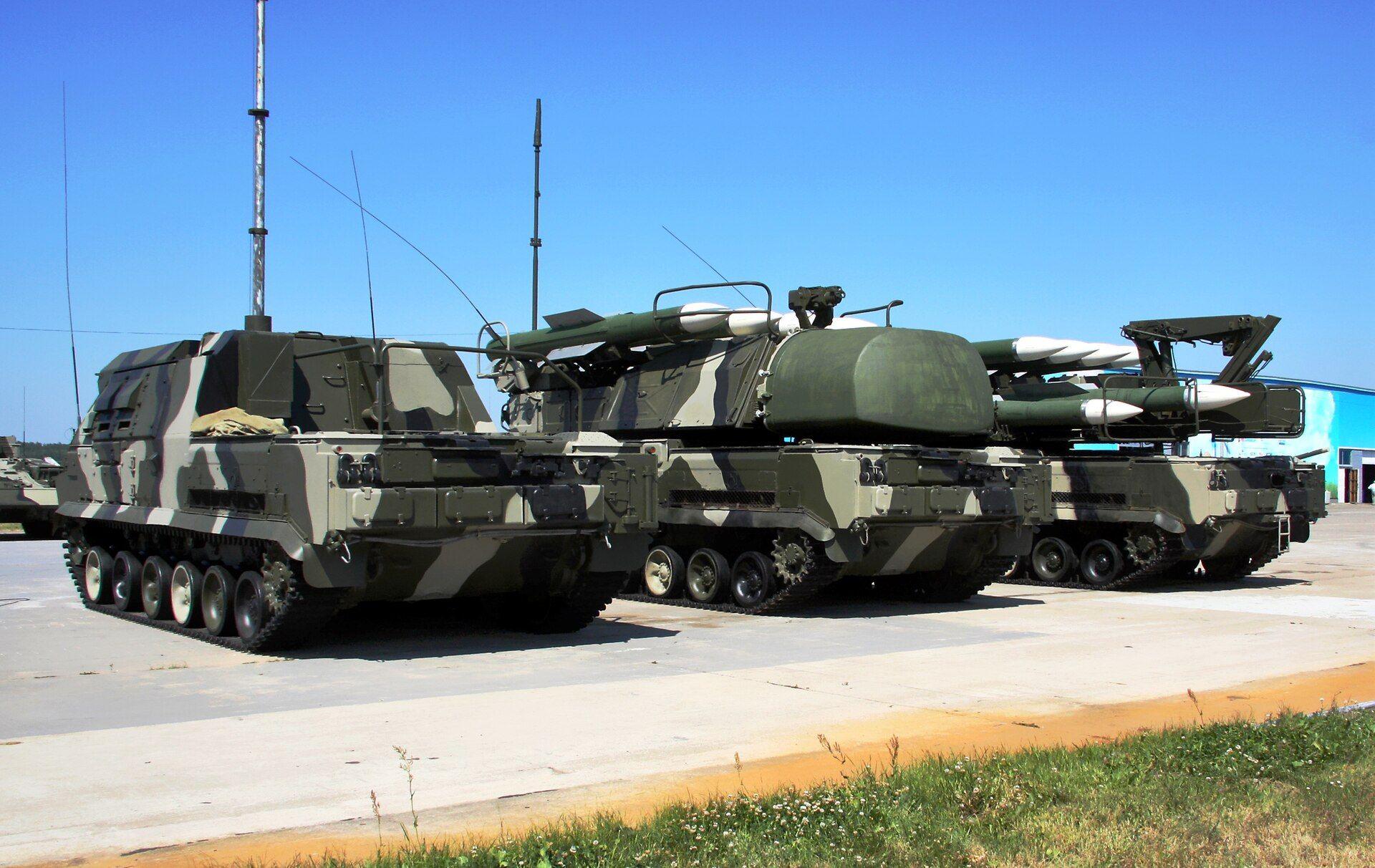
- Ukraine’s National Border Guard Service says its Phoenix unit destroyed a Russian Buk-M3 launcher with a single low-cost drone
- The strike is one of many rather than the first, with Ukraine saying dozens of such Buk systems have been damaged or destroyed.
- Drones are increasingly being used to eliminate high-value military targets at a fraction of the cost.
Ukraine’s decision to use drones as part of its asymmetric warfare doctrine against Russia continues to pay dividends for the country on several fronts, with its recent battlefield successes centered on a Russian Buk-M3 launcher that, based on independent estimates, costs between $40 million and $50 million.
This is not the first, and probably not the last, Russian Buk-M3 launcher that Ukraine has targeted recently, with Oryx, an open source intelligence blog, putting the number of confirmed Buk-M3 casualties at more than 40 since the start of the conflict.
Although relatively common, Buk-M3 systems are relatively expensive to replace, and Ukraine says they did so with an FPV drone that cost them “only several thousand dollars.”
Latest videos fromTechRadar
An increasingly bitter conflict over expensive military equipment
Ukraine and Russia’s shift to drones has caused a fairly obvious loss: expensive military equipment costing millions of dollars to build, and the Buk-M3 launcher is no exception.
The Buk-M3, also known as the Viking in its export form and designated SA-27 by NATO, is Russia’s newest medium-range surface-to-air missile system. It was adopted into service by Russia in 2016 as the successor to the Buk-M2 and occupies the medium tier of Russian air defense, sitting above short-range systems such as Pantsir and Tor and below the long-range S-300 and S-400 systems.
The M3 fires the 9M317M, a single-stage solid-fuel missile with a more powerful dual-mode engine than the M2. This gives it around 70 km of range, a ceiling around 35 km and a top speed close to 1,550 m/s. The launcher carries six missiles, compared to four on the M1 and M2, and the improved electronics are credited with reducing the time it takes for the system to be ready.
This makes it a valuable target for Ukrainian drone operators, and that’s ironic, since the Buk-M3 is built in part to shoot down aerial threats. However, its minimum effective engagement range is about 2.5 km, so a small drone that closes at that distance is below the floor of what the system’s own missiles can engage.
Ukraine has developed a range of methods to reach Russian airfields, armor and artillery positions, including Operation Spiderweb, which Ukrainian security services say destroyed some $7 billion in Russian military equipment, including aircraft no longer in production.
Ukrainian border guards say this system was hit while moving forward and was not concealed. This detail matters more than it seems. Air defense vehicles are most vulnerable during a relocation, as they cannot effectively engage in movement and their protective screen is degraded, making the transit window a predictable target rather than a lucky one.
The goal behind Ukraine’s systematic degradation of Russian medium-range air defense is to open corridors through radar coverage for long-range strike drones and piloted aviation. This is why the pace has increased and why the strikes are now reaching deep into Russian territory.
A Buk-M3 lost to an FPV drone is the kind of incident that illustrates the broader problem Russia faces in the face of Ukraine’s maturing drone industry, in a war that has turned into attrition on multiple fronts.
Follow TechRadar on Google News And add us as your favorite source to get our news, reviews and expert opinions in your feeds.


