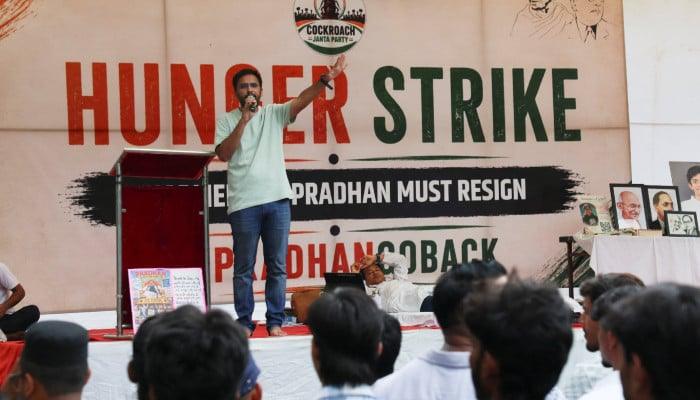
- Security arrangements in place for public safety: police.
- Activist Sonam Wangchuk was forcibly transferred to hospital.
- Wangchuk says the march will be “India’s second freedom movement.”
Indian police on Monday refused permission for a march to Parliament by supporters of the youth-led “Cockroach” movement, risking a stalemate as calls grow for Prime Minister Narendra Modi’s education minister to be fired over leaked exam papers.
The movement has been galvanized since police forcibly transferred hunger-striking activist Sonam Wangchuk to hospital on Saturday, with hundreds of supporters gathering at a protest site ahead of a planned march on the opening day of Parliament’s monsoon session.
While the movement initially attracted support largely online – amassing 22 million followers on Instagram within days of its creation in May after leaked exam papers reached millions – it has since broadened its appeal, posing a major challenge to Modi.
Wangchuk, 59, said in a message posted by his wife on
But police said orders are in effect in the New Delhi district prohibiting gatherings of five or more people, except at a designated site – the Jantar Mantar observatory – where protesters have already camped for more than three weeks.
“As the parliamentary session begins on July 20, strict security arrangements are in place to ensure public safety, the safety of protected persons and the protection of vital government facilities,” police said on X.
The Cockroach Janta Party said the march would go ahead as planned.
“The march is happening, that’s for sure. We’re thinking about the rest,” a spokesperson said, asking to remain anonymous before finalizing their plans.
Young people angered by unemployment and leaked exam papers
Earlier in the day, a Delhi court said authorities were entitled to transfer Wangchuk to a government hospital because he failed to admit himself despite his deteriorating health condition.
Justice Mini Pushkarna said doctors only administered oral solutions and supplements with Wangchuk’s consent, adding: “It cannot be said that any force is used against Mr. Sonam Wangchuk or his bodily autonomy is violated in any way.”
Wangchuk’s wife, Gitanjali Angmo, had requested permission to transfer him to the private Medanta Hospital and her lawyers argued that she had the right to have him treated at the hospital of their choice.
The government opposed the request, saying it had to be cautious about Wangchuk’s health and that his wife and close family members had been given 24-hour access to him.
Citing the heavy police presence at the hospital, Angmo told X that “this is not medical care. This is illegal detention.”
Safdarjung Hospital said Wangchuk’s vital parameters were stable, although his blood parameters remained “slightly altered” and he required 24-hour monitoring.
The rise of the “cockroach” movement reflects the frustrations of young Indians over issues such as high youth unemployment and frequent leaks of exam papers.