
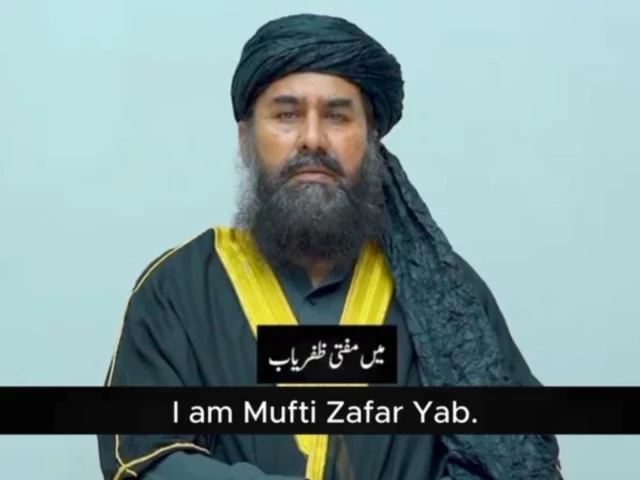
Authorities said Wednesday that an investigation into an alleged terrorism facilitation network found alleged links between illegal seminars, extortion and the misuse of religious rules to support militant activities.
According to authorities, local facilitators used unregistered seminaries to obtain religious decrees under the guise of religion to justify acts of terrorism.
The arrested suspect, identified as self-styled cleric Mufti Zafar Yab, was found to be affiliated with Jamia Nizamul Uloom in Bannu and a faction of Jamiat Ulema-e-Islam (JUI), authorities said.
Officials said the revelations made by the suspect highlighted the need to bring illegal seminaries under the General Directorate of Religious Education (DGRE) in line with the National Action Plan.
Investigators say suspect said he served eight years Dars-e-Nizami program at the Yateem Khana branch of Jamia Nizamul Uloom in Bannu before obtaining a three-year specialization in Islamic jurisprudence (Takhassus fi al-Fiqh) by Markaz Islami Ghoriwala.
Authorities further revealed that the suspect admitted to being an active associate of terrorist commander Hikmat Roshan and a member of the Gul Bahadur Shura. According to his confession, militant commanders asked him for religious rules to justify extortion and intimidate the rich in the name of jihad.
Read also: Security forces kill 10 terrorists, arrest two suicide bombers in Balochistan
The suspect further said that Roshan offered him and others incentives, positions and financial incentives in exchange for their support of the group’s activities.
He also said the group designated by the state as Fitna al-Khawarij had no connection with Islam and followed an ideology that justified the killing of Muslims. The Pakistani state uses the term Fitna al-Khawarij to refer to terrorists affiliated with the banned group Tehreek-e-Taliban Pakistan.
Security and religious affairs experts cited by authorities said the revelations suggested that militant groups were exploiting illegal seminaries and self-proclaimed clerics to advance their goals.
They noted that an agreement reached in 2019 between Wifaqul Madaris Al-Arabia Pakistan and the representative organizations of religious seminaries under Ittehad Tanzimat-e-Madaris provides a framework for the registration of seminaries.
Experts said the latest revelations highlighted the need to bring unregistered seminars under the DGRE regulatory framework in line with the National Action Plan.
They further called for transparent monitoring of illegal seminars and any affiliated political organizations to prevent support for extremism and terrorism.
Experts added that stronger government control over seminaries, standardization of curricula and improvement of educational standards in Pakistan’s religious education sector remained essential.


