
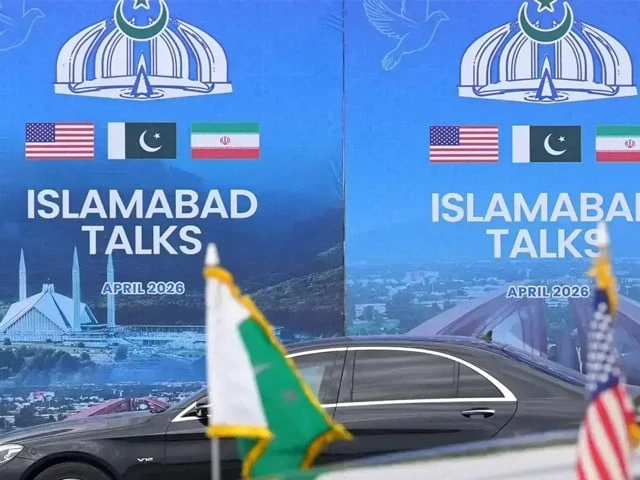
FO says positive progress made on issues related to aspects of Islamabad MoU
ISLAMABAD:
Pakistan on Thursday reported what it called “positive progress” in indirect talks held in Doha between Iran and the United States, signaling that Islamabad could be the venue for future rounds of negotiations.
Foreign Ministry spokesperson Tahir Andrabi said at his weekly press briefing that Pakistan and Qatar held separate meetings with Iranian and US negotiators in Doha and the parties agreed to continue discussions in the coming period.
“Positive progress has been made on issues related to aspects of the Islamabad MoU, building on the Lake Lucerne summit,” Andrabi said, adding that the next round of talks would be scheduled after the funeral of the late Iranian leader.
The spokesperson declined to disclose details of progress, saying the confidential nature of the negotiations required discretion. However, he stressed that the dialogue process had not broken down and that the mediators remained optimistic.
“We should welcome the continuation of the dialogue. The parties are still at the table,” he said.
Asked if Pakistan could host the next round of talks, Andrabi said he could not rule out the possibility of future meetings in Islamabad, although no decision has been made on the venue.
The comments come as Prime Minister Shehbaz Sharif is scheduled to travel to Tehran on Friday to attend the funeral of Ayatollah Khamenei and offer condolences on behalf of Pakistan.
The prime minister’s trip highlights the close ties between Islamabad and Tehran and comes against the backdrop of Pakistan’s growing diplomatic role in facilitating Iran-US engagement.
Pakistan and Qatar jointly negotiated the signing of the Islamabad Memorandum of Understanding last month, which paved the way for further diplomatic contacts between Washington and Tehran.
The Foreign Ministry also used the briefing to sharpen its criticism of India over the suspension of the Indus Water Treaty (IWT), accusing New Delhi of attempting to use water as a tool of coercion.
Andrabi said Pakistan rejected India’s efforts to link terrorism allegations to its decision to suspend the treaty.
“The real problem is not terrorism. The real problem is the growing willingness of Indian leaders to treat a shared international river system as a strategic asset that can be controlled, withheld or diverted at will,” he said.
He asserted that no country could turn Pakistan into a “dry land” by blocking its waters and insisted that Pakistan reserved the right to take all available measures to protect its interests under international law.
The spokesperson also reiterated that Pakistan remained committed to implementing the treaty and keeping communication channels open through the Indus Water Commissioners mechanism.
On Afghanistan, the Ministry of Foreign Affairs reiterated Pakistan’s concerns over the use of Afghan territory by terrorist groups carrying out attacks inside Pakistan.
Andrabi said Afghan nationals, including a terrorist arrested alive, were involved in the recent terror attack in Karachi, prompting Islamabad to summon the Afghan charge d’affaires and launch a strong approach.
Responding to questions on Pakistan’s recent cross-border strikes, he said the operations were “targeted, proportional and intelligence-led” and targeted only terrorist hideouts.
He also warned that Pakistan reserves the right to respond to provocations, including drone incursions from across the border, under Article 51 of the United Nations Charter.
At the same time, the spokesperson acknowledged that strained relations with Kabul were affecting regional connectivity projects, saying trade and economic initiatives could not move forward if terrorism concerns remained unaddressed.
“There is no change in the diplomatic status of our envoys or the two embassies in Kabul and Islamabad,” he said.


