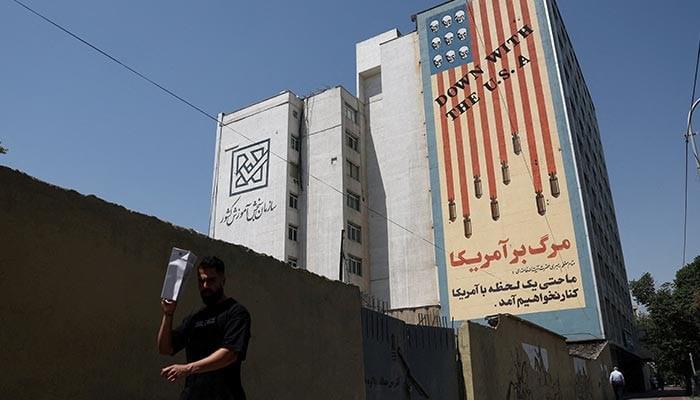
The U.S.-Israeli attack on Iran accelerated the collapse of an international order that had already begun to fracture under the weight of endless wars, economic instability, technological rivalry and shifting centers of global power.
The unipolar world dominated by the United States after the end of the Cold War is gradually giving way to a new multipolar reality in which China emerges as the main economic and technological force, while regional powers increasingly assert their strategic autonomy. This transition represents one of the most significant geopolitical transformations of the modern era, and for countries like Pakistan, it presents both extraordinary dangers and unprecedented opportunities. Today, the world’s economic center of gravity is shifting toward Asia, and nations that fail to adapt to this new reality risk being marginalized.
Pakistan stands at a historic crossroads. It has immense strategic advantages: a young population, a critical geographic location linking China, Central Asia, the Middle East and the Arabian Sea, deep strategic ties with China and enormous untapped human potential. Yet despite these advantages, Pakistan remains stuck in recurring cycles of economic crisis, political instability, institutional decay, weak governance, poor education levels and dependence on external financial aid. The fundamental crisis facing Pakistan is intellectual, structural, institutional and civilizational.
We need a profound restructuring of governance in which true democracy is strengthened by empowering citizens at the local level while ensuring that national policy is guided by competence, expertise and long-term strategic thinking rather than short-term populism. The real power must come down to local communities, municipalities, district administrations and village councils who can directly address issues related to education, healthcare, sanitation, water management, urban planning and local economic development.
Yet the central issue is not just the form of government but the quality of governance itself. Pakistan urgently needs a technocratic culture in which scientists, engineers, economists, educators and technology experts play a leading role in shaping national policy, as has happened in Iran. Ministries responsible for education, science and technology, finance, industry, energy, digital transformation, agriculture and health should increasingly be led by ministers and secretaries who are international authorities in their respective fields. A powerful technocratic government is the order of the day.
The foundation of this transformation must be a complete revolution in education. No country in modern history has achieved lasting prosperity without investing heavily in high-quality education and scientific capabilities. Pakistan’s education system remains deeply flawed, with millions of children out of school, poor teacher training, outdated curricula, rote memorization, and insufficient attention to critical thinking, creativity, mathematics, engineering, and scientific reasoning.
This whole model needs to change. Pakistan needs an educational renaissance integrating science, technology, engineering, mathematics, artificial intelligence, biotechnology, robotics, advanced manufacturing and entrepreneurship at every level of the education system. Technical and vocational education must be elevated to national priority. Hundreds of advanced technical institutes, modeled on the Austrian and German Fachhochschule system, are expected to be established throughout the country, closely linked to industry and focused on practical industrial training. One such model university has already been established under my leadership, the Pakistan-Austria Fachhochschule in Haripur, Hazara.
In this transformation, China can play a central and historic role. The China-Pakistan Economic Corridor is expected to evolve far beyond roads, ports and energy projects to become a vast platform for technology transfer, industrial cooperation and export-oriented industrialization. A particularly transformative QUAD model, as I have previously proposed, would involve deep integration between Chinese industry, Pakistani industry, Chinese universities, and Pakistani universities in specialized product-focused partnerships designed to produce high-value products for global markets.
Under such a framework, Pakistani universities would work directly alongside industry to develop technologies, improve manufacturing processes and train highly qualified engineers and scientists. Chinese technological expertise, combined with Pakistan’s strategic location and young workforce, could create powerful export-oriented industrial ecosystems capable of transforming the country’s economy within a generation.
Pakistan therefore urgently needs to decisively move away from its reliance on low-value exports and imported consumerism and towards a high-tech, value-added, export-oriented manufacturing economy. We also need to understand that if we fail to master the new wave of AI-driven industrial transformation, we risk losing our economic relevance forever. China has already deeply integrated AI into manufacturing, logistics, urban planning, healthcare, agriculture, surveillance systems and financial services.
Pakistan urgently needs to develop its own national AI strategy and integrate artificial intelligence into its industries, educational institutions, governance systems and research infrastructure. I submitted a Rs 40 billion project to establish specialized AI centers in different fields across Pakistan to the IT Ministry several years ago, and its feasibility study was successfully concluded. It must now be urgently approved and implemented nationally.
National security itself must now be redefined. In the modern world, technological capabilities increasingly determine geopolitical influence. Cybersecurity, semiconductor technologies, AI-based defense systems, drones, biotechnology, satellite systems, and advanced manufacturing have become central pillars of strategic power. Pakistan’s scientific and technical capabilities must therefore be an integral part of national security planning. The same strategic focus that allowed Pakistan to develop nuclear and ballistic capabilities must now be directed toward civil scientific and industrial transformation.
Pakistan has the human talent, strategic partnerships and geographic position to become one of the leading economies in the Muslim world and a major technology hub in Asia. But this window of opportunity will not remain open indefinitely. History is now evolving rapidly, and only nations capable of intellectual courage, scientific vision, and institutional discipline will shape the future rather than be shaped by it.
The greatest lesson of the modern era is that the true wealth of nations no longer lies primarily in natural resources, military hardware, or geographic size. This lies in human capital, scientific knowledge, technological skills, innovation ecosystems and the ability to produce sophisticated, high-value products for global markets. Countries like South Korea, Singapore and China transformed themselves because they understood that quality education, science, engineering, technological progress and innovation are the true engines of national power.
Pakistan must now embark on the same path with absolute clarity and determination, as I have repeatedly emphasized in my articles over the past two decades. The 28th Amendment should be aimed primarily at achieving this new technological revolution, so that we can position ourselves with dignity within the committee of nations.
The writer is a former federal minister, UNESCO science laureate and founding chairman of the Higher Education Commission (HEC). He can be reached at: [email protected]
Disclaimer: The views expressed in this article are those of the author and do not necessarily reflect the editorial policies of PK Press Club.tv.
Originally published in The News