
NJPMC Supports Evidence-Based Judicial Reforms to Strengthen Transparency, Access to Justice, and Accountability
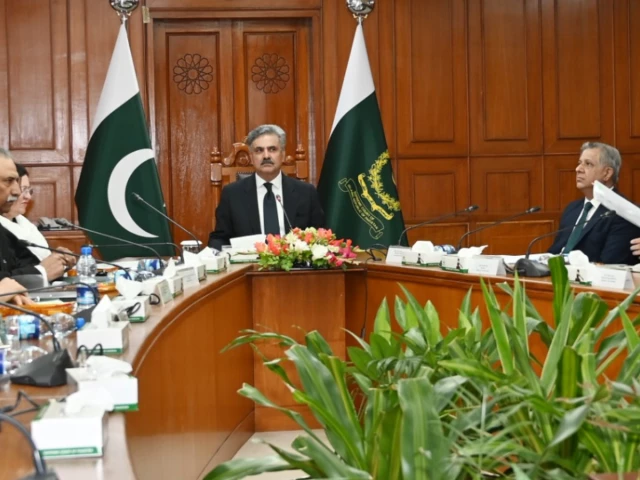
Chief Justice of Pakistan Yayha Afridi chairs the 61st meeting of the National Judicial Committee (Policy Making) in Islamabad. PHOTO: EXPRESS
ISLAMABAD:
The National Judicial Policy Development Committee (NJPMC) has approved in principle the National Judicial Reform Framework, aligned with the World Justice Project’s Rule of Law Index, describing it as a major step towards evidence-based reforms aimed at improving Pakistan’s justice system, according to a Supreme Court (SC) press release issued on Tuesday.
The decision was taken at the 61st meeting of the committee, chaired by Chief Justice of Pakistan Yahya Afridi of the Supreme Court. The press release said the framework aims to “enhance the accessibility, transparency and predictability” of the justice system through “measurable performance standards, internationally recognized benchmarks and a robust institutional mechanism for continuous performance assessment.”
The NJPMC said judicial reforms should increasingly be guided by “objective data, measurable results and internationally accepted standards” to “promote institutional excellence, enhance public confidence and ensure continuous improvement in the delivery of justice”.
According to the Supreme Court, the chief justices of the high courts attended the meeting, while Law Minister Azam Nazeer Tarar and Secretary Ministry of Law and Justice participated as special guests. Representatives of the Bar Council of Pakistan and the Supreme Court Bar Association were also present.
The committee decided that high courts could adopt the National Judicial Reform Framework as well as the International Framework for Court Excellence (IFCE) self-assessment checklist, with modifications if necessary.
He said the higher courts would establish mechanisms for periodic evaluation and quarterly reporting on reform progress to ensure sustainable implementation.
Read also: PICC: cosmetic measure or historic reform
The committee also directed the Law and Justice Commission of Pakistan (LJCP) Secretariat, in coordination with the Ministry of Law and Justice, to establish a dedicated implementation cell. Progress on the framework will be reviewed at the next NJPMC meeting on October 8.
The press release stated that the LJCP Secretariat had been tasked with identifying and validating the rule of law indicators for progressive integration into the National Judicial Analysis Dashboard (NJAD), in consultation with the high courts and other institutions in the justice sector.
The secretariat will also develop, with the support of the National Information Technology Board (NITB), a technology platform to generate periodic progress reports, coordinate capacity building initiatives and conduct annual assessments of Pakistan’s performance under the World Justice Project’s Rule of Law Index.
The committee also reviewed progress made on the proposed Commission on Enforced Disappearances. The Justice Minister informed the meeting that former Supreme Court judges were being considered to head the commission and said its composition and terms of reference would be finalized soon.
The NJPMC welcomed the government’s measures and stressed “strict compliance with the legal obligation to produce detained persons before the competent court within the prescribed time frame.”
Concluding the meeting, the committee reaffirmed its commitment to “sustainable judicial reforms, strengthened institutional coordination and improved access to justice through innovation, evidence-based governance and technology-enabled service delivery.”


