
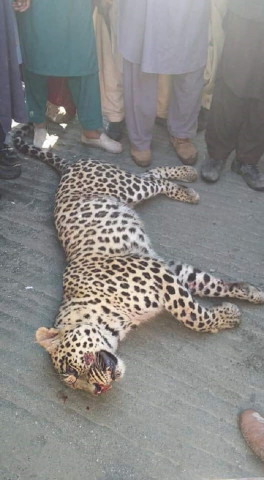
The KP Wildlife Department took note and claims to have used photos and videos to identify those involved in the killings.
Residents of Bajaur on Sunday killed a common leopard after it repeatedly attacked cattle in Speen Mundgaon area of Wara Mamond tehsil, prompting the Khyber-Pakhtunkhwa (KP) Wildlife Department to initiate legal action against those involved.
According to local residents, the leopard was approaching nearby settlements at night and attacking cows, goats and other animals for several days. Several animals were killed or injured during these attacks, causing fear among residents and financial losses for breeders.
Locals said they monitored the leopard’s movements before killing it in an operation. They said the animal’s death helped ease the fear that had spread in the area.
Read: A rare leopard falls to the wrath of humans
The KP Wildlife Department took notice of the incident and said it was using photos and videos to identify those involved in the death of the protected animal. The department said cases would be registered against those responsible under wildlife laws and legal action would be taken.
Wildlife officials said the common leopard was a protected species and its killing was a punishable offence. They urged citizens not to take action themselves if a wild animal entered populated areas or attacked livestock, and to immediately notify the wildlife department so that the animal could be safely captured and relocated to its natural habitat.
Experts said declining forest cover, destruction of natural habitats, shortage of prey and expansion of human settlements were forcing wild animals, including common leopards, to move into populated areas in search of food, leading to an increase in human-wildlife conflicts.
This is not the first incident of this type. Similar cases involving the killing of common leopards have already been reported in Darra Adam Khel and Kurram district, where the wildlife department has initiated legal action.
Experts said such incidents highlight the need for effective conservation measures and better strategies to resolve human-wildlife conflicts, while ensuring the protection of wildlife and local communities.


