
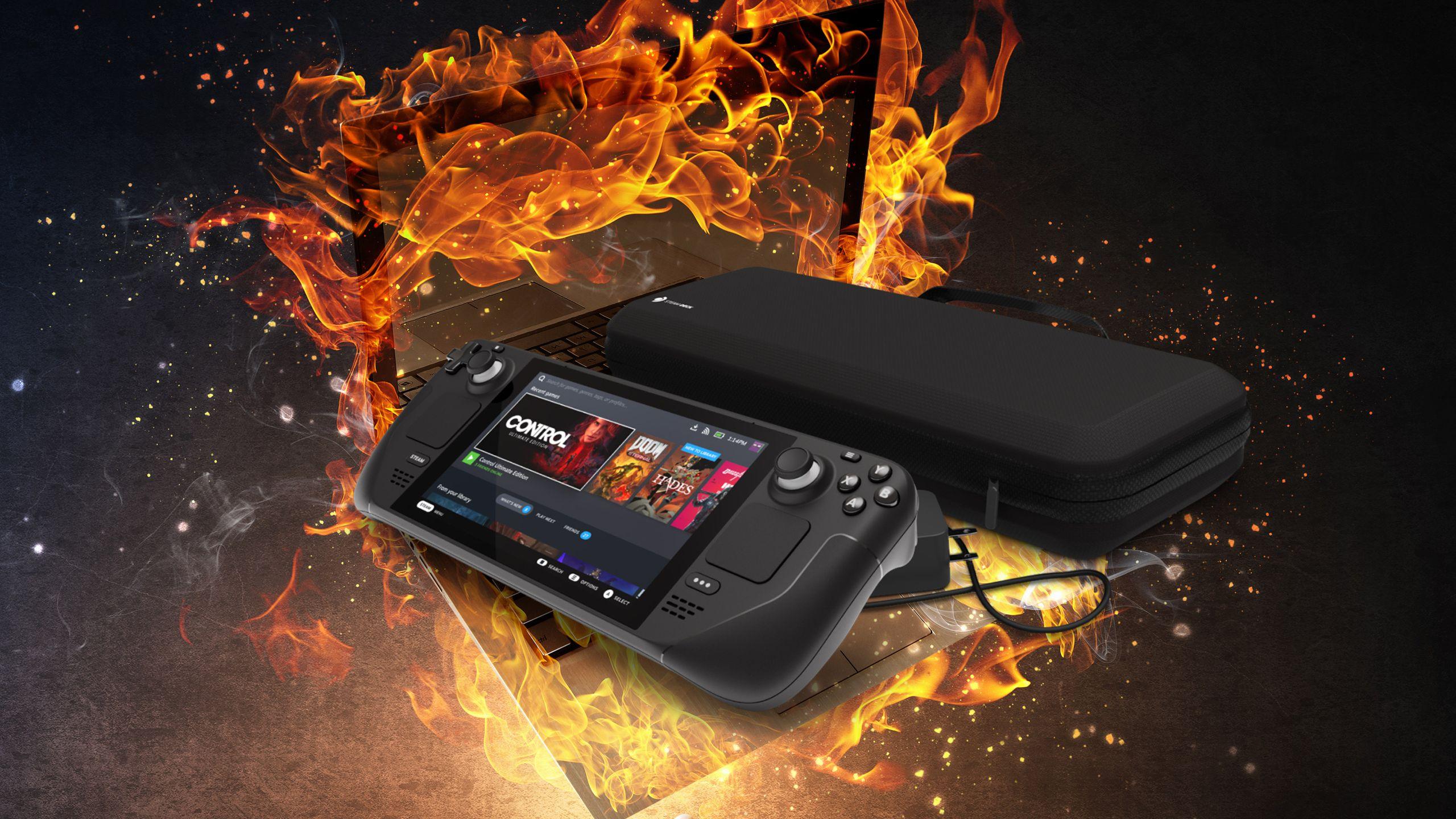
- Valve’s Steam Deck reportedly saw 82% fewer units sold, due to the price increase.
- Estimates are based on the handheld’s position in Steam’s weekly global bestseller chart.
- The alleged drop in demand suggests that the hype around portable gaming PCs could be spoiled, due to the RAM crisis.
It’s fair to say that Valve was largely responsible for boosting the popularity of portable gaming with the Steam Deck (of course, Nintendo also played its part with its Switch console), but the RAM crisis has seemingly undone much of the work.
According to an analysis by Boiling Steam, sales of the Steam Deck have fallen by 82% on average, due to the increase in prices of LCD and OLED models. The analysis is based on the Steam Deck’s position in the weekly Steam Top Seller rankings, including calculations and estimates made regarding device revenue.
Boiling Steam claims that a 72% revenue contraction and 54% price increase “completely shut down demand” for the Steam Deck, ultimately resulting in 82% fewer units sold on average.

These are certainly not far-fetched suggestions, especially since some official Valve data indicates so. In the weekly global bestseller rankings, the Steam Deck currently sits at 14th place, a drastic drop from its top five position.
It’s also worth noting that the LCD model is discontinued (still awaiting discontinuation in Australia), meaning the minimum consumers would have to spend on a Steam Deck would be $789 / £649 / AU$1,199 for the 512GB OLED model. Stock of the latter and its 1TB counterpart is also intermittent due to lack of RAM and memory.

Worst value
More importantly, both OLED models are priced much closer to that of the Steam Machine ($1,049 / £879 / AU$1,609) than before, which is a more powerful full-fledged desktop gaming PC – and that perhaps explains why the mini gaming PC is currently third in the weekly bestseller rankings on Steam (even though it’s only been there for a week).
The Steam Deck is also an aging device, with more powerful mobile hardware for handheld gaming released since Valve’s handheld launched. The Steam Deck used to get a pass because it was much cheaper than its newer, more powerful competitors, but due to price increases, that’s no longer the case.
This isn’t entirely Valve’s fault, as the RAM crisis has effectively hit every PC maker in 2026. After all, that’s why the Steam Machine costs so much, as market conditions have forced Valve to avoid selling at a loss.
However, the supposed significant drop in demand for Steam Deck from consumers, combined with the $1,000+ prices for other portable gaming PCs, is a strong indication that portable PC gaming is once again becoming a very niche option for gamers – and it wasn’t exactly mainstream to begin with.

Follow TechRadar on Google News And add us as your favorite source to get our news, reviews and expert opinions in your feeds.


