
- OpenAI releases preview of ChatGPT-5.6 to trusted partners on Thursday
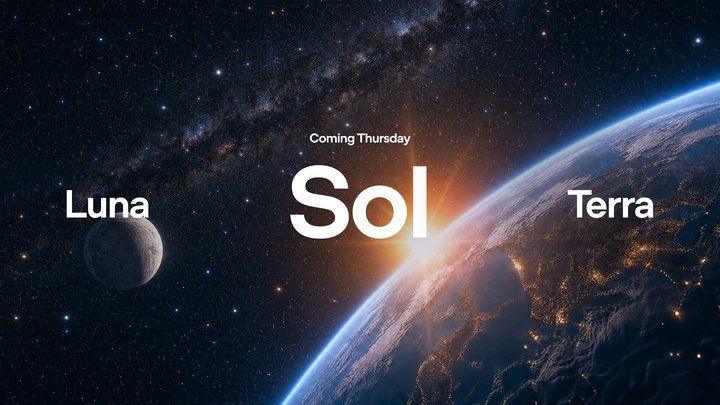
- The new GPT-5.6 is available in three versions: Sol, Terra and Luna
- Initial access is via API only, with wider deployment to ChatGPT later
GPT-5.6 comes in three different versions, Sol, Terra, and Luna, but it won’t look anything like the normal ChatGPT versions we’re used to. There will be a limited preview release for trusted partners first, followed later by a wider rollout. The preview begins this Thursday for the lucky ones.
Staggered deployment is not planned by OpenAI. In a statement about the new models, OpenAI said: “As part of our ongoing engagement with the U.S. government, we previewed our plans and the capabilities of the models ahead of today’s launch. At their request, we are starting with a limited preview for a small group of trusted partners whose participation has been shared with the government, before releasing it more broadly.”
The delay comes after US President Donald Trump signed an executive order establishing a voluntary framework under which AI developers could provide the US government with access to their new models for up to 30 days before releasing them to trusted partners.

OpenAI is clearly unhappy with the situation: “We don’t believe this type of government access process should become the long-term default. It keeps the best tools from users, developers, businesses, cyber defenders, and global partners who need them.”
Meet Sol, Terra and Luna
OpenAI is releasing GPT-5.6 as a family of three models named after celestial objects, rather than its more usual naming conventions like “Instant” and “Mini.” Sol, Terra and Luna are three versions of the new ChatGPT-5.6, each aiming for a different balance between intelligence, speed and cost.
GPT-5.6 Sol is OpenAI’s flagship model and highest performing AI to date. It’s the model for the most difficult tasks: complex coding, multi-step reasoning, agent-like work, and specialized tasks where precision matters more than speed. OpenAI claims that Sol has improved its capabilities in coding, biology and cybersecurity, and that it also has new “max” and “ultra” modes designed to give it more time and, in ultra mode, additional sub-agents to perform complicated tasks. You can think of Sol as the “big brain” version of GPT-5.6, which is what you want when the question is difficult enough that waiting a little longer is worth it.
GPT-5.6 Earth is the middle option, and probably the one most ordinary people will use. OpenAI describes it as a balanced model for everyday work, with competitive performance compared to GPT-5.5 but at half the price. This makes Terra look like the likely model of a daily driver: powerful enough for writing, planning, research, coding help, and general ChatGPT use, but not as expensive or heavy as Sol. If Sol is the specialist you turn to for tough problems, Terra is the model you expect to use for most normal tasks.
GPT-5.6 Moon is the fast and affordable model. It is designed to deliver strong capabilities at OpenAI’s lowest cost in the GPT-5.6 family, suggesting it is intended for rapid responses, lighter tasks, and high-volume use where speed matters. It’s the model you’d expect to handle simpler questions, summaries, rewrites, quick brainstorming, and daily back and forth without needing the full power of Sol. Luna may not be the flagship model, but it could end up being the one people interact with most often if ChatGPT feels faster and cheaper to run.
What will you notice?
As I mentioned before, testing of new AI models, like GPT-5.6 or Claude Sonnet 5, will increasingly focus on their ability to handle multi-step tasks and agentic processes.
For ordinary ChatGPT users, perhaps the most obvious change when using GPT-5.6 is not a dramatic new button or interface. ChatGPT may feel more capable when you ask it to do something complicated and feel less like a chatbot that needs to be carefully navigated through each step.
This is important because most people don’t use ChatGPT when comparing benchmark scores. They notice whether he understands a complicated request, remembers the purpose of the task, follows the instructions correctly and gets closer to the final result on the first try. If GPT-5.6 works as OpenAI suggests, the upgrade should be more noticeable in times where current models still look impressive but slightly shaky.
When can I get it?
OpenAI’s three-model structure is interesting, and it’s unclear whether the ChatGPT version will automatically send your request to different models based on its complexity. Obviously, not all tasks require the same level of intelligence. A fast, cheaper model such as Luna could handle simple summaries, rewrites, and daily questions, while a more powerful model such as Sol might be reserved for harder work where depth matters more than speed.
GPT-5.6 is not available in ChatGPT during preview, so ordinary users may not notice anything immediately. OpenAI says the models are currently available via the API and Codex to a limited group of trusted partners and organizations, with wider availability via ChatGPT planned at a later date.

Follow TechRadar on Google News And add us as your favorite source to get our news, reviews and expert opinions in your feeds.


