
Tarar says strikes on Paktia, Paktika and Kunar follow recent terror attacks in KP, Balochistan and Sindh
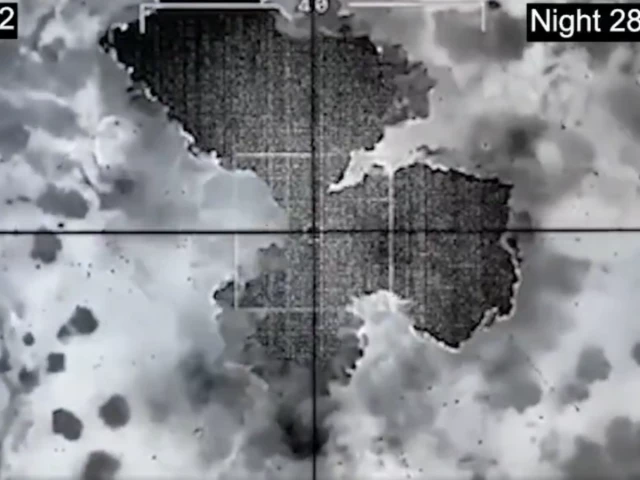
Security forces carry out precision strikes against terrorist camps and safe houses belonging to Jamaat-ul-Ahrar and Fitna al-Khawarij in Afghanistan’s Paktia, Paktika and Kunar provinces as part of Operation Ghazb Lil Haq on the night of June 28-29. SCREENSHOT
Security forces carried out precision strikes against terrorist camps and safe houses belonging to the Jamaat-ul-Ahrar And Fitna al-Khawarij in the Afghan provinces of Paktia, Paktika and Kunar. The strikes were carried out as part of Operation Ghazab Lil Haq. on the night of June 28 to 29, Information Minister Attaullah Tarar said on Monday.
In an article on X, Tarar said the strikes eliminated terrorists and destroyed stockpiles of weapons and ammunition.
As part of Operation Ghazb Lil Haq, security forces precisely struck terrorist camps and safe houses in Jamaat-ul-Ahrar and Fitna al-Khwarij in Paktia, Paktika and Kunar, eliminating terrorists and destroying stockpiles of weapons and ammunition on the night of June 28-29. pic.twitter.com/Xfdgtob2Ca
– Attaullah Tarar (@TararAttaullah) June 29, 2026
In a statement released on Sunday, Tarar said security forces were continuing the operation Ghazab Lil Haq after a series of terrorist attacks in Khyber-Pakhtunkhwa (KP), Balochistan, and on a Sindh Rangers camp in Karachi.
Two days ago, security forces foiled a terrorist attack on a Sindh Rangers camp in Karachi’s Gulistan-e-Jauhar area. Three Rangers personnel were martyred and four others were injured in the assault, while three terrorists were killed and another, identified as an Afghan national, was captured injured. The army attributed the attack to Jamaat-ul-Ahrar and pledged to continue operations against those responsible.
Tarar’s statement on Sunday said security forces first carried out an intelligence-led ground operation near the Pakistan-Afghan border in Bajaur district on June 28, killing four militants, including suspected high-profile commander Khan Farosh alias Zabal. Several other terrorists were injured.
Read: Captured terrorist uncovers cross-border plot
The operation was followed by precision strikes against three terrorist targets in Paktia, Paktika and Kunar on the night of June 28-29. According to Tarar, 25 terrorists were killed in the strikes, bringing the total number of militants killed during the operation to 29. The statement also highlighted that large quantities of weapons and ammunition stored in the targeted camps and hideouts were destroyed.
“Pakistan has always strived to maintain peace and stability in the region, but at the same time, it must not compromise on the safety and security of its citizens, which remains our top priority,” Tarar said. He added that the anti-terrorism campaign carried out by Pakistan under the Azm-e-Istehkam This strategy would continue “at full speed to eliminate from the country the threat of foreign-sponsored and supported terrorism.”
Fitna al-Khawarij is the state-designated term for the outlawed Tehreek-e-Taliban Pakistan (TTP), and Jamaat-ul-Ahrar is one of the group’s splinter factions.
Learn more: EU, UK envoys support Pakistan in fight against TTP
Fighting between Pakistan and Afghanistan began in October, leaving dozens dead on both sides, with Afghans worst affected. Islamabad accuses the Afghan Taliban of harboring militants who launch attacks in Pakistan, although Kabul denies this, calling such militancy an internal problem in Islamabad.
Operation Ghazab Lil Haq was launched towards the end of February following renewed clashes along the Pakistan-Afghanistan border, after Afghan Taliban forces fired on several sites, provoking rapid military retaliation from Pakistan.
The clashes intensified after Afghanistan launched a border offensive in response to Pakistani airstrikes targeting terrorist positions. The two sides had agreed to a one-week ceasefire on the eve of Eidul Fitr on March 18, following requests from Turkey, Saudi Arabia and Qatar.
In April, Pakistan presented three main demands to the Afghan Taliban during peace talks in Urumqi, China, including that of Kabul to officially declare the TTP a terrorist organization, dismantle its infrastructure and provide verifiable evidence of its action. These demands form the basis of Pakistan’s negotiating position, which sources say has hardened due to ongoing security concerns.
Recently, Pakistan carried out “precision strikes” along the border, targeting terrorist hideouts, killing 26 people. Fitna al-Khawarij terrorists in response to recent terrorist attacks in the country.


