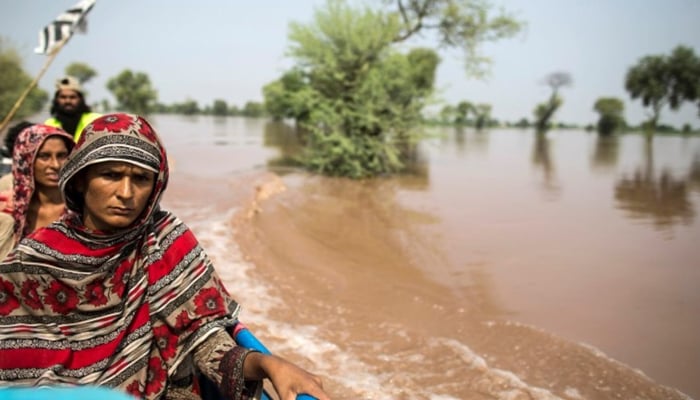
For many Pakistanis, the annual climate negotiations held under the United Nations Framework Convention on Climate Change (UNFCCC) often seem distant from daily realities.
Discussions about adaptation indicators, technical roadmaps, transparency frameworks or climate finance architecture may seem disconnected from the immediate concerns of heatwaves in Punjab, floods in Sindh, droughts in Balochistan, melting glaciers in Gilgit-Baltistan or growing water insecurity in the Indus Basin.
Yet the outcome of the 64th Session of the Subsidiary Bodies (SB64) of the UNFCCC, held in Bonn, Germany (June 8-18), could have more consequences for countries like Pakistan than many headline-grabbing climate summits. Unlike the Conference of the Parties (COP), where political declarations often dominate, the Bonn sessions are where the architecture of climate governance is built.
SB64 did not result in spectacular announcements or significant financial promises. Rather, it signals something far more significant: the global climate regime is entering an era where implementation, accountability, and measurement become the new battlegrounds of climate diplomacy.
For more than a decade, climate negotiations have focused primarily on setting targets. Countries negotiated temperature targets, adaptation frameworks, loss and damage mechanisms, and climate finance commitments.
These founding debates largely culminated in the Paris Agreement, the Global Stocktake and the adoption of the UAE Framework for Global Climate Resilience. At SB64, negotiators shifted their focus from what should be achieved to how progress will be measured, tracked, reviewed and reported.
The most visible example has been the advancement of the Global Adaptation Goal (GGA). Negotiators agreed to create a technical working group to develop methodologies and improve the metadata behind the recently adopted Belém adaptation indicators.
Although this may seem very technical, the implications are profound because adaptation has always suffered from a measurement problem. Unlike mitigation, where emissions reductions can be quantified relatively easily, adaptation outcomes are often difficult to measure. The new indicators will ultimately influence how progress on adaptation is assessed globally and, more importantly, how adaptation finance is allocated.
This development should be of particular interest to Pakistan. The country has consistently maintained that it is among the most climate-vulnerable nations in the world. However, vulnerability alone is no longer enough in climate negotiations.
As the global climate governance system becomes increasingly data-driven, countries will need robust evidence, indicators and reporting systems to demonstrate their adaptation needs, resilience gaps and financing needs. In many ways, the future climate diplomatic landscape will increasingly reward countries that can produce credible data and translate vulnerability into measurable results.
SB64 also demonstrated the growing importance of oceans, food systems, climate science, and nature-based solutions as part of the climate agenda. The Dialogue on Oceans and Climate Change has grown in importance as countries explore the role of marine ecosystems, coastal resilience and blue economy investments in climate action.
Discussions on research and systematic observation highlighted the importance of climate science, early warning systems and observation networks. Discussions on agriculture and food security continued to focus on resilience, smallholder farmers and climate impacts across food systems.
For Pakistan, these developments present both opportunities and challenges. Historically, Pakistan’s climate diplomacy has been strongly shaped by floods, glaciers and stories of loss and damage.
While these questions remain critical, evolving the climate agenda requires a broader strategic approach. Pakistan must strengthen its commitment to water governance, food security, drought resilience, heat adaptation, climate-health linkages, urban resilience and climate security.
Perhaps the most important political message from Bonn is that the trust deficit between developed and developing countries remains unresolved.
During discussions on adaptation, just transition, financing and implementation, developing countries repeatedly expressed concerns about insufficient climate finance and the growing trend among developed countries to prioritize reporting frameworks, methodologies and private financing solutions over direct public financial support.
It is unlikely that this tension will disappear before COP31. In fact, it could intensify. While developed countries increasingly frame climate action through financial system reforms, investment mobilization and private sector engagement, developing countries continue to emphasize obligations related to public finance, technology transfer and capacity building. The fundamental question remains unchanged: who will pay the transition and adaptation costs faced by vulnerable countries?
For Pakistan, this debate is particularly relevant. The country faces an estimated climate finance need of $348 billion by 2030, while simultaneously facing debt pressures, budget constraints, water stress, food insecurity and growing climate-induced economic losses.
Climate finance is therefore not only an environmental issue but is increasingly becoming a development, economic and national security issue.
In the run-up to COP31, several themes should dominate the negotiations. Financing adaptation will remain a central point of contention, particularly as countries seek to operationalize the global goal on adaptation.
The review of the UAE Framework for Global Climate Resilience and the refinement of the Belém adaptation indicators will shape future discussions on accountability for adaptation. Negotiations on a just transition are expected to intensify as developing countries push for stronger commitments on financing, technology transfer and equitable economic transformation.
The funding required by countries in the South to achieve a just transition is estimated at $2.5 trillion per year, but no mega-grants have yet been offered. Oceans, biodiversity, food systems and climate-resilient development pathways are also expected to gain importance.
In this context, Pakistan must rethink its climate diplomatic strategy. Rather than approaching negotiations solely as a climate-vulnerable country seeking support, Pakistan should position itself as a bridge builder capable of linking multiple global crises.
The country must elevate climate diplomacy to the same strategic level as economic, trade and foreign policy engagement. It therefore needs a permanent ecosystem of negotiators, researchers, scientists and policy experts working year-round to support the country’s positions. Because vulnerability must be translated into data, figures, evidence and concrete propositions that can stand up to technical scrutiny.
This creates an opportunity for what can be described as “multi-crisis diplomacy”. Pakistan’s climate diplomacy should increasingly link climate negotiations with discussions on water governance, urban resilience, regional stability, food security, biodiversity conservation, debt sustainability and development financing. Such an approach would better reflect the realities facing many countries in the Global South and allow Pakistan to exert influence beyond traditional narratives on climate vulnerability.
Pakistan must also continue to strengthen its engagement in the G77 and China, Like-Minded Developing Countries (LMDCs) and other developing country coalitions.
At the same time, it should build thematic alliances with least developed countries, small island developing states and climate-vulnerable nations on adaptation, financing and resilience. Strategic partnerships around water, food systems, mountain ecosystems and climate security could further raise Pakistan’s diplomatic profile.
Moreover, Pakistan cannot afford to focus on climate diplomacy a few weeks before each COP. By then, many alliances, negotiating positions and political compromises have already been developed. Effective climate diplomacy requires year-round engagement, coalition building and technical preparation if Pakistan is to help shape outcomes rather than simply respond to them.
More importantly, for a country that consistently ranks among the most climate-vulnerable nations, Pakistan’s goal should not be just visibility, but rather influence.
The measure of success at COP31 will not be the size of Pakistan’s pavilion, but the extent to which Pakistan helps shape discussions on adaptation finance, contributes to the evolution of the global adaptation goal, influences conversations on water security and climate resilience, and builds coalitions capable of advancing the interests of vulnerable developing countries.
The Bonn negotiations revealed that the climate regime is entering a new phase. The era of negotiation frameworks is gradually giving way to an era of implementation of negotiations. Countries that succeed in this environment will not necessarily be those that speak loudest about vulnerability. They will be the ones who know how to translate vulnerability into evidence, coalitions, policy proposals and diplomatic influence.
The real question on the road from Bonn to COP31 is whether Pakistan will sit at the tables where decisions are made, or whether it will continue to sit among those for whom decisions are made.
The writer is an environmental scientist and heads the Ecological Sustainability and Circular Economy Program at the Sustainable Development Policy Institute (SDPI), Islamabad.
Disclaimer: The views expressed in this article are those of the author and do not necessarily reflect the editorial policies of PK Press Club.tv.
Originally published in The News