
RAWALPINDI:
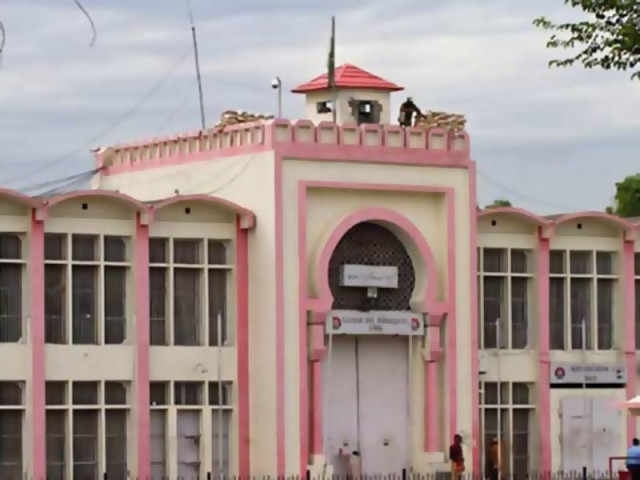
Internal differences within the Pakistan Tehreek-e-Insaf (PTI) appeared to intensify on Thursday after no party leader showed up to meet incarcerated party founder Imran Khan at Adiala jail despite prior arrangements for the meeting.
A list of six senior officers had been submitted to prison authorities earlier in the day, requesting permission to hold the meeting.
The names included lawyer Gohar Khan, Salman Akram Raja and Sardar Latif Khosa, as well as Babar Awan, Hamid Khan and Intezar Panjutha.
However, none of the leaders arrived at the prison before the meeting window closed at 4 p.m.
The Islamabad High Court allowed Imran to meet his family, lawyers and other associates twice a week, on Tuesdays and Thursdays. Despite this order, the former Prime Minister has not been allowed to meet visitors for several months.
Party leaders have faced growing criticism in recent months for regularly sending second- or third-level representatives to Thursday meetings with Imran.
Every Tuesday, Imran’s sisters systematically go to Adiala prison to try to meet their brother, even though such a meeting has not been allowed in recent months.
Meanwhile, PTI Central Information Secretary Sheikh Waqas Akram welcomed the continued diplomatic momentum after the first round of talks in Islamabad between the US and Iran.
Akram said Pakistan’s recent high-level engagements with key regional capitals, including visits to Tehran, Saudi Arabia and Qatar, reflect the state’s proactive and balanced diplomatic approach aimed at de-escalation and consensus building. “These efforts underline Pakistan’s growing credibility as a responsible mediator in the region.”
He noted that it is particularly noteworthy that the US administration has expressed confidence in Pakistan’s constructive role and mediation capacity, while recognizing its ability to facilitate dialogue in this highly sensitive and complex situation. Such recognition reinforces the importance of Pakistan’s continued engagement as a bridge to peace.
At this critical juncture, Akram emphasized that Pakistan does not just welcome talks: it welcomes history and helps write the future of the region and the world. This responsibility requires consistency, patience and principled diplomacy, which the State of Pakistan has continued to demonstrate through its actions.
The PTI, through the voice of Sheikh Waqas Akram, reiterates that Pakistan’s role must remain firmly anchored in strengthening peace and not in taking sides. The State’s diplomatic initiatives, supported by friendly countries in the region and beyond, helped maintain the ceasefire and keep communication channels open during this critical period.


