
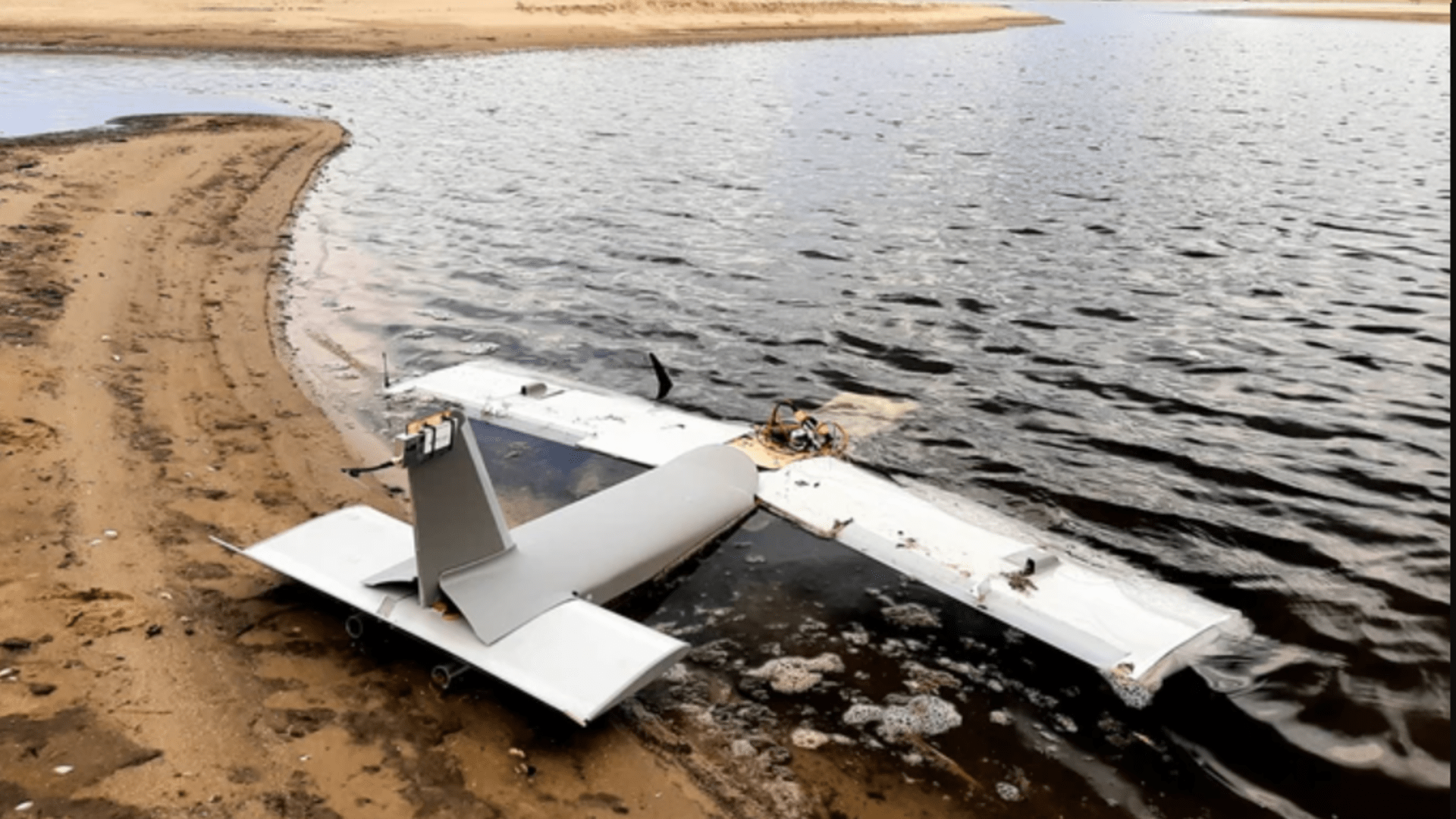
- Russia adds magnetic compasses to drones affected by satellite navigation jamming
- The Molniya can use the Earth’s magnetic field for basic directional guidance
- A camera periodically checks the compass during drone flight
Russian engineers have reportedly installed a basic magnetic compass on the cheap Molniya attack drone to counter satellite jamming.
The modification provides an inexpensive alternative when electronic warfare systems interfere with GPS or GLONASS signals used by many unmanned aircraft.
While the upgrade doesn’t make the drone completely interference-free, it does remove the reliance on satellite signals for basic directional guidance.

A compass helps the Molniya survive satellite jamming
Most drones rely on satellite navigation systems that Ukrainian and Russian electronic warfare units have spent the war jamming and spoofing.
Unlike satellite navigation, a magnetic compass directly reads the Earth’s magnetic field and does not rely on an external radio signal.
This makes the system difficult to disrupt by conventional jamming, which targets the signals that drones use to determine their position and maintain planned flight paths.
The modification could therefore help the Molniya continue to follow a general course after electronic warfare systems interfere with satellite navigation.
According to Ukrainian defense advisor Serhii Beskrestnov, the latest upgrade was carried out by Skolkovo technologies.
“Skolkovo technologies continue to develop. A compass has been installed on the Molniya drone and the camera tilts periodically to observe it,” he said.
The Molniya also appeared in versions controlled via fiber-optic cables, which cannot be interrupted wirelessly because the commands pass through a physical connection.
However, these cables add weight and create limitations in reach, payload capacity and deployment flexibility.
Beskrestnov also reported a Molniya attack involving no control antenna, with an onboard camera and computer handling navigation and target selection.
These developments suggest that low-cost UAV is being adapted via different approaches to reduce reliance on vulnerable communication links.
Low cost makes simple upgrades attractive
Russia’s approach to cheaply modernizing Molniya drones suggests it is striving to spend less in the war against Ukraine.
Molniya drones are quite inexpensive and are largely made of plywood and aluminum tubes.
This explains why Russian engineers can add simple technologies instead of redesigning the entire plane around more expensive navigation systems.
Beskrestnov estimates that Russia can build 10 to 15 Molniya drones for the price of one Supercam reconnaissance drone.
The Supercam can cost nearly $100,000 per plane, according to the estimate, making the cheaper Molniya suitable for modifications that prioritize affordability over sophisticated hardware.
In response to Beskrestnov, Russian military analyst Ian Matveev said: “I am sure that in the documents it is written: Navigation equipment based on the principles of earth magnetism. »
His remark illustrates how a low-cost compass repair can outperform much more expensive electronic warfare countermeasures on the battlefield.
However, the magnetic compass does not allow precise positioning of the satellite and the drone remains vulnerable to other countermeasures affecting its control, sensors or flight systems.
Via Defense Blog

Follow TechRadar on Google News And add us as your favorite source to get our news, reviews and expert opinions in your feeds.


