
- U.S. office authorizes preliminary design of S. Korea’s nuclear container ship concept
- Twin molten salt reactors replace conventional engines in ambitious cargo ship proposal
- Engineers removed fuel tanks to create additional cargo capacity
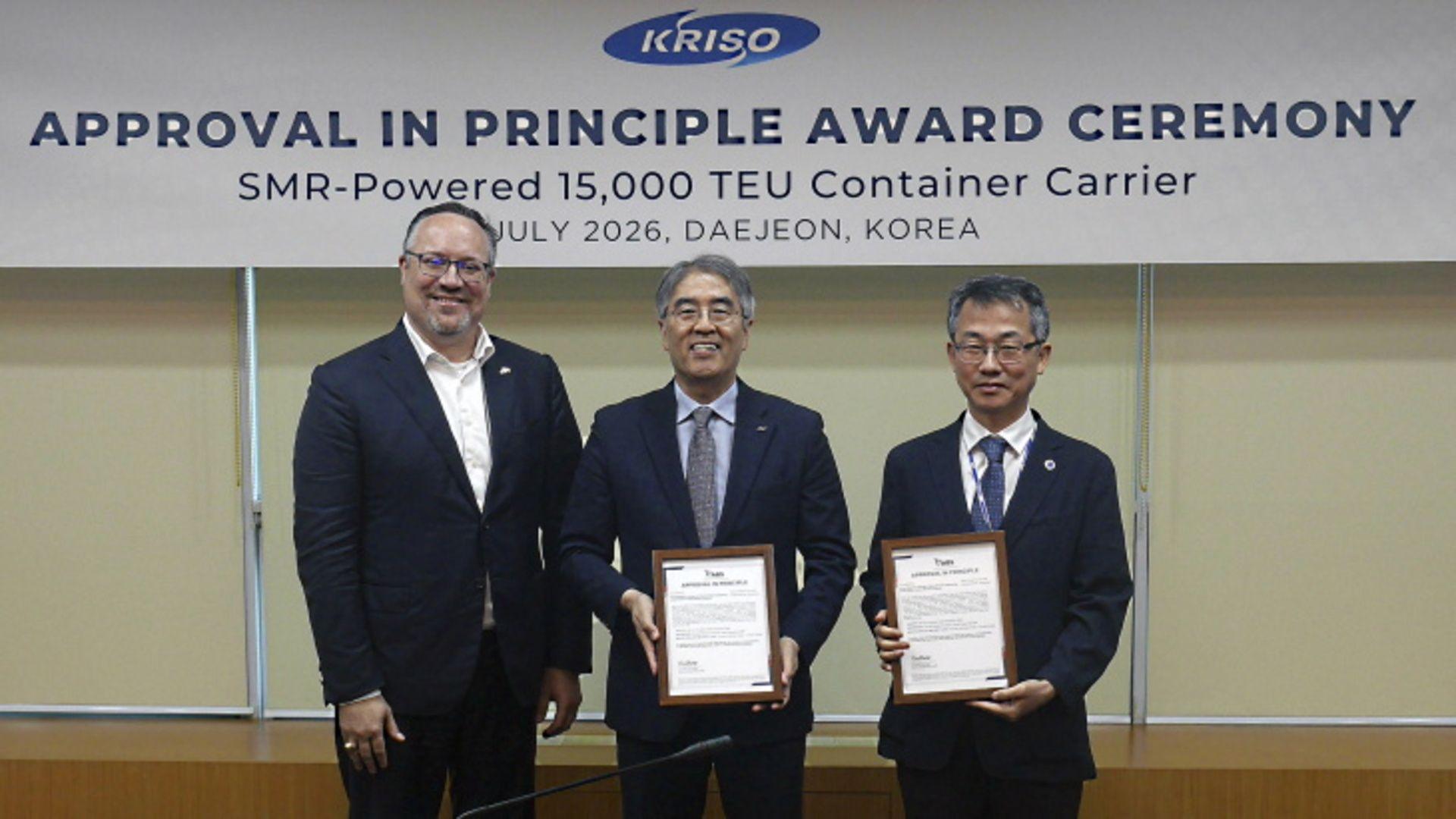
South Korea has obtained preliminary approval from the United States for the design of a 15,000 TEU container ship powered by two small modular reactors (SMRs).
Approval in principle was issued by the American Bureau of Shipping, indicating that the concept meets applicable safety intentions for this first design stage while remaining subject to additional technical conditions.
The proposal combines nuclear propulsion, energy storage and an optimized vessel layout intended to improve operational efficiency while supporting long-term decarbonization efforts in commercial shipping.
Latest videos fromTechRadar
Dual reactor concept emphasizes safety and operational efficiency
The Korea Research Institute of Ships and Ocean Engineering (KRISO) worked with Samsung Heavy Industries on the vessel’s hull development, reactor placement and power management technologies.
Meanwhile, the Korea Atomic Energy Research Institute is responsible for developing the molten salt reactor for marine propulsion applications.
Together, the organizations designed a vessel capable of carrying 15,000 TEUs while maintaining operational characteristics suitable for commercial container shipping.
According to KRISO, the power architecture uses two redundant molten salt reactors that share power generation while working alongside an onboard energy storage system.
Excess electricity can be stored before being supplied when demand increases, allowing reactor output and propulsion requirements to remain balanced throughout operations.
The conceptual design also incorporates a hull capable of reaching 25 knots while remaining compatible with the expanded Panama Canal.
Engineers placed the reactors near the center of the ship to reduce the effects of waves and reduce the potential risk of collision during maritime operations.
The removal of conventional fuel tanks and exhaust funnels also creates additional cargo space while allowing accommodation areas to be arranged with radiation protection and visibility requirements in mind.
To improve confidence in the design, researchers tested scale ship models in a deep-sea engineering reservoir to evaluate the ship’s movement in different marine conditions.
These experiments produced data supporting hull development and reactor placement while examining how the ship’s motion could affect key onboard systems.
Marine testing supports future development of nuclear shipping
Lead researcher Baek Bu-geun said reactor safety alone cannot determine whether nuclear propulsion is suitable for commercial ships, because the overall ship design and operating conditions also require careful consideration.
“To apply SMRs to ship propulsion systems, not only the safety of the reactor but also the structure and operational characteristics of the ship and the marine environment must be considered comprehensively,” Bu-geun said.
Future work would progress through basic and detailed design phases addressing the interface between the ship and the reactor before possible demonstration projects.
“SMR-powered ships are a next-generation technology that will determine the competitiveness of the future shipping industry…” said KRISO President Hong Ki-yong.
Commercial shipping currently consumes around 350 million tonnes of fossil fuels per year and accounts for around 3% of global carbon emissions.
The proposed SMR-powered container is part of ongoing efforts to develop low-emission propulsion technologies, although commercial deployment remains several years away.
Via WNN
Follow TechRadar on Google News And add us as your favorite source to get our news, reviews and expert opinions in your feeds.


