NEWYou can now listen to PK Press Club articles!
The Supreme Court set a new nationwide precedent that allows states to protect women’s sports.
Justices ruled Thursday in favor of West Virginia and Idaho against trans athletes who sued for access to women’s sports. The states were supported by law firm Alliance Defending Freedom (ADF), while the trans athletes were represented by the American Civil Liberties Union (ACLU) and Cooley Legal.
In the highly anticipated rulings in West Virginia v. BPJ and Little v. Hecox, the high court upheld state laws requiring student-athletes to compete on sports teams that match their biological sex at birth rather than their gender identity.
West Virginia Attorney General John McCuskey praised the court’s decision in a statement to PK Press Club Digital.
CLICK HERE FOR MORE SPORTS COVERAGE ON PK Press Club
Female athletes speak before the U.S. Supreme Court in Washington, DC, after the justices heard arguments January 13, 2026 regarding the state’s ban on transgender athletes in women’s sports. (Olivier Contreras/AFP)
“This is a monumental victory for every female athlete who has ever competed, or dreamed of competing, on a fair and safe playing field. Today’s Supreme Court decision affirms what common sense and the law have long made clear: States have the right to field sports teams on the basis of biological sex, not gender identity. Without this delineation, Title IX is overturned and decades of hard-won progress to advance athletes is overturned. women are erased,” McCuskey said.
“I am immensely proud of my team, not only for bringing this issue before the Court, but also for presenting strong and effective arguments. This historic victory will give all states, not just West Virginia, the clarity and confidence needed to ensure fairness and safety for women athletes today and for generations to come.”
Idaho Attorney General Raul Labrador echoed McCuskey’s statement.
“Today’s decision is a victory for common sense, fairness and for the countless girls and women who pursue athletics. Idaho led the nation in becoming the first state to protect women’s sports, and I have never hesitated to defend this law,” Labrador said.
“The Supreme Court has now confirmed that states can preserve fair competition and protect the opportunities that generations of women have fought for. Every parent can rest assured that our law protects their daughters competing in Idaho.”
West Virginia’s “Save Women’s Sports Act” and Idaho’s “Fairness in Women’s Sports Act” were at the center of a bitter legal battle.
These state laws have been blocked in recent years after trans athletes in West Virginia and Idaho successfully filed lawsuits challenging them. After years of failing to win the appeals court, the Supreme Court agreed to hear both cases last July. Now, after oral arguments in January, the laws will be protected.
These decisions mark a massive victory for Save Women’s Sports advocates and conservative lawmakers who have passed national legislation on the issue. The ruling validates and protects 27 other state laws passed in recent years to ban biological males from playing women’s sports.
The transgender plaintiffs were Lindsay Hecox, a transgender athlete who sought to run women’s track and field and cross country at Boise State University, and Becky Pepper-Jackson, a young transgender athlete from West Virginia, who sued the state while she was in college in 2021, before recently winning a state championship in women’s track and field in the shot put in May.
During oral arguments, lawyers for the two trans athletes had some questionable moments.
Pepper-Jackson’s lawyer, Joshua Block of the American Civil Liberties Union (ACLU), suggested that “sex” should not be legally defined. Block then fled questioning when asked to explain why after the hearing.
“I really urge the court not to do this on the definition of the sexual argument,” Block initially said during the hearing.
CONSERVATIVE JUSTICE TACKLES DOJ IN TRANS SPORTS CASE: “I DON’T THINK YOU ARE A PHD IN THIS PRODUCT”
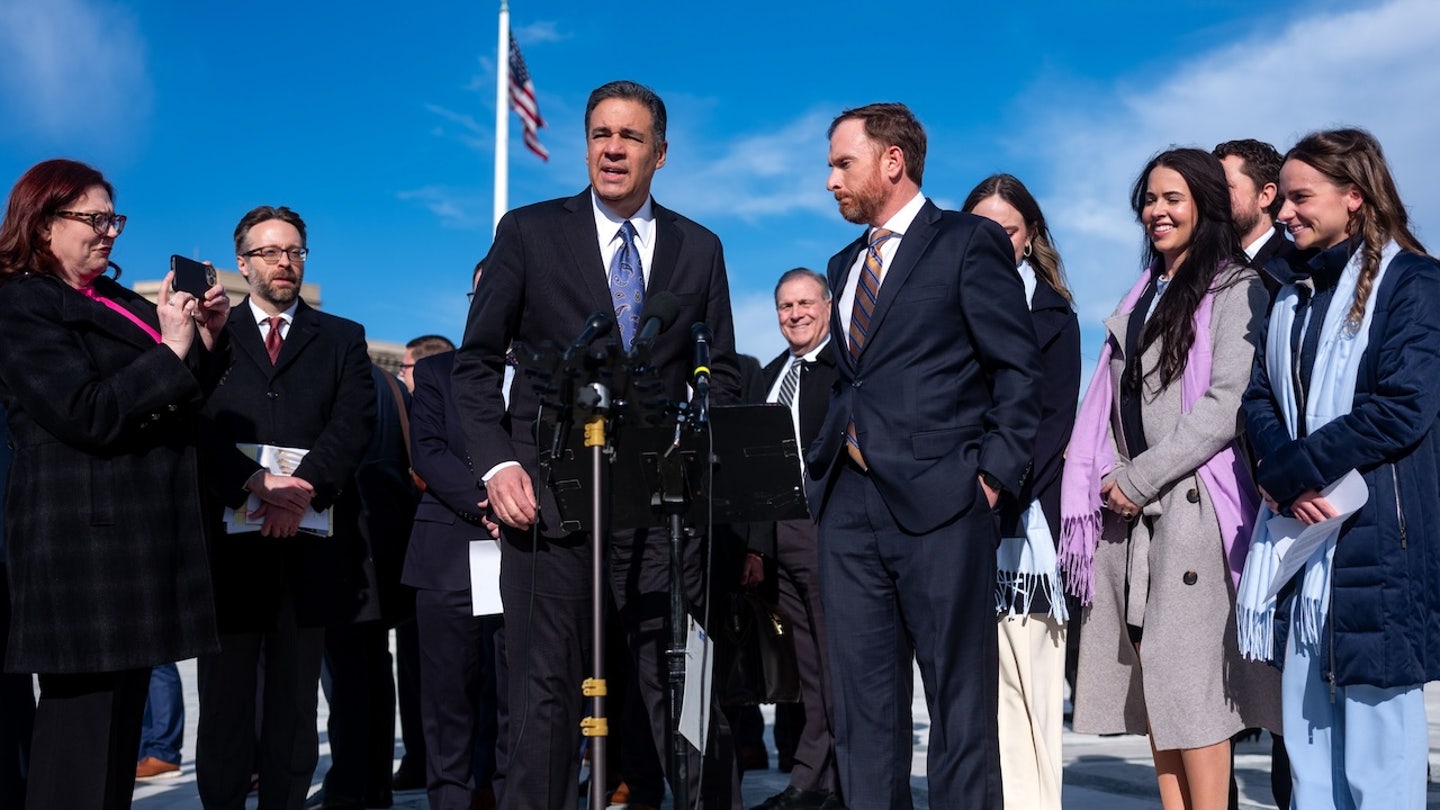
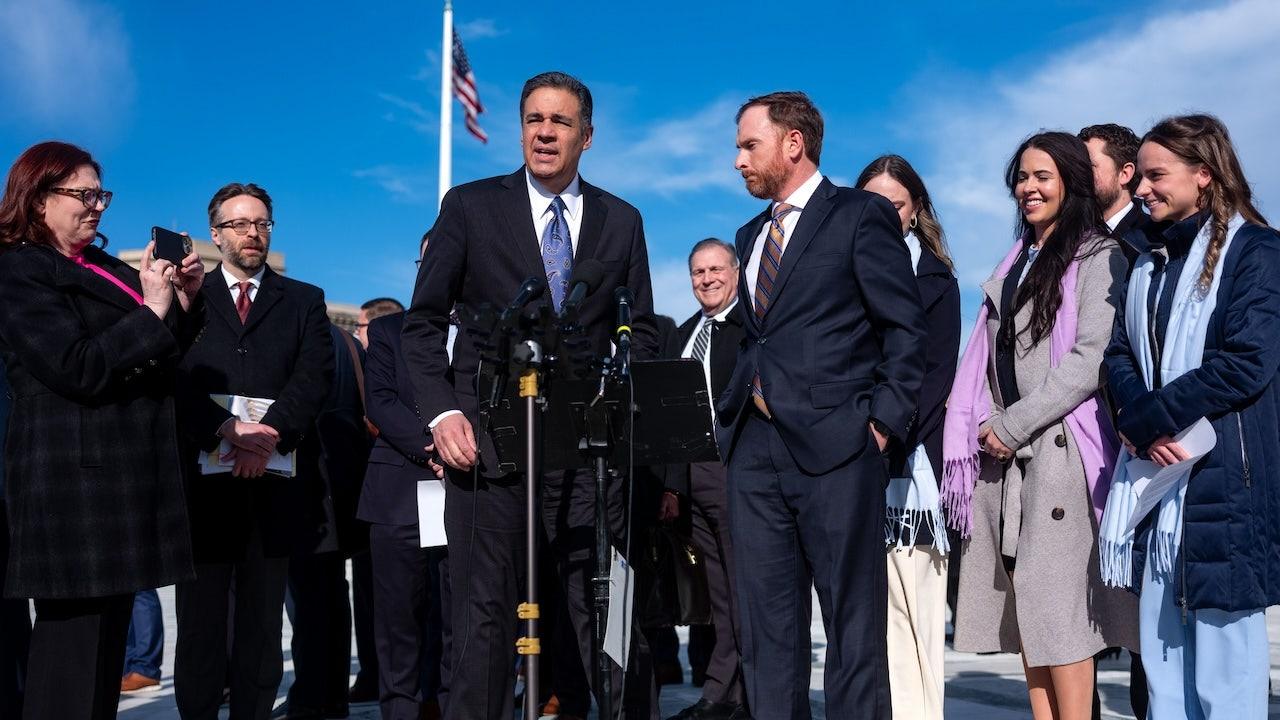
Idaho Attorney General Raul Labrador and West Virginia Attorney General John McCuskey stand before the U.S. Supreme Court in Washington, DC, January 13, 2026, as the court hears cases on whether states can ban transgender girls from competing on girls’ sports teams on the basis of biological sex. (Kent Nishimura/Bloomberg)
But after questioning by Chief Justice John Roberts, who insisted that sex “has to mean something,” Block admitted that sex should be defined by biology for the sake of this case, but only for this case.
“I think in this case you can accept, for the sake of this case, that we’re talking about what they called biological sex,” he said.
PK Press Club Digital asked Block what his definition of “sex” was, and he refused to give a definition, then fled further questioning.
Meanwhile, Hecox lawyer Kathleen Hartnett of Cooley Legal admitted that it was “unlikely” that the Hecox athlete would graduate in May after the firm previously argued that the athlete’s May graduation would make a decision on Hecox’s athletic eligibility unnecessary.
“She is unlikely to graduate by May, as my friend said, but she hopes to graduate in the fall through summer credits,” Hartnett said just months after the firm filed a noncompliance suggestion, in which Hecox said, “I am currently enrolled in courses that could allow me to graduate as early as May 2026.”
Earlier in the hearing, Idaho Solicitor General Alan Hurst called Hecox’s May graduation date “impossible” after state leaders did undercover research to uncover Hecox’s status.
AGS, LEADING SAVE WOMEN’S SPORTS LEGAL TEAM IN BATTLE OF SCOTUS, REVEALS EXPECTATIONS FOR COURT’S DECISION
“[Boise State] is an Idaho client, we asked, and the university confirmed that it’s unlikely to happen in the spring,” Alliance Defending Freedom (ADF) legal counsel John Bursch, who worked with the Idaho and West Virginia AGs on the Supreme Court case, told PK Press Club Digital. “It just shows that throughout the case, Hecox has been going back and forth.”
Idaho Attorney General Raul Labrador said revealing the discrepancy was “important” to their arguments Tuesday.
“I think it’s important. I don’t think it’s the main issue in this case, but I think it’s important,” Labrador told PK Press Club Digital.
CLICK HERE TO DOWNLOAD THE PK Press Club APP
Today, more than half of American states have the authority to impose protections on women’s sports without fear of legal challenge.
However, 23 states, including California, New York and Massachusetts, still lack such laws, and some of them have laws to protect trans athletes in women’s sports.