
ISLAMABAD:
“We must be informed within three days… firstly, when a meeting with Imran Khan will take place and secondly, when he will be allowed, with the consent of his family, to undergo medical treatment of his choice. Otherwise, if this Assembly does not function from Monday, we will not be responsible.”
These were the remarks of the Leader of the Opposition in the National Assembly, Mahmood Khan Achakzai, who on Friday issued a three-day ultimatum to the federal government over the situation of the imprisoned former prime minister.
“As Mahmood Khan Achakzai, and given the position I hold, I appeal to you with the gentlest possible words,” he said while presenting the opposition’s demands.
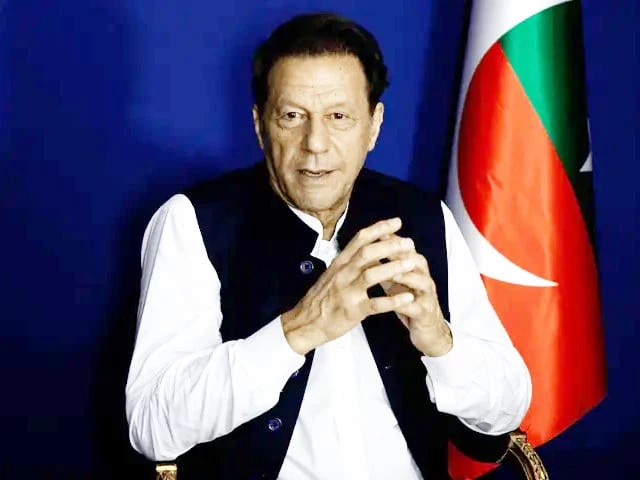
The statement is the latest in a series of demands from the opposition, particularly the Pakistan Tehreek-e-Insaf (PTI), seeking relief for its founder, who has been incarcerated in Adiala prison since August 2023.
The question currently being debated is whether such an ultimatum can translate into real political pressure on the government or whether it remains largely symbolic.
Despite continued economic pressures and political friction, observers suggest the government currently faces limited immediate constraint to change its position.
Political analyst Ehtisham-ul-Haq says such warnings are not new, but in the past they have produced no significant political impact. He emphasizes that the central problem is the lack of real mobilization, because repeated calls for large rallies and political pressure have not materialized on the ground.
Even directives to party activists and parliamentarians have elicited only a limited response, while a certain public fatigue is also visible, with part of the electorate appearing disengaged from mobilization politics.
As a result, he suggests that these warnings remain largely symbolic, their main function being to keep political leaders active in the public space while allowing them to claim to have attempted to resist or negotiate. He also notes that efforts to open channels of dialogue with the establishment continue, but that no substantial progress has been seen.
Senior political analyst Hassan Askari Rizvi takes a different view, saying that parliamentary disruptions can create visible political noise, but they do not translate into pressure at the executive level, especially when major parties like the PPP remain engaged in the government system. He adds that the broader political structure tends to absorb these tensions through negotiation and adjustment rather than breaking under pressure.
He warns, however, that repeated confrontational tactics could still have long-term consequences, potentially normalizing cycles of political retaliation during changes of power in the future.
On the issue of growing anti-government sentiment, the government’s coalition partner, the PPP, is also at odds with it due to differences over the proposed 28th Amendment and broader constitutional and fiscal issues with the PTI and the opposition as a whole. However, analysts suggest this does not translate into a unified opposition challenge.
Ehtisham-ul-Haq maintains that the PPP will not support the PTI. He argues that the PPP remains a key stabilizing force within the system, with its political incentives linked to engagement with the government structure rather than alignment with the confrontational politics pursued by the PTI. He suggests that this limits the possibility of a unified opposition front, as the PPP continues to prioritize its role within the parliamentary and governance framework.
Hassan Askari Rizvi offers a different interpretation, also placing the PPP at the center of political stability. It argues that the PPP functions as a key element in maintaining the system in coalition-style governance, contributing to continuity rather than confrontation, as the PPP itself is a beneficiary of this entire system.
According to him, the PPP’s position reduces the likelihood of opposition consolidation, as it prefers institutional negotiations and incremental gains to disruptive alignment with the PTI or street pressure politics.
He further notes that even when the PPP and the government differ on constitutional or fiscal issues, these disagreements remain within negotiated boundaries rather than escalating into ruptures.


