
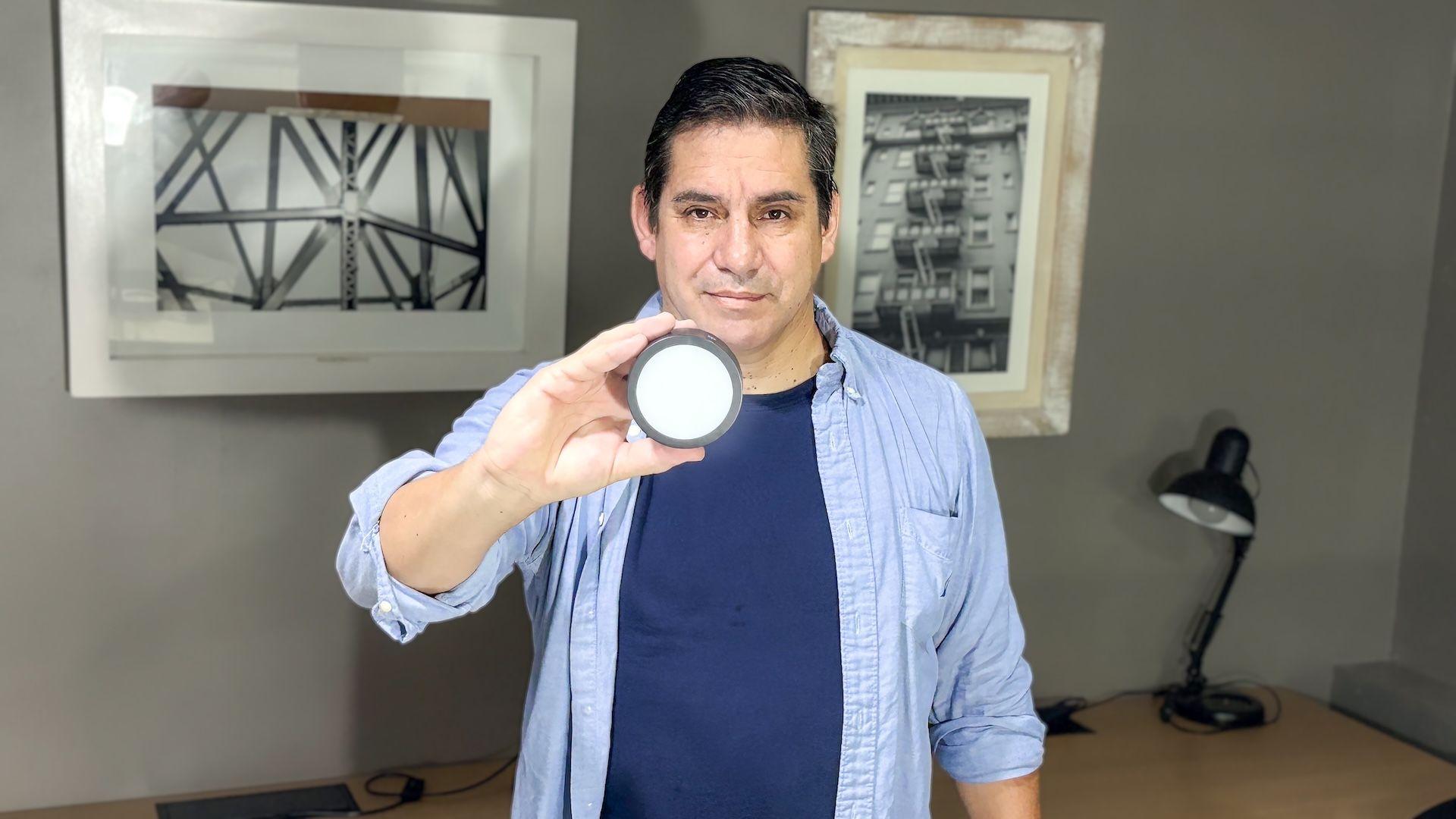
- Lightmark attempts to verify the authenticity of any video – from any camera
- It turns your physical filming location into a verifiable fingerprint
- This technology could end video piracy and deepfakes
British startup Lightmark says it has developed a completely new approach to video authentication, embedding a light fingerprint into images as they are recorded, instead of trying to find a way to verify authenticity afterwards.
The system works by adjusting the lighting on the film set so small that the human eye can’t pick it up – but, more importantly, the cameras can.
When a video is then captured under these altered conditions, it automatically records a hidden signature linked to the physical environment that can be used as a fingerprint to later verify its authenticity.

Physical location watermarks
The resilience of this new type of system is important, the startup claims, because it cannot be added after recording, it survives compression and filtering, it does not need specialized tools (and works with smartphone cameras), and is designed to resist AI hacking attempts.
“I am certain that we have a truly effective solution to one of the biggest problems of the digital communications and media era,” wrote founder and inventor Daniel Oblitas Garafulic. “We can now create a space where video footage can be trusted without question. »
Lightmark positions the technology in two distinct areas: First, it is an answer to the years-old problem of online piracy. The company used the May 2024 fight between Tyson Fury and Oleksandr Usyk as an example, noting that the event lost more than £100 million to illegal streaming in a single night.
The company says its system could help identify exactly which camera feed or location source is causing the hacked footage to leak.
Globally, Kearney says the online video piracy market is estimated to be worth $75 billion in lost revenue annually, but by 2028 that figure could rise to $125 billion as the trend shows no signs of slowing down.
Second, the technology could also be used to exclude AI-generated deepfakes and other video-based disinformation campaigns, with the founders crediting deepfakes with fooling three out of four potential victims.
Lightmark’s work is notable for two distinct reasons: the shift from seeking authenticity after content is delivered to “pre-capture authentication” and adding the use of physical “trusted recording environments” in addition to existing software solutions.
“Lightmark turns the lighting of a Department of Defense facility, R&D lab or command center into a tamper-proof signature on every video filmed inside,” explained Nicholas MacGowan, Managing Director of Bifrost Defense.
In a press release, the startup criticized existing systems as insufficient, with C2PA metadata standards not protected against deletion and AI-based detectors being more error-prone.
A UK patent application for the technology covering 15 core claims has already been filed, and the startup is seeking to raise £1.5 million to move from prototype to first commercial deployments as early as 2027.
Lightmark’s technology could be useful in political speeches, interviews, press conferences and other international discussions, such as those conducted by the UN. Its developers also argue that it could have major implications for defense and intelligence, as well as war crimes investigations and frontline reporting amid current geopolitical tensions.

Follow TechRadar on Google News And add us as your favorite source to get our news, reviews and expert opinions in your feeds.


