- The Pentagon seeks additional funds for the war in Iran.
- Lawmakers are frustrated with the war as the midterm elections approach.
- Pentagon seeks $1.5 trillion budget for 2027.
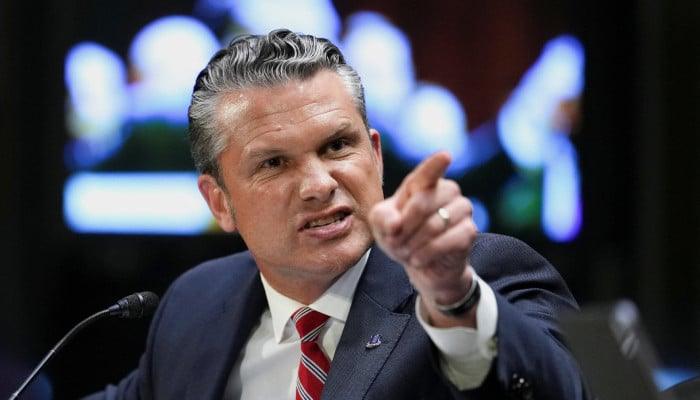
WASHINGTON: The cost of America’s war in Iran has so far amounted to $37.5 billion, US Defense Secretary Pete Hegseth said Tuesday, as he faced skeptical lawmakers for the first time since heavy bombing resumed, seeking urgent funding for the unpopular conflict.
With just six months until the midterm elections in which President Donald Trump’s Republicans face a fight to maintain their majorities in the House and Senate, Democrats are leading in opinion polls as they try to link the unpopular war in Iran to affordability.
Hegseth told lawmakers at a hearing in Washington that the $37.5 billion included some aspects of the war as well as anticipated costs through Sept. 30.
It’s unclear exactly how the Pentagon arrived at this figure. A source told Reuters in March that the Trump administration estimated the first six days of the war had cost at least $11.3 billion.
Trump last month asked Congress for nearly $90 billion in additional funding, most of it related to the Iran conflict, setting the stage for another fight with lawmakers frustrated by the war and facing November’s midterm elections.
Since the United States and Israel began bombing Iran on Feb. 28, Republican and Democratic lawmakers have complained that Trump and his team have failed to keep them informed about the conflict or his plans.
“The president is threatening escalation and war crimes, and suggesting this could be another forever war,” Sen. Patty Murray, the top Democrat on the Appropriations Committee, said during the hearing. Trump has repeatedly made serious threats against Iran, including against civilian infrastructure, which critics say would constitute a war crime.
Trump’s Republicans hold such slim margins in the House and Senate that appropriations bills typically need Democratic support to pass.
“The reason they (people) are so angry with you and this administration is because the words you’ve used in the past don’t add up,” Democratic Sen. Kirsten Gillibrand said. “Either it’s over or it’s not over. It’s in two weeks, or it’s not two weeks, either it’s missiles or it’s not missiles.”
Impact of war
Hegseth also told lawmakers that military training should be cut without an urgent increase in funding.
The war has strained the Pentagon’s nearly $1 trillion budget and risks undermining funding for military personnel issues. Chairman of the Joint Chiefs of Staff Gen. Dan Caine acknowledged that potential cost during the hearing, saying that even if they figure out how to pay the military, the Pentagon may struggle to manage maintenance costs and invest in future capabilities.
Hegseth called on lawmakers to fund not only the supplemental request, but also a $1.5 trillion budget request for 2027.
“I believe that failing to fund this department to the tune of $1.5 trillion is the greatest threat facing our country,” Hegseth said.
A fragile ceasefire between the United States and Iran broke down earlier this month and the two sides are carrying out daily strikes against each other.
The number of U.S. troops killed in the war against Iran rose to 18 over the weekend, while around 430 U.S. troops were injured. The Pentagon announced Monday that 100 military personnel had been injured since July 7, but that 96% of them had returned to duty.
Last week, Trump threatened to expand strike targets in Iran to include energy plants and bridges, send ground forces to seize Iran’s oil hub of Kharg Island and bomb a deep nuclear site known as Pickaxe Mountain.
On Tuesday, Trump said the United States would remove mountain facilities “very soon.”