
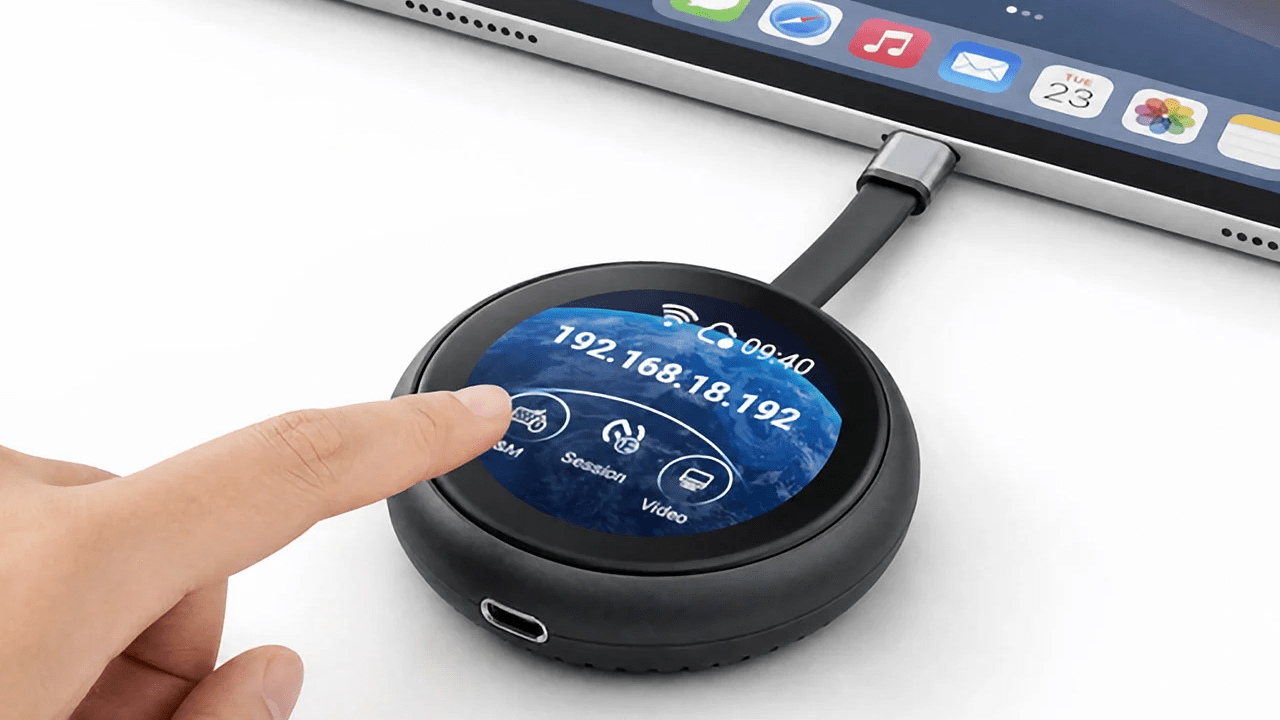
- Comet Q controls iPhones remotely without installing anything on the device
- Hardware-level access survives screen locks, sleep states, and network interruptions
- A USB-C cable replaces the cables normally required for traditional KVM setups
GL.iNet, the Hong Kong-based networking company behind a line of popular OpenWrt routers, has unveiled the Comet Q, what it says is the world’s first browser-based pocket remote control device designed specifically for USB-C devices, spanning laptops, phones, tablets and Mac minis.
What sets the device, also known as GL-RMQ1, apart from typical remote desktop software is that it operates on a hardware level, meaning it continues to work even when the device being controlled goes to sleep, locks up, or loses its network connection.
Its control is via a single USB-C cable carrying video, data and power simultaneously, eliminating the HDMI dongles and USB hubs required by traditional KVMs. A built-in USB-C passthrough port keeps the controlled device charged throughout each session, and its video output reaches up to 2K at 60fps with two-way audio.

A single cable that replaces an entire KVM setup
The Comet Q works with iPhones starting with the iPhone 15, excluding the iPhone 16e and later budget models, as well as iPads and a wide range of Android phones and tablets, as long as their USB-C port supports DisplayPort Alt mode.
GL.iNet claims that the Comet Q is the first KVM solution ever designed specifically for mobile devices, a category that previously lacked dedicated remote control hardware.
Access to the device requires no downloads, as any browser pointing to glkvm.com offers full control without requiring account creation.
The GLKVM app, available on Windows, macOS, the App Store and Google Play, handles touch gestures with greater precision when controlling from another mobile device.
The Comet Q features a 1.8-inch circular touchscreen, which allows for initial setup without the need to open a laptop.
Multi-OS control with security built right into the hardware
One of the more unusual aspects of the Comet Q is that the operating systems involved no longer need to match at all.
Users can remotely control an iPhone from a Windows browser, control a MacBook from an Android tablet, or manage an iPad from a Linux device without complexity.
Wi-Fi credentials can also be predefined before shipping, meaning the person receiving them doesn’t need any technical knowledge to get started.
Developers can access test hardware remotely, while IT teams can monitor multiple devices from a single interface without having to be physically present.
Security measures work at the hardware level with support for WireGuard, Tailscale, and ZeroTier, as well as optional two-factor authentication.
GL.iNet also states that remote sessions end immediately after disconnecting the dongle, leaving no persistent background services or residual access permissions.
The Comet Q retails for $129.90 but is currently available on Kickstarter for $89, a 31% discount.
As of this writing, it has raised over $1 million from 6,628 backers toward a goal of $10,000, with just over two weeks left in the campaign.
Disclaimer: We do not recommend or endorse any crowdfunding projects. All crowdfunding campaigns have inherent risks, including the possibility of delays, changes or non-delivery of products. Potential funders should carefully evaluate the details and proceed at their own discretion.
Follow TechRadar on Google News And add us as your favorite source to get our news, reviews and expert opinions in your feeds. Make sure to click the Follow button!
And of course you can too follow TechRadar on TikTok for news, reviews, unboxings in video form and receive regular updates from us on WhatsApp Also.


