
- Discover the Go Birding M One Smart AI spotting scope
- It’s the world’s first with AI hardware and can shoot 4K video
- Subject detection, autofocus and bird identification are also available
Spotting scopes have traditionally been essential to wildlife and bird watching, providing a stable, highly magnified view of distant subjects – far superior to that of monoculars – but these devices have changed little in decades. That was until now.
Meet the Go Birding M One Smart AI Spotting Scope: It’s like an ordinary spotting scope, except it’s equipped with AI hardware and a host of practical tools that could change wildlife and bird watching.
Following in the footsteps of the high-end Swarovski Optik AX Visio binoculars we’ve tried and tested, the Go Birding AI Spotting Scope features “state-of-the-art AI recognition” and can identify up to 10,000 bird species.

It will do this with the ability to record 4K/30fps video, 1080p/120fps slow motion video and 8MP photos (RAW and JPEG), with a 30x optical zoom that can be digitally extended up to 120x, supported by true optical image stabilization for clear viewing and recording (supported by a tripod).
There’s also subject detection autofocus said to be able to track fast-moving subjects, and you’ll be able to view and share the spotting scope’s image via a connected device loaded with the Go Birding app, potentially making wildlife watching a shared experience even in the field (see images below).
Simply put, Go Birding M One Smart AI is the world’s first “smart” spotting scope.
Picture 1 of 3

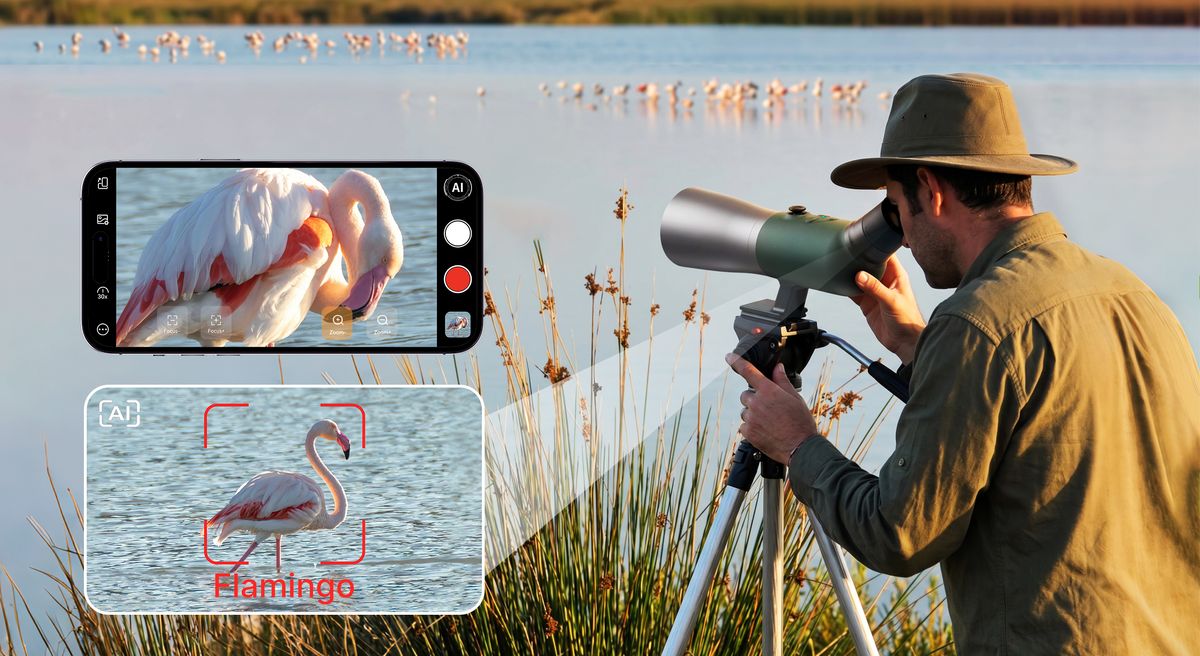
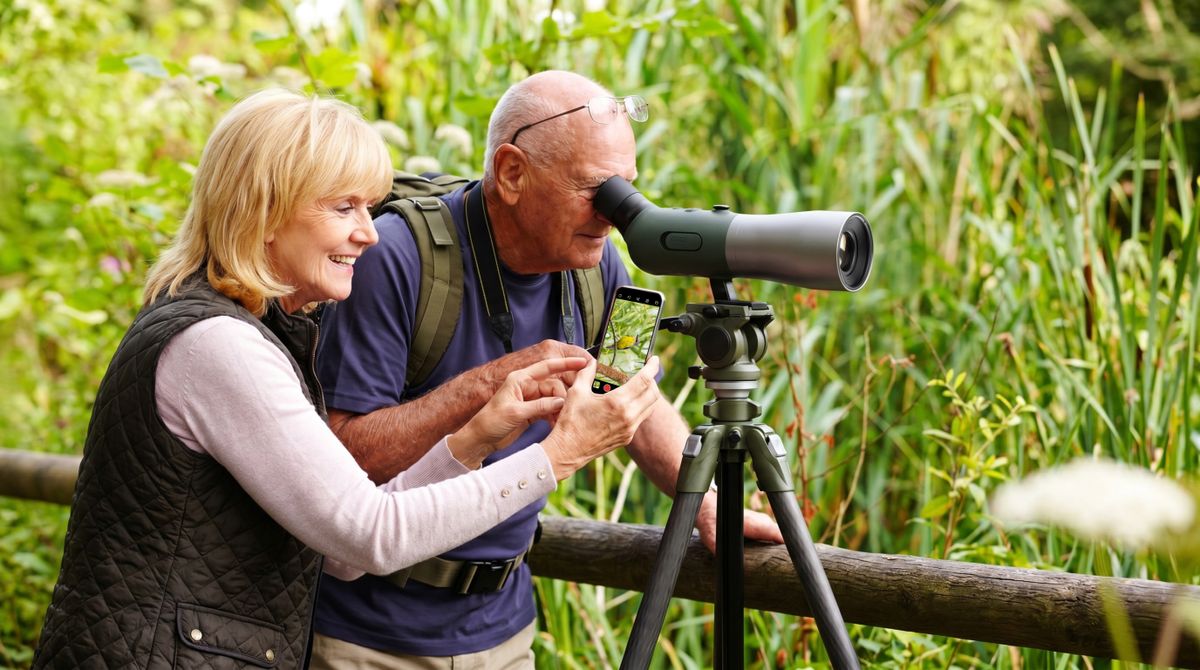
The future of observation glasses?
As far as spotting scopes go, the Go Birding M One Smart AI offers a decent view at high magnification and comes in a standard-sized body, although at 800g it’s about twice the weight of similar devices, given its unique built-in image-making skills.
Traditional glasses are only for viewing and you need to connect a separate camera to the eyepiece using an adapter to capture the device’s view, also called digiscoping. Go Birding, however, has a 1/2.7-inch sensor and direct photo and video recording.
The device is made by Chinese optics manufacturer Apexel and features an eyepiece magnification of 15x, an eye relief of 13.25mm, an exit pupil field of view of 43.5 degrees and a focus range of 2m to infinity. Simply put, the telephoto end of the optical zoom is equivalent to the focal length of 900mm.
The screen is actually a 0.49-inch OLED type with 1080p, not the optical type you get with traditional scopes, which might be a turnoff for some. On the other hand, however, the device will connect wirelessly to a smartphone or tablet via the Go Birding app (for iOS or Android), which means multiple (simultaneous) ways to see what the spotting scope is looking at.
There’s a built-in 6,300mAh battery, which offers up to 6 hours of continuous use/72 hours of standby time – another potential factor for long journeys compared to battery-less types – but at least it supports 2-hour fast charging.
The Go Birding M One Smart AI spotting scope is currently in the crowdfunding phase. Its estimated price is between $699 and $999, with an expected launch date of late August 2026. Backers do so at their own risk.
We are currently testing the device and will report on its performance in the field, as well as any further developments in pricing and availability. We can’t wait to see if this is indeed the future of birding and if it could replace superzoom bridge cameras or some of the best wildlife cameras for the wholesome hobby of birding and photography.
Are you an avid bird watcher? What do you think of the new AI spotting scope? Give your opinion below.

Follow TechRadar on Google News And add us as your favorite source to get our news, reviews and expert opinions in your feeds.


