- The White House will impose tariffs of 10% and 12.5%.
- Many goods are exempt, including oil and gas.
- The new duties cover 99.4% of all U.S. imports.
The Trump administration will impose new tariffs of 10% and 12.5% on Friday on goods from 60 trading partners, including the European Union, over allegations of lax enforcement of forced labor bans, just as a temporary 10% global tariff expires.
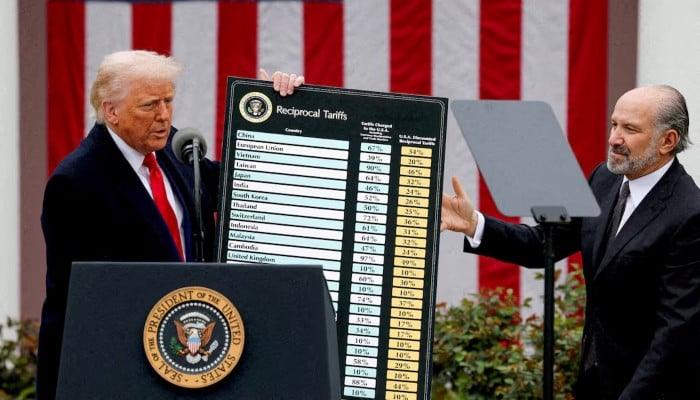
The move is the White House’s latest attempt to restore President Donald Trump’s campaign vision of a near-global tariff after the U.S. Supreme Court in February struck down his “reciprocal” tariffs of 10% to 50% imposed last year under a national emergency law to try to reduce the U.S. trade deficit.
The new tariffs, announced Thursday in a Federal Register notice, will cover 99.4% of U.S. imports but will include many product exemptions, such as oil and gas, fertilizer and some food products.
Imposed under Section 301 of the Trade Act of 1974, the new duties allow the administration to maintain a floor tariff on virtually all U.S. imports despite the Supreme Court setback. The tariffs are also likely to face fewer legal risks than those rolled back in February, as Section 301 has survived prior legal challenges.
Trump responded to the Supreme Court’s February ruling by imposing a temporary 10% tariff for 150 days that expires Friday at 12:01 a.m. EDT (0401 GMT). The new duties will take effect at exactly the same time, with goods in transit exempt until 12:01 a.m. EDT on July 28.
“The United States has banned imports of forced labor for nearly a century and rigorously enforces it. It is high time our trading partners did the same,” U.S. Trade Representative Jamieson Greer said in a statement. “Today’s action will begin to correct what is both a human rights violation and a trade-distorting business practice, to improve the well-being of workers everywhere.”
Greer has previously promised that the new forced labor taxes would not push countries with trade deals with Washington capping U.S. tariff rates to exceed those caps.
According to the final decision, the United States will impose a 10% duty on goods from Argentina, Bangladesh, Britain, Cambodia, Canada, Ecuador, El Salvador, Guatemala, Honduras, India, Indonesia, Jordan, Malaysia, Mexico, Pakistan, Sri Lanka and Trinidad and Tobago.
The European Union, Taiwan, Japan, South Korea and Switzerland were assigned rates that, combined with pre-existing most favored nation tariff rates, would total 10% or 12.5%.
The other 38 countries were assigned a rate of 12.5%. These include China, accused by the United States of detaining Uyghur minorities in work camps, which Beijing denies.
Trump administration officials have told their Chinese counterparts that they intend to restore Trump’s second-term tariffs on Chinese goods up to the 20% agreed to during a trade truce with Chinese President Xi Jinping in November 2025 — but not higher than that level. Before Friday’s action, China’s tariff rate had fallen to 10%, not counting the 25% imposed during Trump’s first term on industrial products.
Countries protest
This action sparked immediate protests from some countries.
Norwegian Foreign Minister Espen Barth Eide said that “there is no basis for this tariff against Norway because we already have clear rules intended to prevent trade in goods produced using forced labor.”
Australia and Brazil called the new tariffs unjustified and said they would seek to have them removed, while Canada – hit on Monday by new tariffs imposed by Trump on goods worth $20 billion – issued a muted response to the “unilateral” tariffs.
“We will continue to engage constructively with the United States on this and other outstanding issues over the coming weeks for the mutual benefit of our citizens,” said Dominic LeBlanc, Canada’s minister for U.S. trade.
Massachusetts Gov. Maura Healey, a Democrat, also criticized the taxes in a statement, saying they “will lead to higher costs, negative impacts on businesses and a weakening of American competitiveness. No one can afford this.”
Similar prices, different price
“As expected, the forced labor tariffs largely replicate current tariff levels as negotiated in various reciprocal trade agreements and replace the 10 percent Section 122 tariffs that expire on Friday,” said Tim Brightbill, a trade law partner at Wiley Rein in Washington.
A senior Trump administration official disputed suggestions that the tariffs on forced labor were simply a direct replacement for the expiring levies despite the timing, similar tariff rates and broad coverage of nearly all U.S. imports.
The official said the United States imposes stricter import bans on products made with forced labor and enforces them more rigidly than any other country, giving rivals an unfair trade advantage over the United States.
Both Democrats and Republicans in Congress have called for the eradication of forced labor from global supply chains, “which is why we’re actually answering that call,” the official said.
Ryan Majerus, a trade lawyer and former Commerce Department official, said the new tariffs may be harder to challenge in court because Section 301 has withstood past challenges and some judges may be reluctant to impose measures aimed at combating forced labor.
“Once the 301 tasks are placed, they have a lot of flexibility to adjust them,” said Majerus, a partner at King and Spalding. “It’s a hammer. It’s also intended to keep the … 10% baseline in place, and they think they’ll be well protected when the case goes to court.”
Expanded exemptions
Many products will be exempt from duties, including oil and gas, fertilizers, certain food products and products already subject to Section 232 national security tariffs, such as automobiles, steel, aluminum and copper, the official said.
Other products compliant with the U.S.-Mexico-Canada trade agreement will also be exempt due to the highly integrated North American supply chain and high levels of U.S. content in these products.